
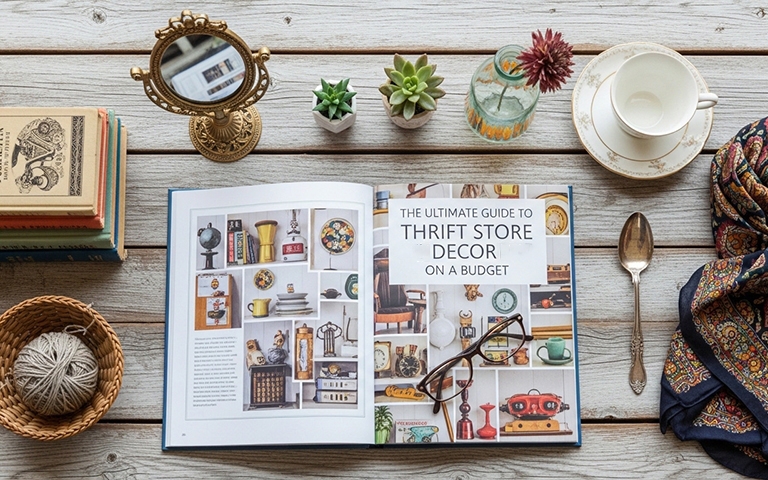
What to buy, what to skip, and how to train your eye for the good stuff

20 years of experience as a home decor consultant, specializing in furniture selection, space-conscious layouts, and practical interior solutions.
Let me be honest with you – I’ve walked out of a thrift store with a lamp that looked amazing in aisle three and absolutely hideous in my living room. We’ve all been there. Thrifting for home decor is genuinely one of the best ways to stretch your budget and score pieces with real character. But it’s also a minefield if you don’t know what you’re doing. So let’s cut through the guesswork and talk about exactly what’s worth grabbing and what you should leave behind – no matter how tempting.
Why Thrift Store Decor Is Actually a Smart Move?
High-end home goods stores are charging premium prices for items that look virtually identical to things sitting in your local Goodwill. The markup on brand-new decorative items is genuinely alarming.
IMO, thrift stores are one of the most underrated decorating resources out there. You can find solid-wood furniture, ceramic vases, brass candleholders, and vintage artwork at a fraction of retail prices. The secret is knowing what holds up and what doesn’t – and that’s exactly what we’re breaking down today.
The Green List: What You Should Absolutely Buy
Solid Wood Furniture
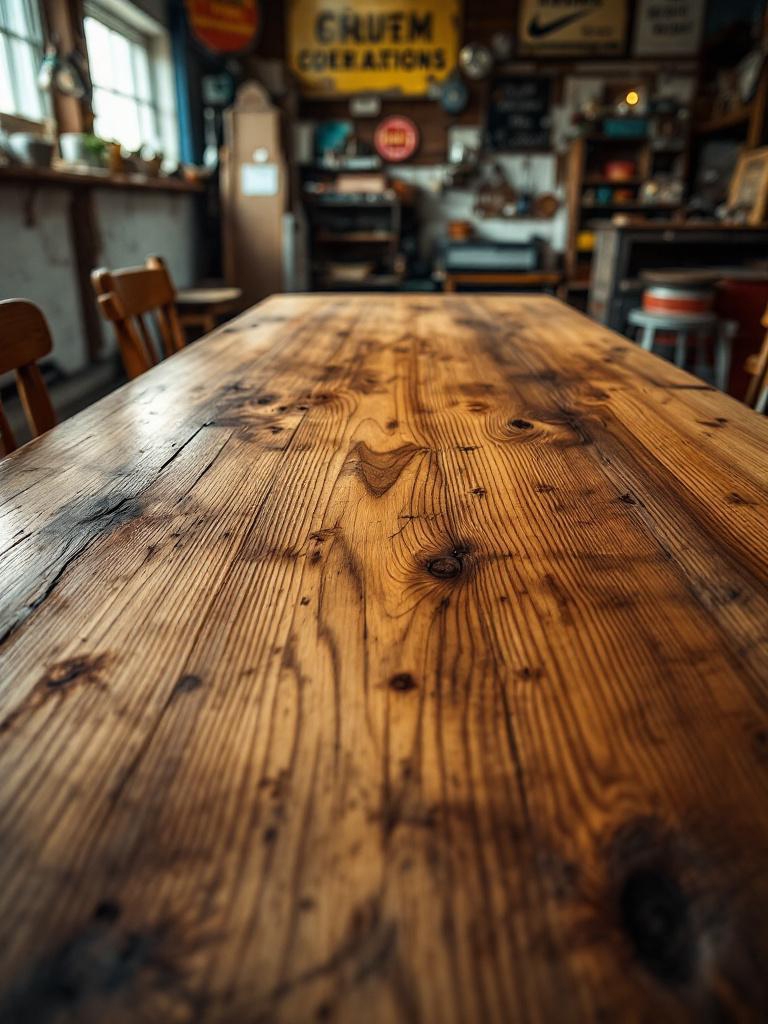
This is the number one thrift store score. Solid wood furniture lasts decades, takes refinishing beautifully, and costs a fraction of new. Flip a piece over and check the underside – real wood grain all the way through means you’ve hit the jackpot.
- Dovetail joints in drawers (a sign of quality construction)
- Real wood veneer is acceptable, but solid hardwood is the gold standard
- No strong musty smell – a little must cleans up, a deep structural smell usually doesn’t
- Sturdy legs with minimal wobble
Ever wonder how home influencers get that perfectly curated vintage aesthetic? Nine times out of ten, it’s a $15 thrift store find with a $10 can of spray paint.
Ceramic and Pottery Pieces
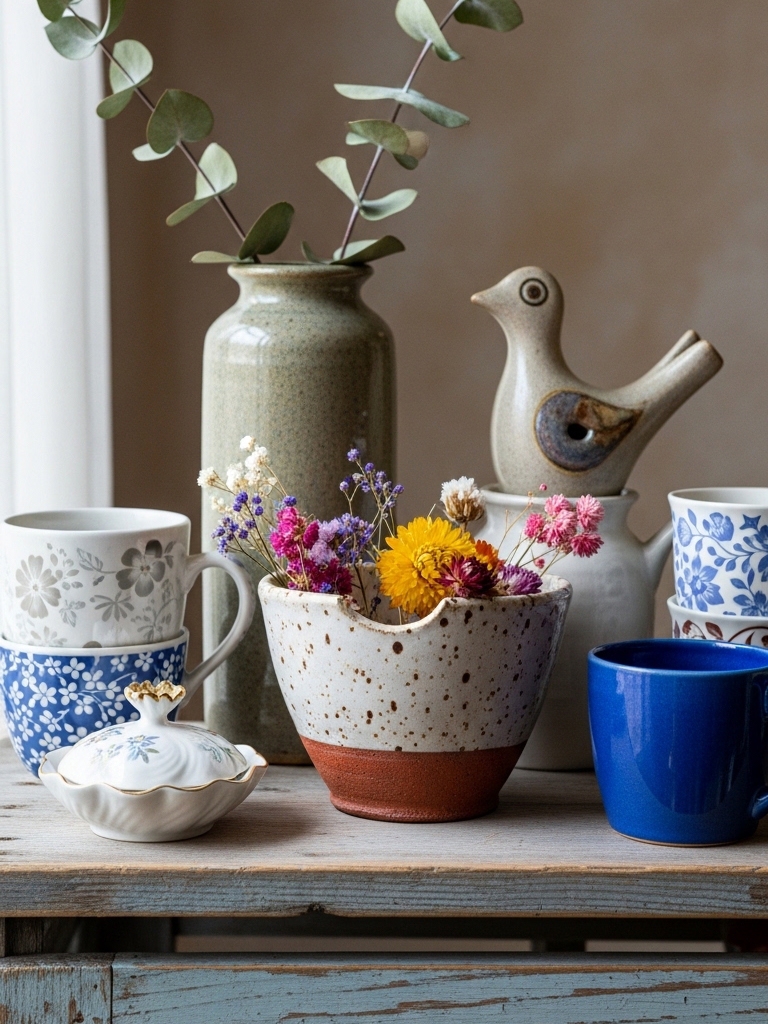
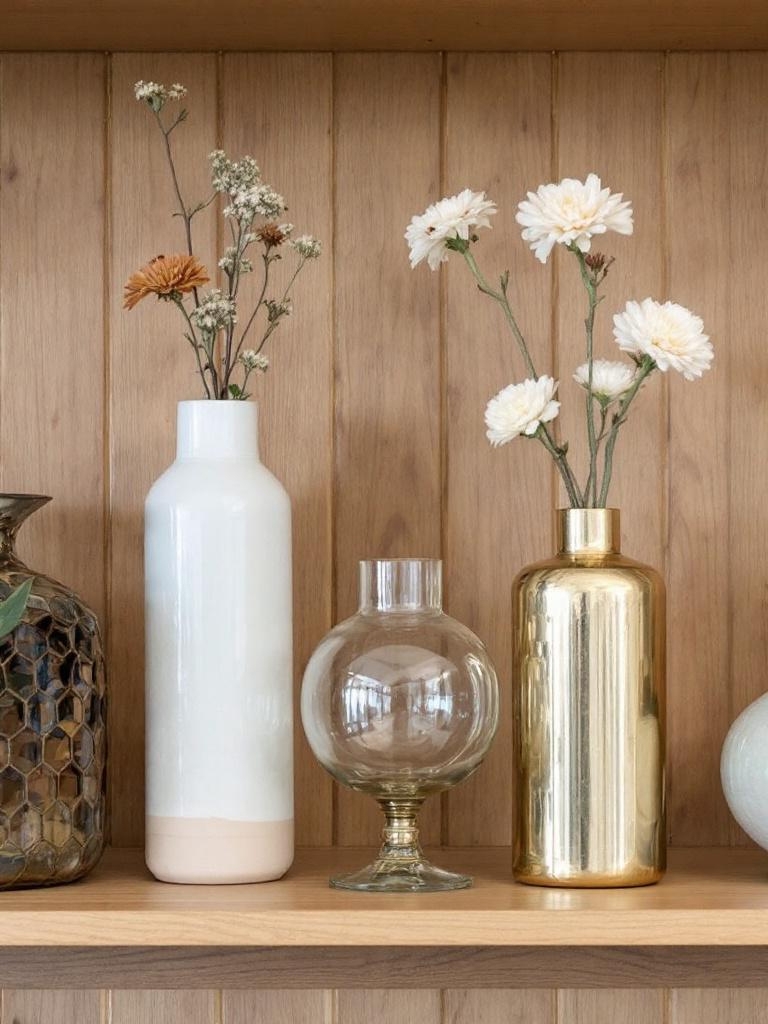
Ceramics, stoneware, and pottery are absolute thrift store gold. A well-crafted ceramic vase or bowl doesn’t expire – it just needs a good wash and a nice spot on your shelf.
- No visible cracks (hold it up to the light and look carefully)
- The glaze is intact and even
- Chips on the base are fine; chips on the rim are a deal-breaker
Pro tip: neutral tones in cream, terracotta, sage, or charcoal are versatile enough to work in almost any aesthetic.
Mirrors
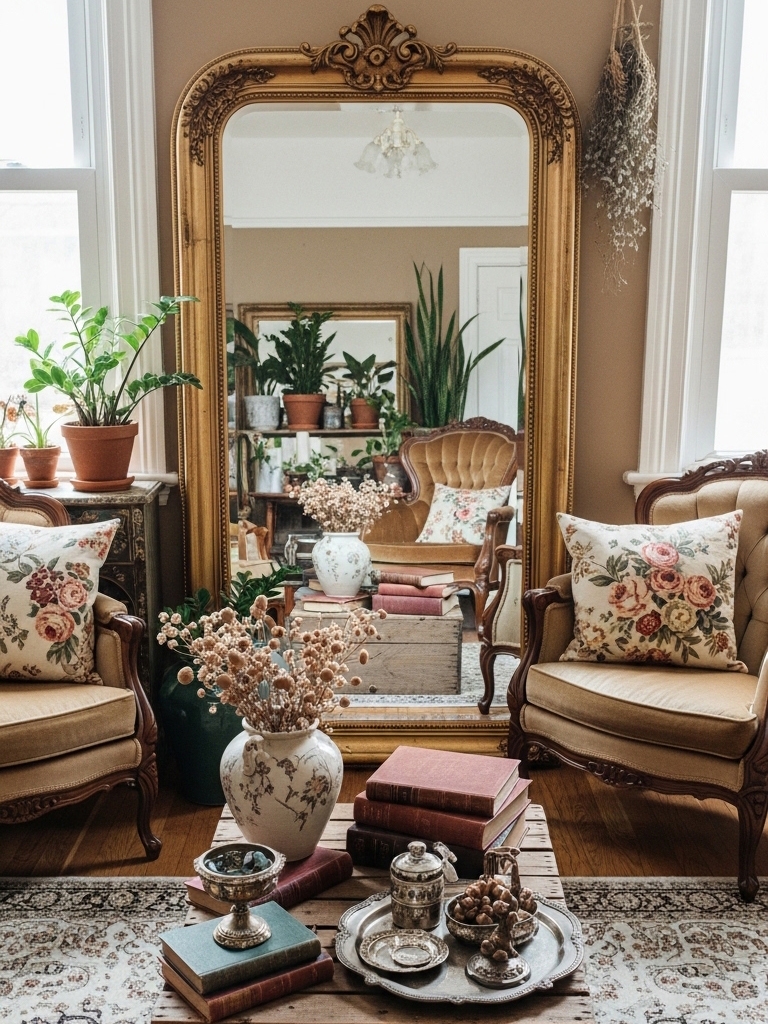
Mirrors are consistently one of the best thrift store buys, full stop. A large mirror in a nice frame can easily retail for $150-$300 new. At a thrift store? Try $8-$30.
- Look for ornate plaster or wood frames – these refinish exceptionally well
- Check that the frame is structurally sound (no pieces missing)
- Avoid frames with deep water damage, which tends to be irreparable

Glassware and Bar Accessories
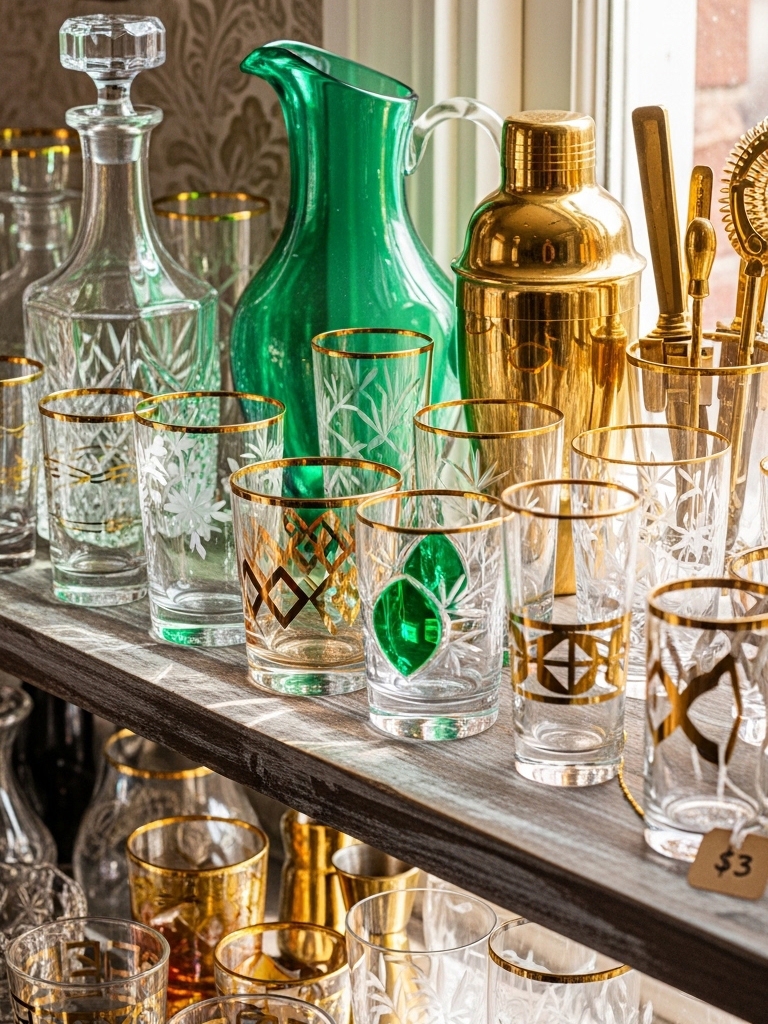
Vintage glassware is having a major moment right now, and thrift stores are full of it. Crystal decanters, colored glass pitchers, and mid-century barware are often priced at $1-$5 per piece and sell for 10X that in vintage shops.
- Cut crystal glasses and decanters
- Colored glass in amber, green, or cobalt blue
- Mid-century style barware with geometric patterns
- Heavy-bottomed highball glasses
Framed Artwork and Prints
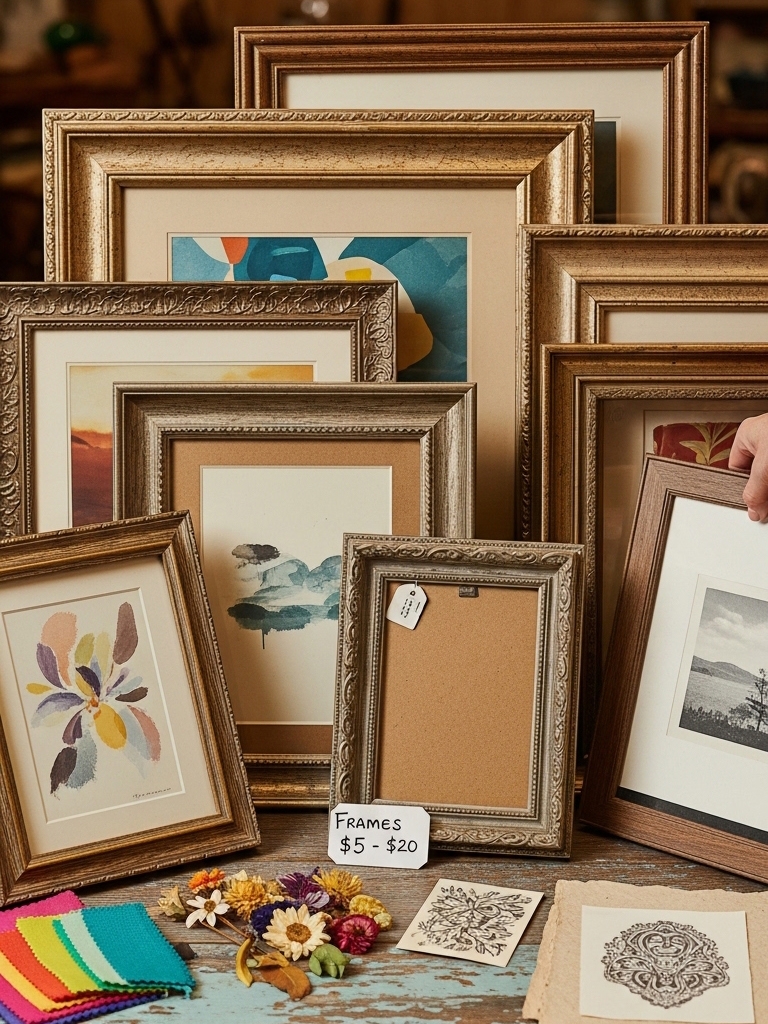
Here’s where most people make a mistake – they skip the art because the subject matter isn’t to their taste. But you’re not buying the art, you’re buying the frame. Pop out the print, swap in your own artwork, a fabric swatch, or even a collection of dried botanicals.
- Real wood construction (not plastic or MDF)
- Intact corners with no missing gilding or carving
- Clean, unscratched glass
- Functional hanging hardware
Decorative Trays and Bowls
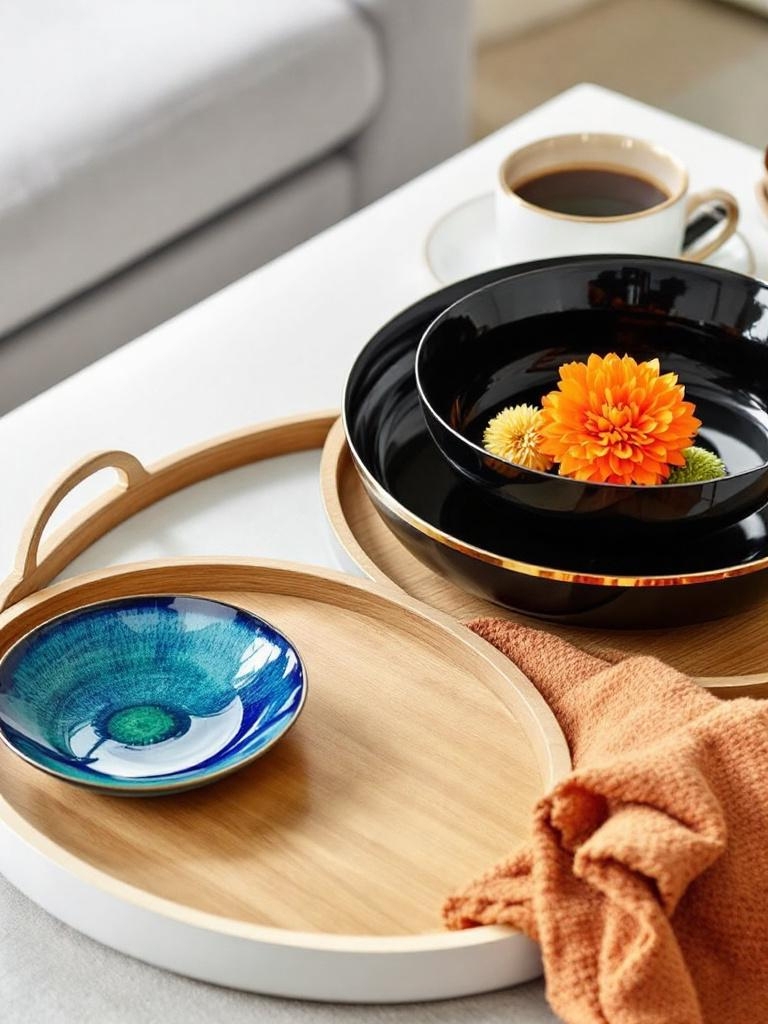
Wooden, ceramic, and lacquered trays are workhorses in home styling. They corral remotes on coffee tables, organize perfume bottles on vanities, and make flat surfaces look intentional. Thrift stores have them constantly and they’re almost always in great condition.
|
MUST READ: |
The Red List: What to Leave on the Shelf
Upholstered Furniture (Usually)
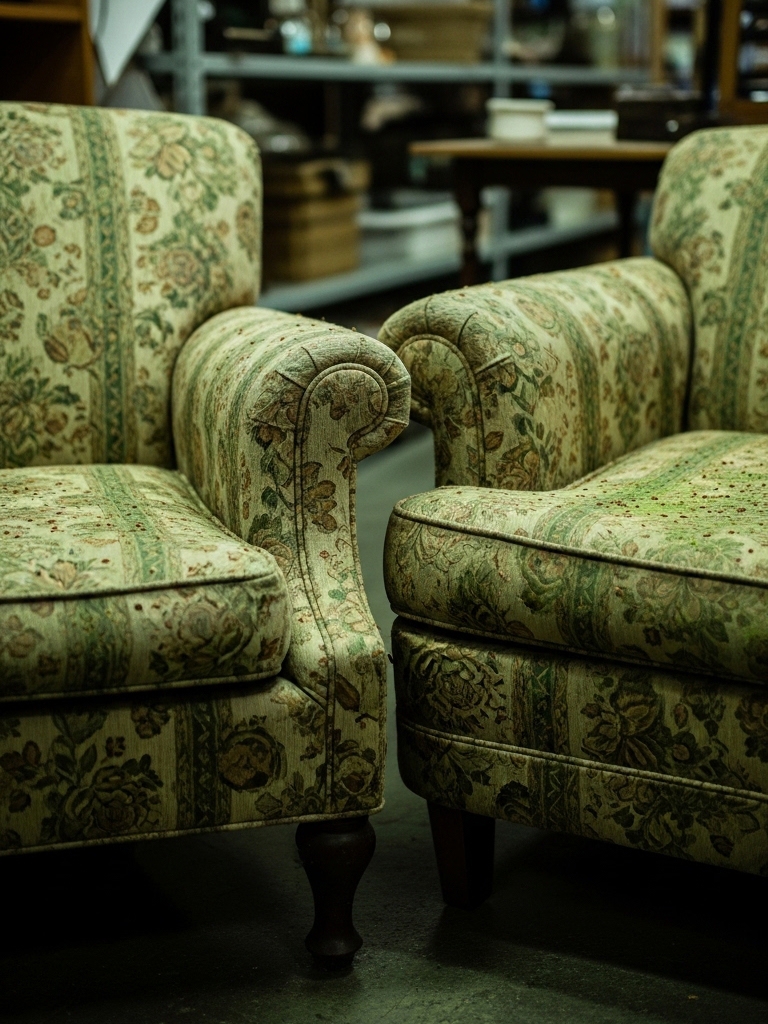
I know, I know – that velvet couch looks incredible. But upholstered furniture from thrift stores comes with real risks that are hard to spot on the floor. Bed bugs, deep-set odors, and mold can live in cushions and fabric long after the piece has been cleaned.
- Only buy items with removable, washable cushion covers
- Avoid anything with unexplained stains or strong odors
- Chairs and ottomans are lower risk than full sofas
- Budget for professional cleaning before bringing it inside
Particleboard Furniture
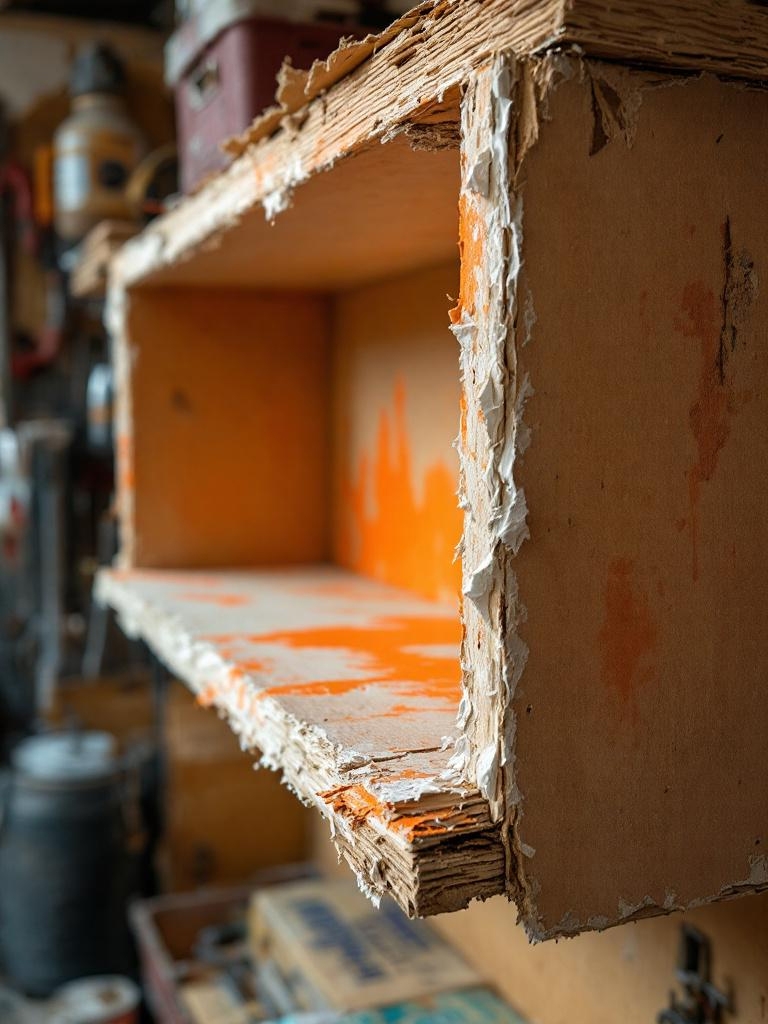
Particleboard and cheap MDF furniture are rarely worth buying secondhand. These materials don’t take refinishing well; they deteriorate rapidly once the laminate starts peeling, and they’re genuinely difficult to repair.
- Very light for its size
- Visible pressed-wood texture on edges or scratched areas
- Hollow sound when you knock on it
- Laminate surface that’s already starting to bubble or peel
Mattresses and Bedding
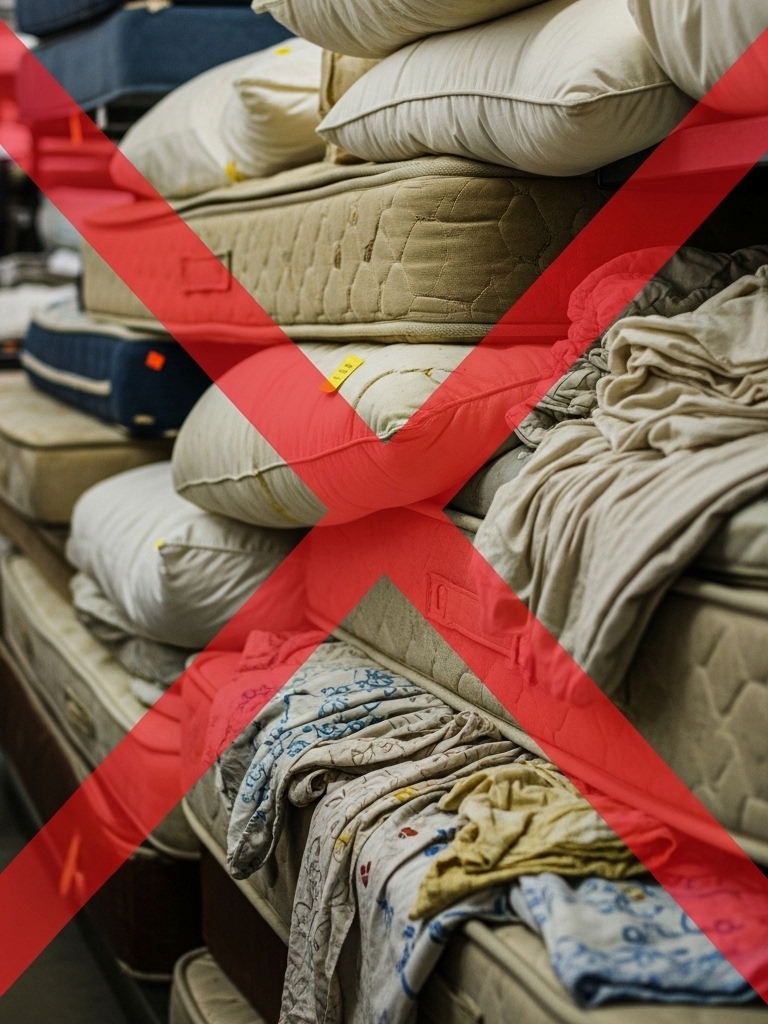
This one should be obvious, but never buy used mattresses, pillows, or bedding from a thrift store. The hygiene concerns are real, and the savings aren’t worth it. Hard pass, always.
Untestable Electronics
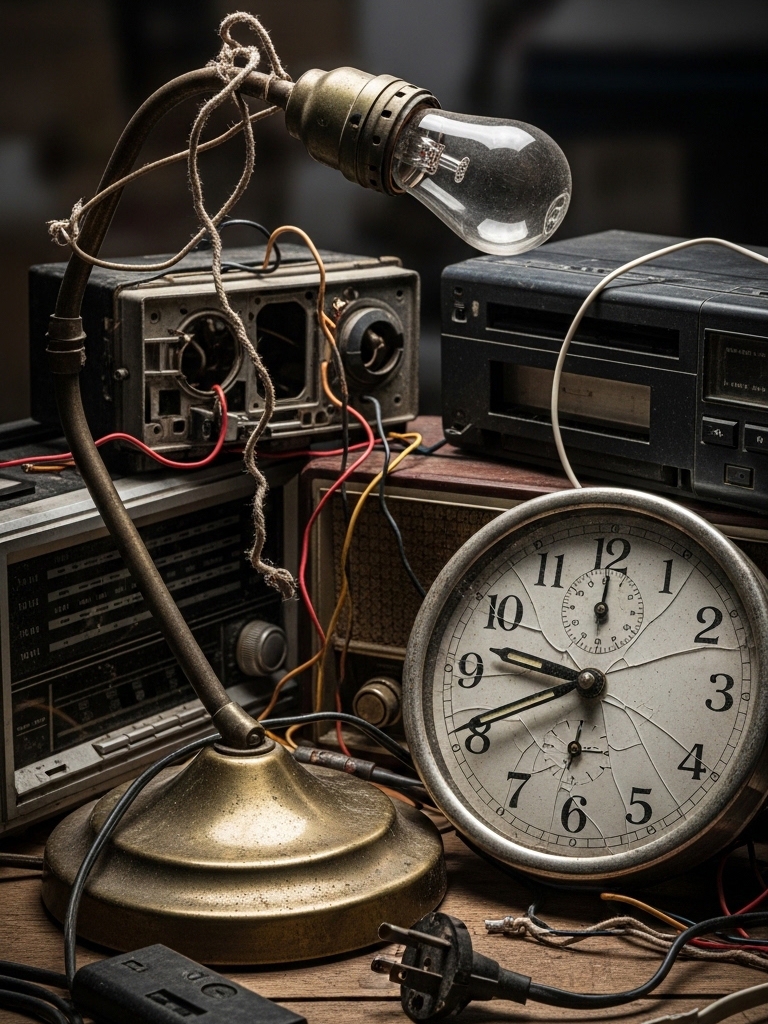
Lamps with faulty wiring, clocks that don’t run, anything electronic you can’t plug in and test before you buy – these are money pits. Only buy electronics if you can verify they work in-store.
Lamps are a partial exception – you can replace the socket and cord for under $10 if the base itself is worth it. But TVs, stereos, or anything complex? Only buy if you can test it.
Heavily Damaged or Structurally Compromised Pieces
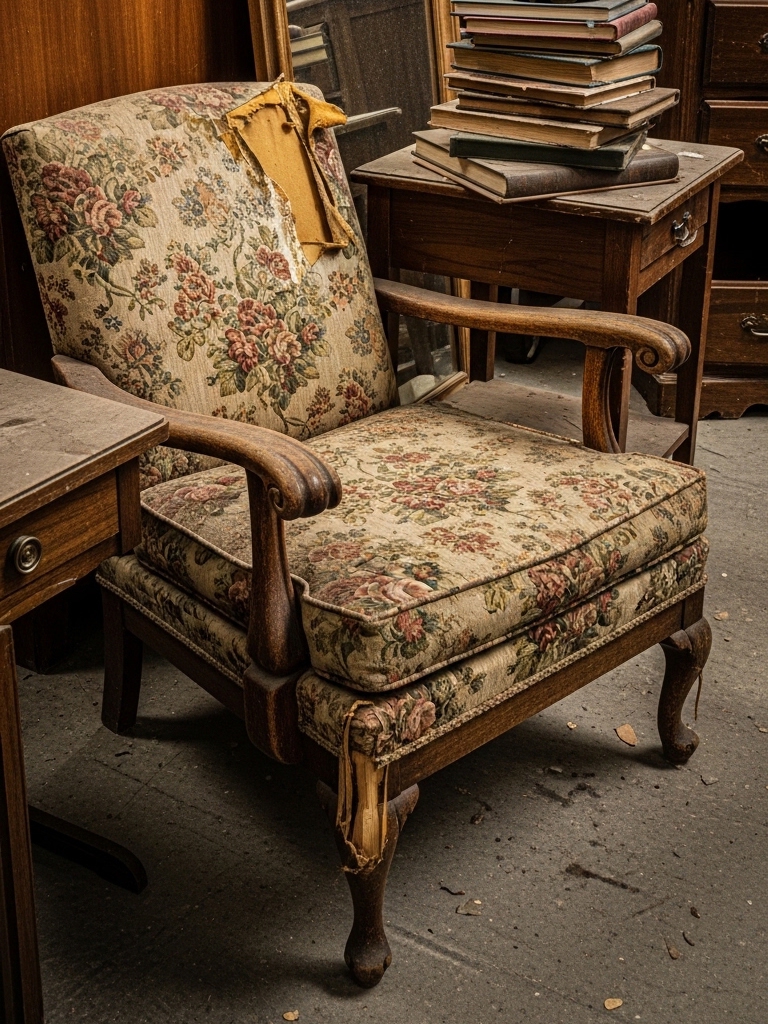
A little wear is character. Structural damage is a headache. Avoid furniture with broken joints, severe warping, or extensive water damage, because what looks like a quick fix often snowballs.
- Drawers that are completely stuck or have broken slides
- Legs that wobble significantly or are cracked near joints
- Tabletops with severe warping
- Visible mold (not just surface dust)
How to Develop Your Thrift Store Eye
Shop Often and Move Fast
The best finds disappear quickly. Serious thrifters shop frequently – ideally mid-week when new donations have been processed – rather than making one big occasional trip. FYI, many larger thrift chains restock on specific days. Ask staff when new items hit the floor.
Know Your Measurements
Nothing is worse than falling in love with a piece and realizing it won’t fit. Always keep a measuring tape in your bag and know the key dimensions of your space before you shop.
Think Transformation, Not Perfection
The mindset shift that makes thrifting click: you’re not looking for finished pieces, you’re looking for good bones. An ugly color can be repainted. A dated finish can be stripped and stained. Train your eye to see past the surface and evaluate structure, material quality, and proportion instead.
Styling Thrift Finds Like a Pro
- Group in Odd Numbers: Three vases together reads better than two or four.
- Vary Heights: Mix tall and short pieces on shelves and surfaces.
- Repeat a Material: Two brass pieces in a room tie the look together even if they’re completely different objects.
- Edit Ruthlessly: Not every thrift score needs to be displayed. Rotate pieces seasonally.
FAQ
How do I find good quality decor at thrift stores?
Look for solid materials like wood, metal, and glass instead of plastic. Check for damage, stains, or missing parts. Shop in higher-end neighborhoods when possible, and visit often – inventory changes quickly. Trust your eye for potential, not just current appearance.
What are the best thrift store items for home decor?
Great finds include mirrors, picture frames, lamps, vases, books, baskets, and small furniture pieces. These items are easy to clean, repaint, or repurpose into stylish decor.
How can I make thrift store items look modern?
Use paint, new hardware, or minor repairs to refresh items. Neutral colors, matte finishes, and simple styling can instantly give thrifted pieces a modern, cohesive look.
Is thrift store decor really cheaper than buying new?
Yes, most thrifted items cost significantly less than retail. Even after minor upgrades, you’ll usually spend far less while achieving a unique, high-end look.
How do I decorate my home on a tight budget?
Start small, prioritize key pieces, and mix thrifted items with what you already own. Focus on layering textures and rearranging spaces to create impact without overspending.
The Bottom Line
Thrifting for home decor is legitimately one of the best skills you can develop as a budget-conscious homeowner or renter. The buys are excellent when you know what to look for – solid wood, ceramics, mirrors, glassware, and art frames. The skips are just as clear – upholstered unknowns, particleboard, mattresses, and anything you can’t test or inspect properly.
The more you practice, the faster and more confident your eye becomes. You’ll start spotting solid wood in a pile of particleboard from across the room. That instinct is worth developing, and it saves real money over time.
Now go hit your local thrift stores with purpose. Your next favorite piece is probably sitting on a shelf right now, waiting for someone who knows what they’re looking at. That might as well be you.



Add comment