
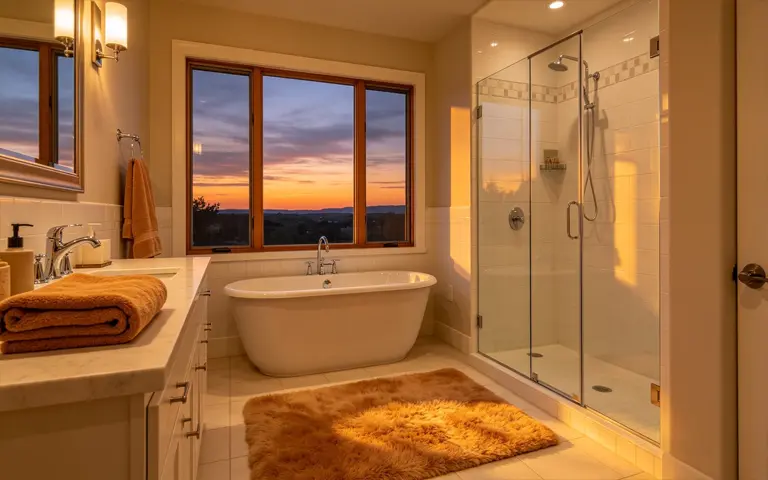
Stylish bathroom decor solutions

20 years of experience as a home decor consultant, specializing in furniture selection, space-conscious layouts, and practical interior solutions.
Luxury bathrooms rarely feel luxurious because they’re filled with expensive finishes alone. What separates a calm, hotel-inspired space from one that always feels messy is thoughtful storage. Interior designers consistently recommend furniture that hides everyday essentials, improves organization, and creates more visual breathing room without making the room feel crowded.
The 17 bathroom furniture ideas below combine proven space-saving strategies with timeless design, from floating vanities and linen towers to mirrored medicine cabinets, recessed shelving, and clever under-sink storage. Each recommendation was selected because it solves a common bathroom problem while contributing to a cleaner, more intentional look.
Whether you’re updating a compact powder room or remodeling a spacious primary bath, these ideas can help maximize storage, reduce visual clutter, and create a bathroom that feels more functional, relaxing, and noticeably more luxurious.
Key Takeaways
- Floating furniture is the single biggest visual win in a small bathroom. Wall-mounted vanities and cabinets show floor beneath them, and that sliver of visible tile does more for the “spa” feeling than any candle ever will.
- Vertical storage beats horizontal storage in tight rooms. A linen tower or an over-toilet etagere uses air space you’re currently wasting.
- Buy one statement piece and keep the rest simple. A marble-top console or a vintage dresser vanity reads as luxury only if it isn’t competing with six other “special” pieces for attention.
- Open shelving needs discipline. It looks styled with 6-8 items and looks like a yard sale with 20, so match the shelf to how much self-control you actually have.
- Budget $150-$400 for a solid entry-level vanity or storage piece, $600-$1,500+ for a designer or solid-wood version.
- Water resistance matters more than style in a bathroom. Solid wood, sealed MDF, teak, and powder-coated metal hold up; particleboard and unsealed veneer don’t.
- Measure your door swing and toilet clearance before you buy anything. The single most common return reason is a piece that looks fine online and blocks the door in real life.
At-A-Glance Summary
| Furniture Piece | Best For | Price Range | Rating |
|---|---|---|---|
| Floating Vanity | Small or powder-room bathrooms | $180-$900 | 9.4/10 |
| Double Vanity | Shared primary bathrooms | $700-$2,500 | 9.0/10 |
| Linen Tower | Overflow towel and product storage | $150-$500 | 8.8/10 |
| Over-Toilet Etagere | Renters and small apartments | $60-$220 | 8.9/10 |
| Ladder Shelf + Baskets | Renters, boho or coastal style | $70-$200 | 8.3/10 |
| Vanity With Hamper Drawer | Families, kids’ bathrooms | $300-$900 | 8.7/10 |
| Mirrored Medicine Cabinet | Hiding daily-use clutter | $100-$450 | 9.1/10 |
| Corner Shelving | Awkward, narrow bathrooms | $40-$180 | 8.0/10 |
| Storage Bench | Walk-in showers, seating + storage | $90-$350 | 8.5/10 |
| Repurposed Bar Cart | Guest baths, added personality | $60-$250 | 7.9/10 |
| Recessed Niche Shelving | New builds or remodels | $300-$1,200 (installed) | 9.2/10 |
| Vintage Dresser Vanity | Character homes, one-of-a-kind look | $200-$1,500 | 8.6/10 |
| Marble-Top Console | Primary bathrooms, luxury feel | $500-$2,000 | 9.0/10 |
| Ladder Towel Rack | Any bathroom, quick style fix | $40-$150 | 8.4/10 |
| Freestanding Mirror + Shelf | Rooms without vanity storage | $80-$300 | 8.1/10 |
| Pull-Out Under-Sink System | Fixing dead cabinet space | $30-$120 | 8.8/10 |
| Glass-Front Wall Cabinet | Displaying nice products | $120-$400 | 8.5/10 |
|
MUST READ: |
Why Trust This Guide
Choosing bathroom furniture isn’t just about finding a cabinet that looks good in a product photo. Moisture, daily wear, storage capacity, and long-term durability matter just as much. This guide combines real-world interior styling experience with manufacturer specifications, independent material research, and customer satisfaction trends from leading home retailers and furniture brands.
Recommendations were compared against published product dimensions, construction materials, weight capacities, care instructions, and warranty information whenever available. We also reviewed guidance from home improvement experts and building organizations on moisture-resistant materials, bathroom ventilation, and storage best practices to ensure every recommendation reflects both practical performance and design.
When evidence is limited or a conclusion depends on aesthetics or personal preference, it is clearly identified as opinion rather than presented as fact. The goal is to provide transparent, evidence-informed recommendations that remain useful long after decorating trends change.
How We Evaluated These Pieces
Every product was assessed using the same evaluation framework to improve consistency and transparency. We compared material quality, resistance to humidity and moisture, construction methods, storage efficiency, assembly requirements, maintenance needs, warranty coverage, and overall value relative to price.
Product specifications were verified against manufacturer information whenever possible, while customer review patterns helped identify recurring strengths and long-term reliability concerns rather than isolated experiences. We also considered how efficiently each piece uses limited floor space, whether it supports everyday bathroom organization, and how easily it integrates into different design styles.
Visual appeal was included in the final assessment, but only after practical performance, durability, and functionality met our minimum standards. Pieces that prioritize appearance over reliability or everyday usability were not recommended.
So let’s start now our journey…
Floating (Wall-Mounted) Vanity
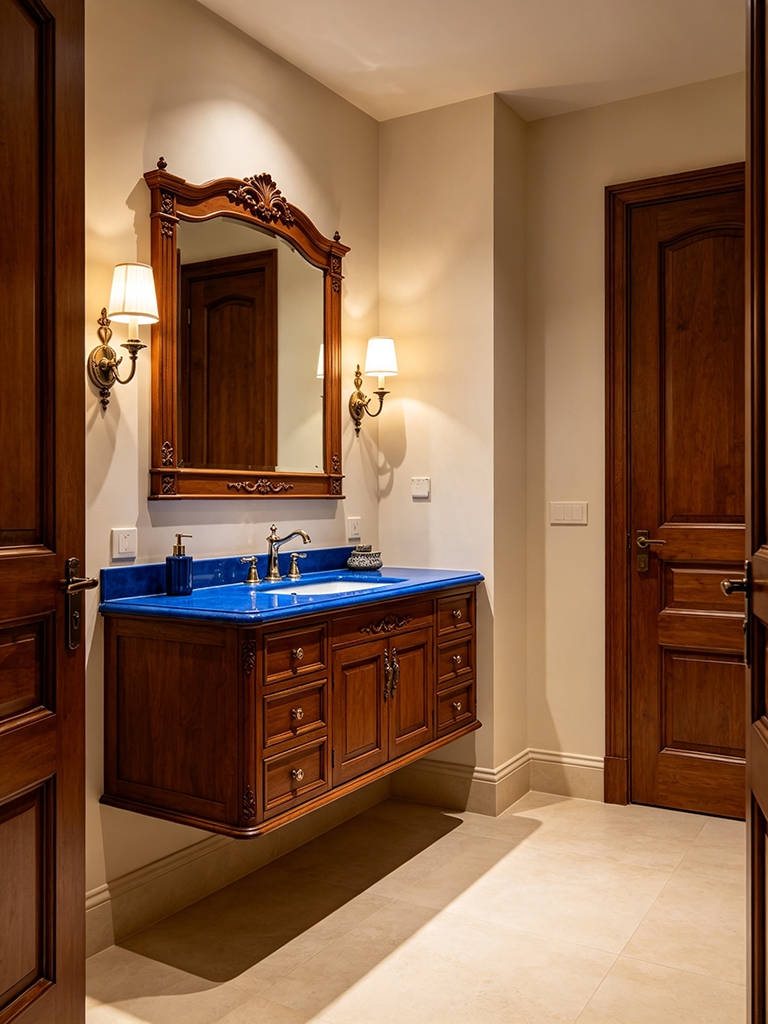
Best For: Small bathrooms and powder rooms where every inch of visible floor counts.
Quick Overview: A floating vanity hangs off the wall instead of sitting on the floor, and that gap underneath is doing more design work than people give it credit for. I’ve swapped a boxy floor vanity for a wall-mounted one in a 5×7 bathroom, and the room reads as almost 20% bigger, just from the sightline to the baseboard.
Key Features: Wall-mounted brackets rated for 100-300 lbs, soft-close drawers, available in floating single or double-sink versions, widths from 24 to 60 inches.
Pros: Visually opens up the room, easier to mop under, works in almost any style from mid-century to modern farmhouse.
Cons: Needs into-stud mounting, which isn’t a weekend DIY for most people. Less counter depth than a floor-standing version in the same footprint.
Price Range: $180-$900 depending on size and material. Shop it at Wayfair or Amazon for a wider range of finishes.
Why We Recommend It: Of everything on this list, this is the one upgrade that changes how a small bathroom feels the fastest.
Double Vanity With His-And-Hers Storage
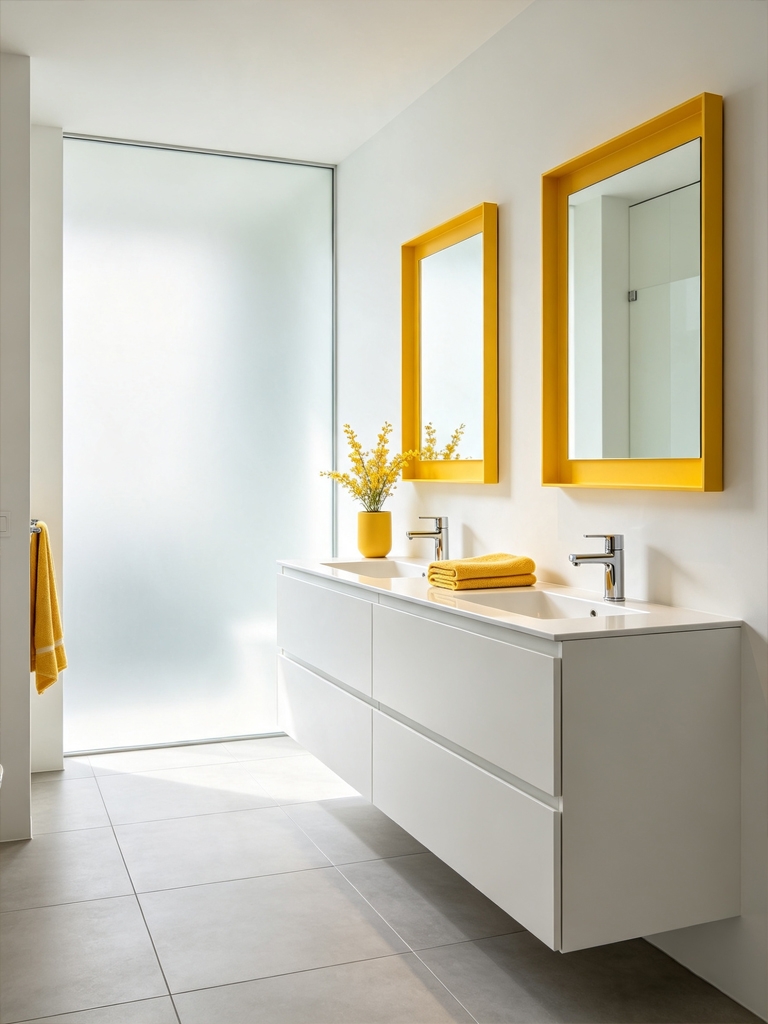
Best For: Shared primary bathrooms where two people get ready at once.
Quick Overview: Two sinks solve the morning traffic jam, but the real upgrade is dedicated drawer zones so nobody’s toothbrush ends up in somebody else’s makeup bag.
Key Features: Dual sink basins, separate drawer banks per side, typically 60-72 inches wide, quartz or marble tops available.
Pros: Ends the sink-sharing standoff, adds resale value, doubles usable counter space.
Cons: Needs a genuinely wide bathroom to avoid feeling cramped. Costs roughly double that of a single vanity.
Price Range: $700-$2,500. Shop it at Wayfair for stone-top versions or Walmart for budget-friendly options.
Why We Recommend It: If two people share the room daily, this pays for itself in reduced morning friction alone.
Freestanding Tower
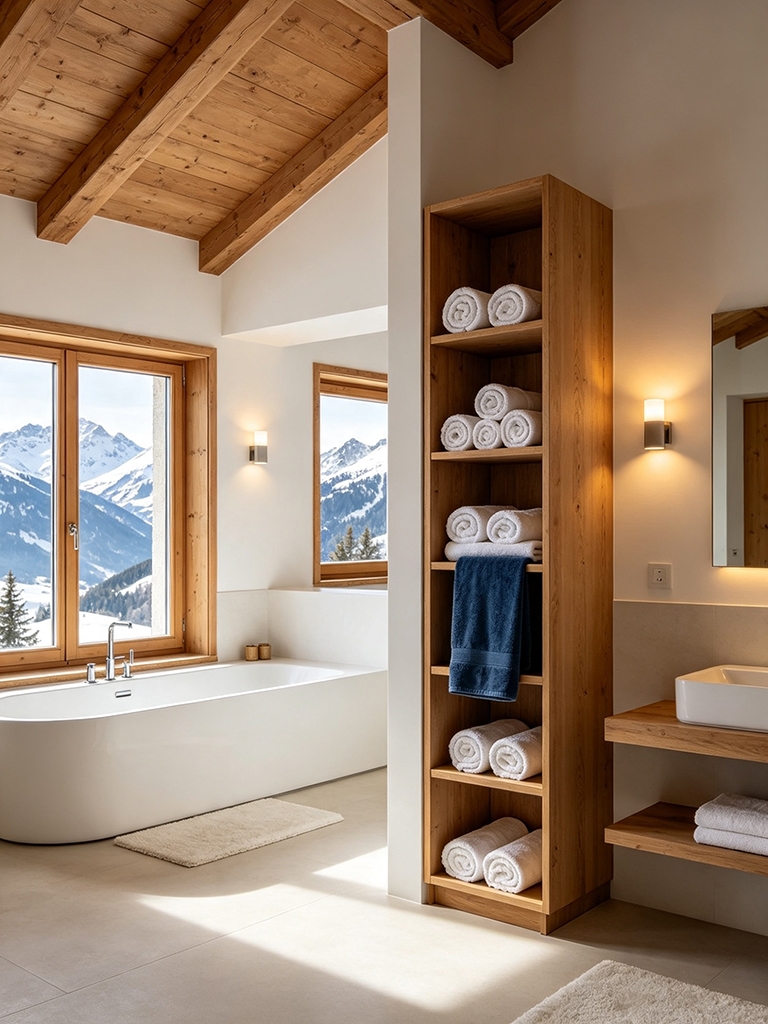
Best For: Anyone whose towels currently live in a laundry basket on the floor.
Quick Overview: A tall, narrow cabinet, usually 12-18 inches wide, that stacks storage vertically instead of eating floor footprint. It’s the most underrated piece on this list.
Key Features: Adjustable shelves, some with hamper compartments, heights from 48 to 72 inches, slim 12-16 inch depth.
Pros: Fits in corners and next to the bath, holds a surprising amount, works as a stand-alone piece with no installation.
Cons: Top shelves can be hard to reach in a low-ceiling bathroom. Cheaper versions wobble if not anchored.
Price Range: Typically costs between $150 and $500, depending on the size, finish, and included features. Available at Walmart or Amazon.
Why We Recommend It: This is the piece I tell clients to buy first when they say they “just need more storage.”
Over-The-Toilet Storage Etagere
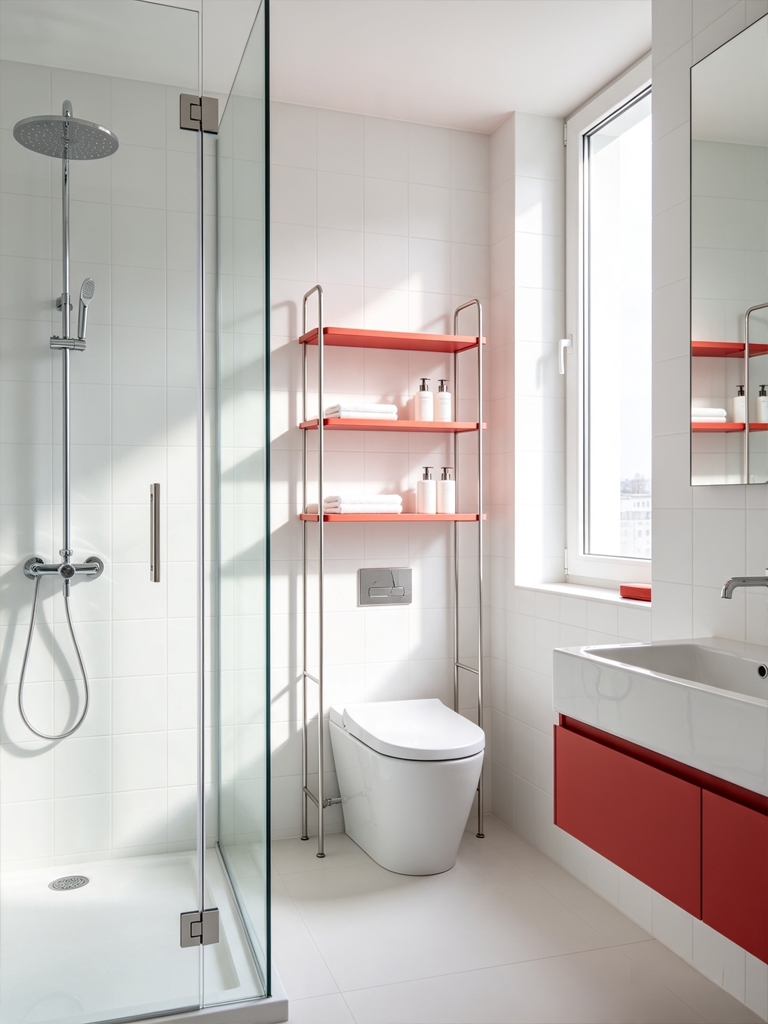
Best For: Renters and small apartments who can’t mount anything permanent.
Quick Overview: A shelving frame that straddles the toilet tank, using dead air space that’s otherwise wasted. It’s not glamorous, but it works, and it’s the fastest fix on a tight budget.
Key Features: No-drill freestanding frame, 2-4 shelves, weight capacity typically 40-80 lbs total, widths sized to fit standard toilets.
Pros: Renter-friendly, cheap, assembles in under 20 minutes.
Cons: Can look cluttered fast if overloaded, some models feel flimsy at the top shelf.
Price Range: $60-$220, with frequent discounts available at Amazon and Walmart retailers.
Why We Recommend It: Honestly? For the price, nothing else on this list gives you more storage per dollar.
Woven Storage Baskets With A Ladder Shelf
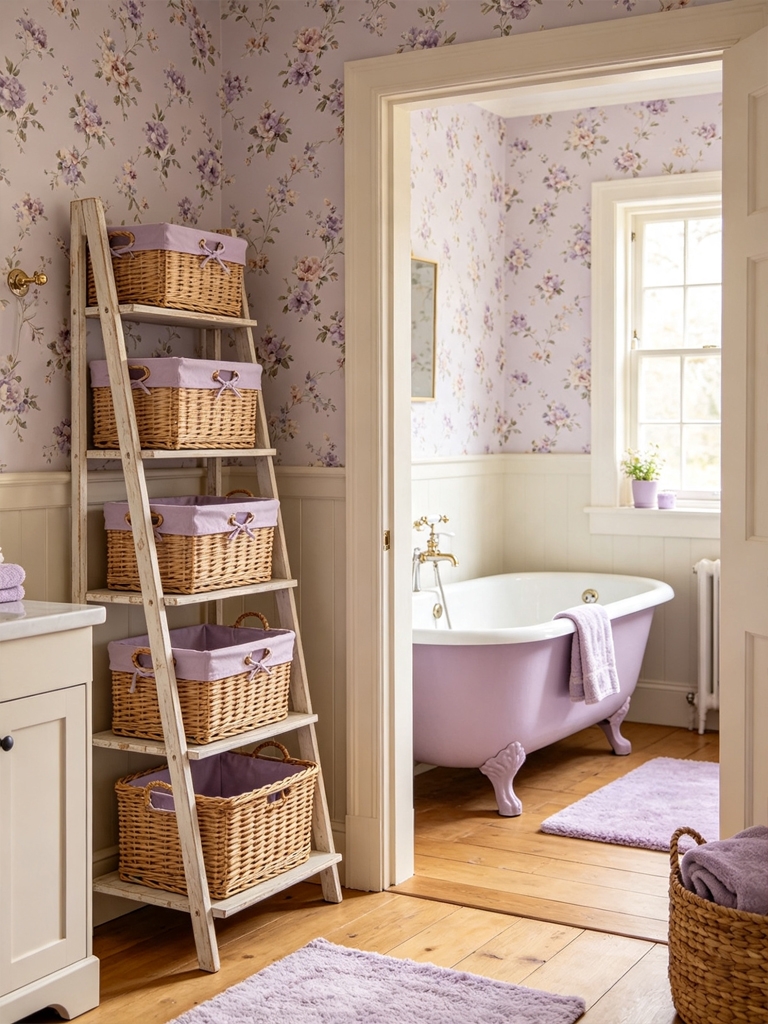
Best For: Boho, coastal, or warm-neutral bathrooms that want texture, not another box.
Quick Overview: A leaning ladder shelf holds a few woven rattan or seagrass baskets, and the mix of open wood and closed weave hides clutter while still looking intentional.
Key Features: Angled freestanding frame, no wall mounting needed, baskets sized for rolled towels or toiletries.
Pros: No installation, easy to restyle or move, hides mess without a lid.
Cons: Rattan doesn’t love constant steam and humidity, so it’s not the best pick for a bathroom with no fan.
Price Range: $70-$200. Shop it at Wayfair or 2Modern for competitive prices.
Why We Recommend It: The texture contrast against white tile is the cheapest way to make a bathroom feel curated instead of builder-basic.
Vanity With Integrated Hamper Drawer
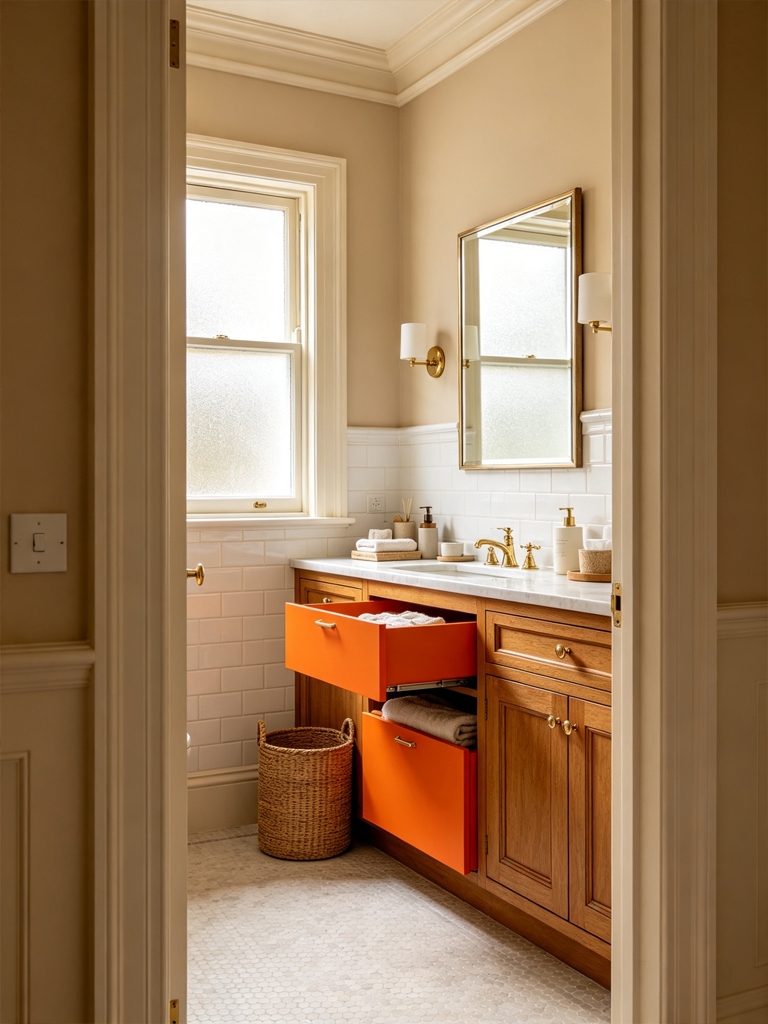
Best For: Families and kids’ bathrooms where dirty clothes end up on the floor.
Quick Overview: A vanity with one drawer swapped for a removable hamper liner. It quietly solves the “towel on the floor” problem because the hamper is right there, at eye level, not down the hall.
Key Features: Removable canvas or mesh liner, soft-close hamper drawer, standard vanity storage alongside it.
Pros: Keeps laundry contained without a separate hamper taking up floor space, easy to pull the liner straight to the washer.
Cons: Hamper drawer eats into other storage, so total shelf space is smaller than a standard vanity of the same size.
Price Range: $300-$900. Shop it at Wayfair or Walmart.
Why We Recommend It: I’m still not 100% sold on hamper drawers for adult-only bathrooms, but for a family with kids, this one earns its keep.
Mirrored Medicine Cabinet
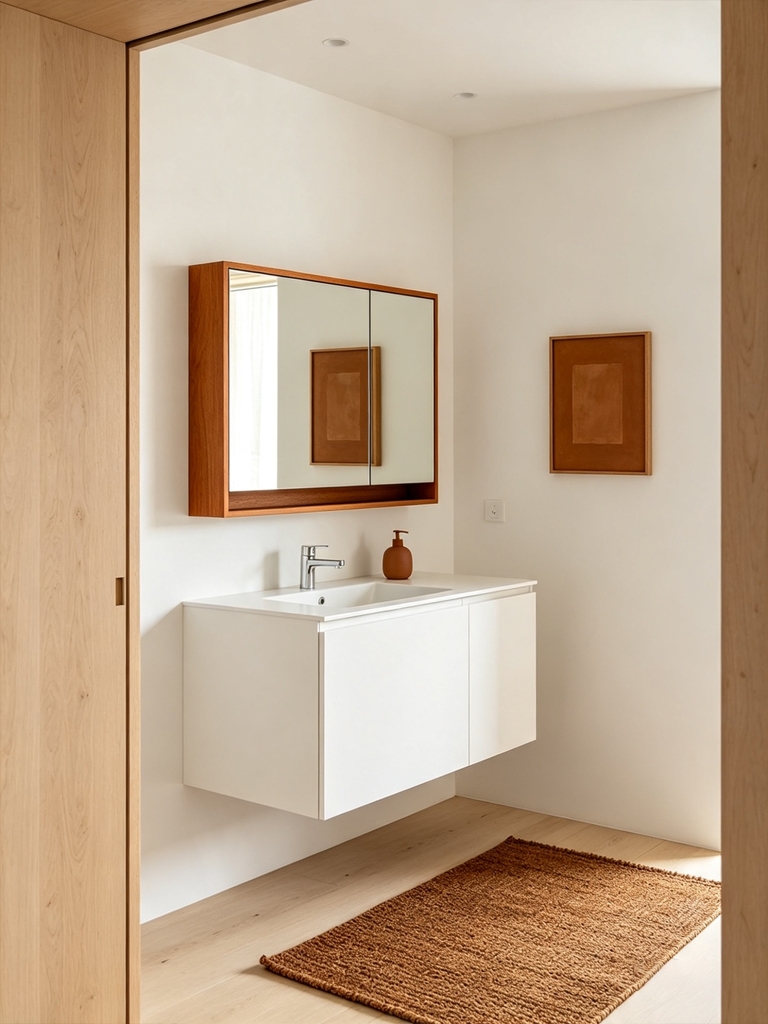
Best For: Hiding the daily-use stuff: toothpaste, medication, skincare, without losing mirror space.
Quick Overview: A recessed or surface-mounted cabinet with a mirrored door does double duty as both storage and mirror, which matters in a small room where you can’t afford a wall for each.
Key Features: Recessed or surface mount, single or triple-door mirror configurations, adjustable interior shelves, some with built-in outlets or lighting.
Pros: Keeps counters clear, hides everyday clutter instantly, doubles as your primary mirror.
Cons: Recessed versions need wall cavity space, which isn’t always available in an exterior wall.
Price Range: $100-$450. Shop it at Wayfair or Walmart for lit or triple-door versions.
Why We Recommend It: This is the single fastest way to clear a cluttered counter, full stop.
Corner Shelving Unit
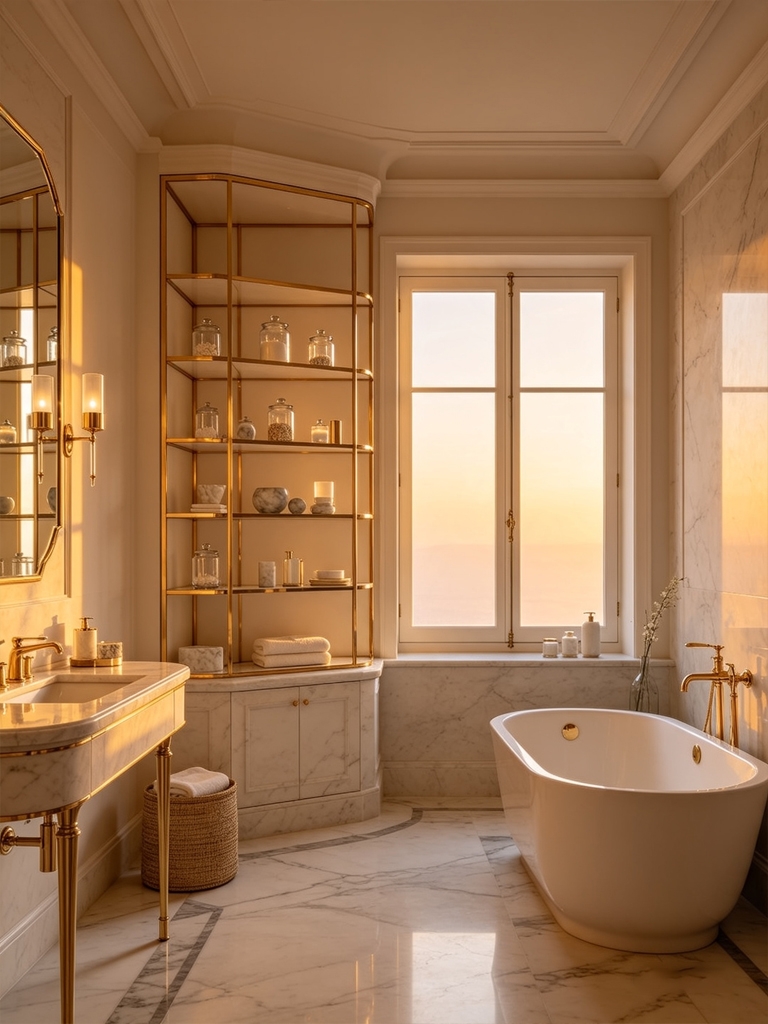
Best For: Awkward, narrow bathrooms with unused corners.
Quick Overview: Triangular shelves that stack into a corner; most people just leave them empty. It’s a small win, but in a tight bathroom, small wins add up.
Key Features: Wall-mounted or freestanding corner frame, 3-5 tiers, typically holds toiletries or folded towels.
Pros: Uses genuinely dead space, cheap, minimal footprint.
Cons: Limited weight capacity, awkward shape means it doesn’t hold larger items well.
Price Range: $40-$180. Available at Amazon and Walmart, offering affordable, stylish options for every budget and home.
Why We Recommend It: If your bathroom has an empty corner, this is close to free storage.
Bathroom Bench Or Stool With Storage
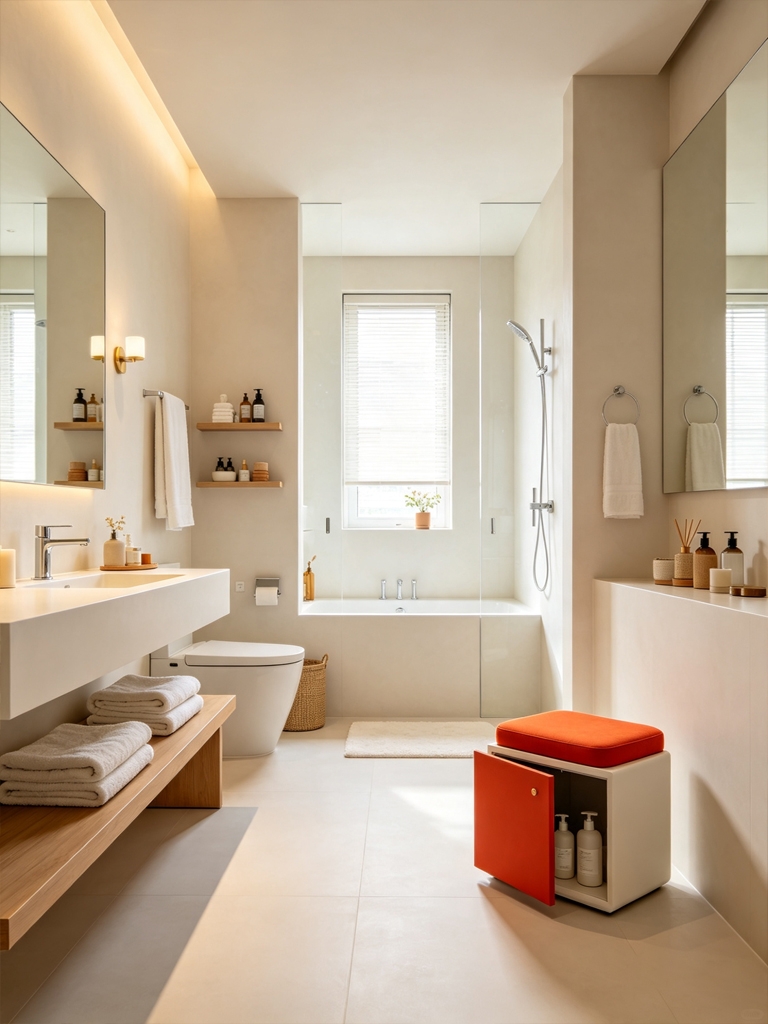
Best For: Walk-in showers and bathrooms that could use a place to sit.
Quick Overview: A small bench with a lift-top or drawer underneath, used for seating while dressing and hiding extra towels at the same time.
Key Features: Water-resistant teak, bamboo, or powder-coated metal frame, lift-top or drawer storage, typically 16-24 inches wide.
Pros: Functional seating, hides bulky items like extra towels or bath toys, adds a furniture-forward, less clinical look.
Cons: Takes floor space a smaller bathroom might not have to spare.
Price Range: $90-$350. Shop it at Amazon or Wayfair for teak versions built to handle steam.
Why We Recommend It: This one doesn’t work in every layout, but where there’s room, it adds warmth nothing else on this list does.
Repurposed Bar Cart
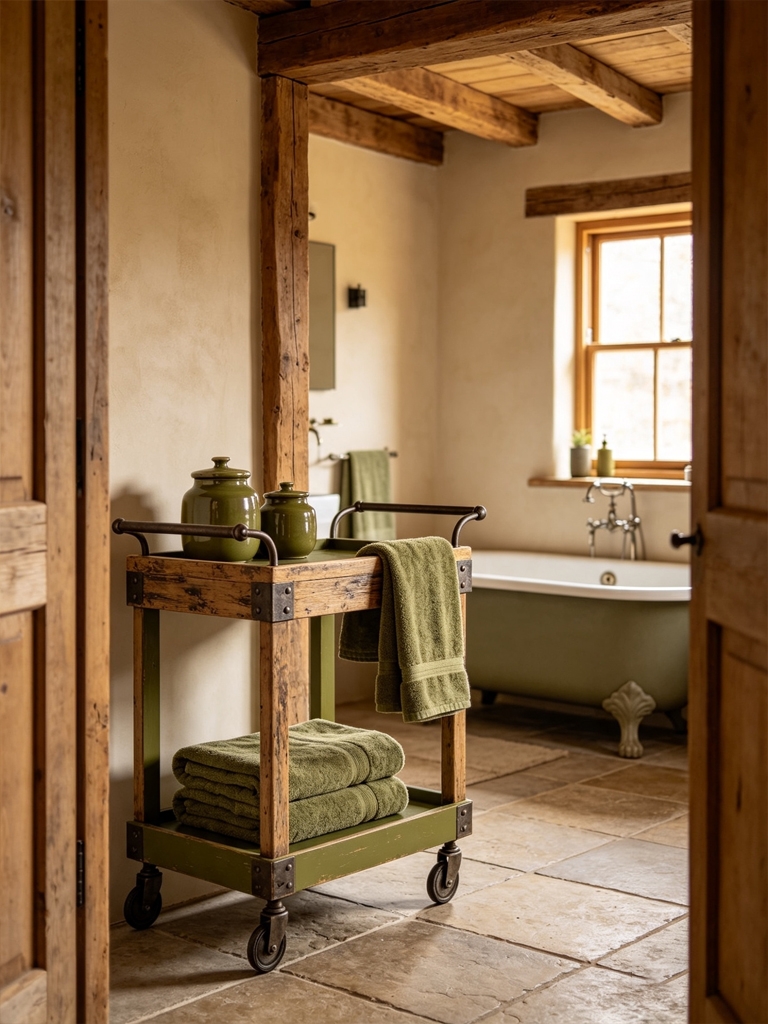
Best For: Guest bathrooms that want a bit of personality.
Quick Overview: A small rolling bar cart, the kind meant for drinks, works surprisingly well for towels, spare toilet paper, and bath products. It rolls, so it adapts to whatever the room needs that week.
Key Features: Two or three tiers, casters for mobility, metal or wood-and-metal frame.
Pros: Unexpected and personality-driven, mobile, doubles as a plant or towel stand.
Cons: Not water-sealed like dedicated bathroom furniture, so it needs a dry spot away from direct spray.
Price Range: $60-$250. Shop it at Crate & Barrel or 2Modern for a sleeker, more design-forward frame.
Why We Recommend It: This is the least conventional pick here, and it’s the one guests actually comment on.
Recessed Niche Shelving
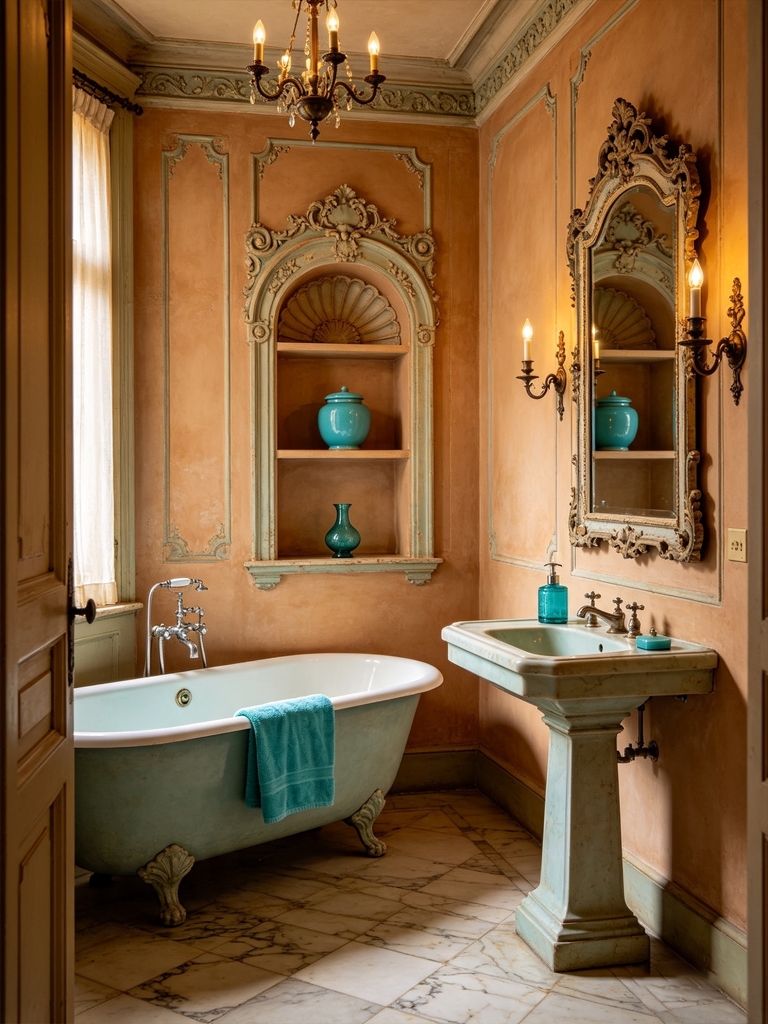
Best For: New builds or full remodels where you’re already opening the wall.
Quick Overview: Built into the wall cavity itself, a recessed niche adds shelving with zero footprint. It’s the cleanest, most permanent storage option on this list, and it looks like it’s always been part of the room.
Key Features: Framed into wall studs, waterproofed liner for shower niches, tileable interior to match the room.
Pros: Adds no visual bulk, looks intentional and architectural, ideal inside a shower for products.
Cons: Requires opening the wall, so it’s a remodel-stage decision, not a weekend project.
Price Range: $300-$1,200 installed. Shop niche kits and liners at Amazon or Walmart.
Why We Recommend It: If you’re already remodeling, skipping this is the mistake I see homeowners regret most.
Vintage Dresser Converted To Vanity
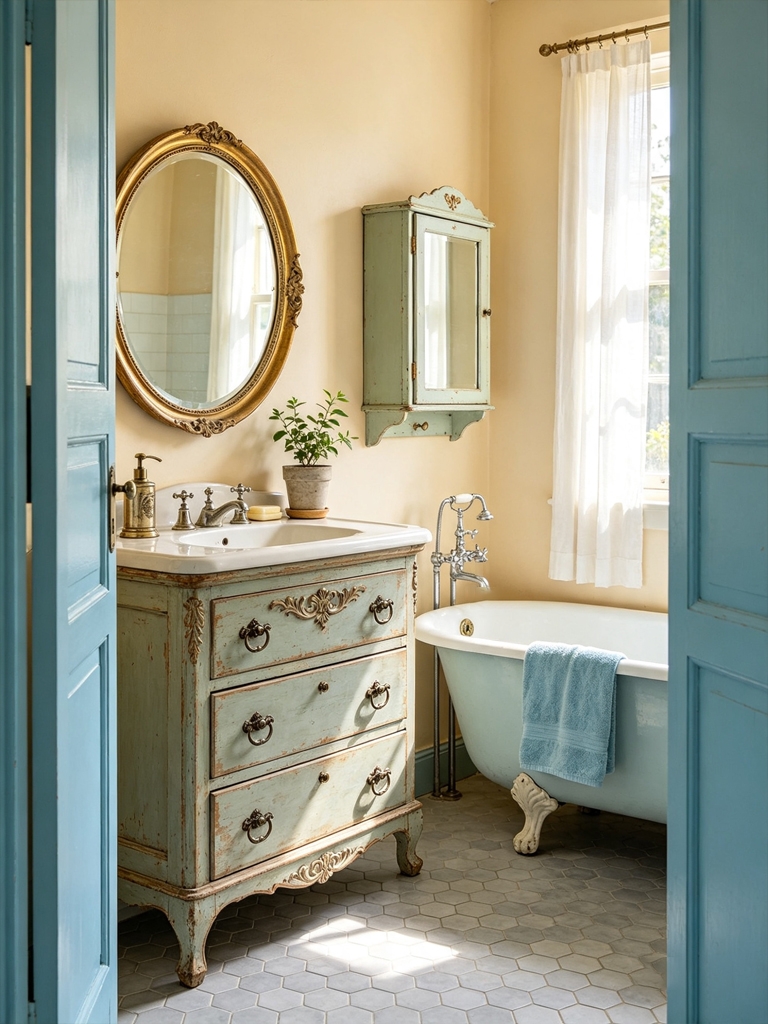
Best For: Character homes and anyone who wants a one-of-a-kind look.
Quick Overview: An old wood dresser, cut for a vessel sink and sealed against moisture, brings a warmth that no mass-produced vanity really matches.
Key Features: Solid wood construction, custom vessel-sink cutout, sealed or lacquered finish for water resistance.
Pros: Genuinely unique, often more solid than new furniture, great for antique or eclectic styles.
Cons: Needs professional conversion and sealing, which adds cost and time. Not every dresser survives the humidity long-term.
Price Range: $200-$1,500 depending on the piece and conversion labor. Source the dresser secondhand and shop the vessel sink and hardware at Etsy.
Why We Recommend It: This approach doesn’t work in a rushed timeline, but if you can wait for the right piece, it’s the one nobody else will have.
Marble-Top Console Table
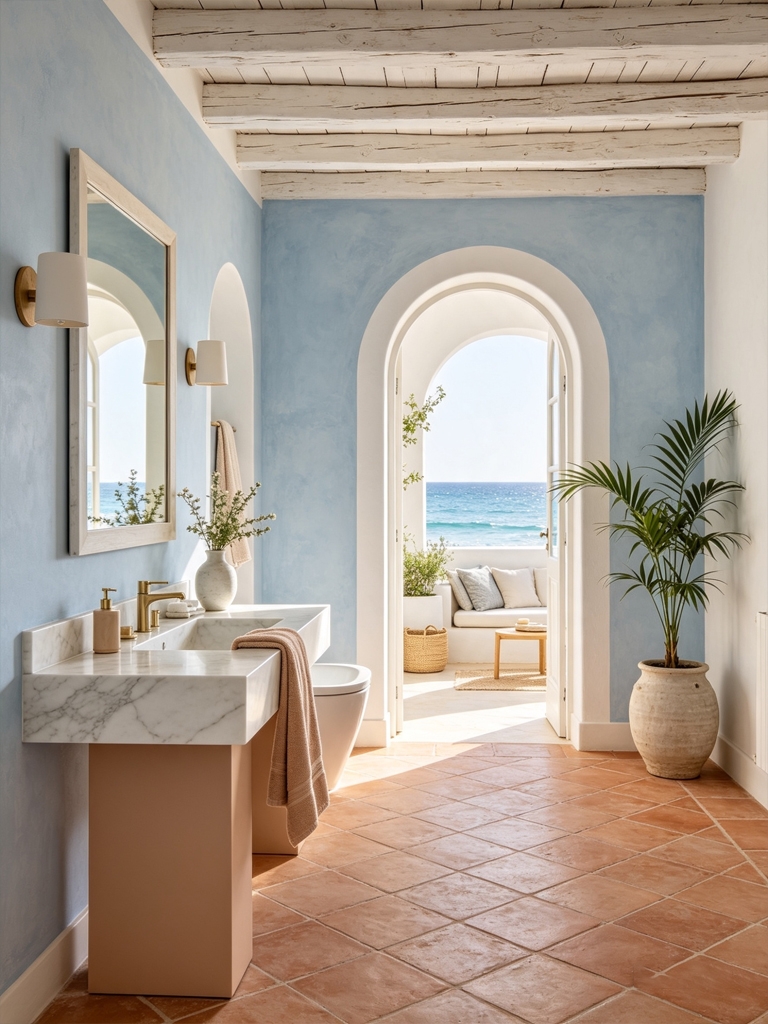
Best For: Primary bathrooms that want a genuine luxury-hotel feel.
Quick Overview: An open-leg console with a marble or quartz top, sink mounted on top. No cabinetry underneath, just clean legs and visible floor, which is exactly what makes it read as expensive.
Key Features: Solid marble, quartz, or engineered stone top, brass or matte-black legs, open shelf underneath for towels.
Pros: High-end look, easy to clean under, pairs beautifully with a floating mirror.
Cons: Zero enclosed storage, so plumbing and products are fully visible unless you style carefully.
Price Range: $500-$2,000. Shop it at Wayfair for the marble version or Crate & Barrel for a quartz alternative.
Why We Recommend It: This is the piece that makes people ask where you had the bathroom done.
Ladder Towel Rack
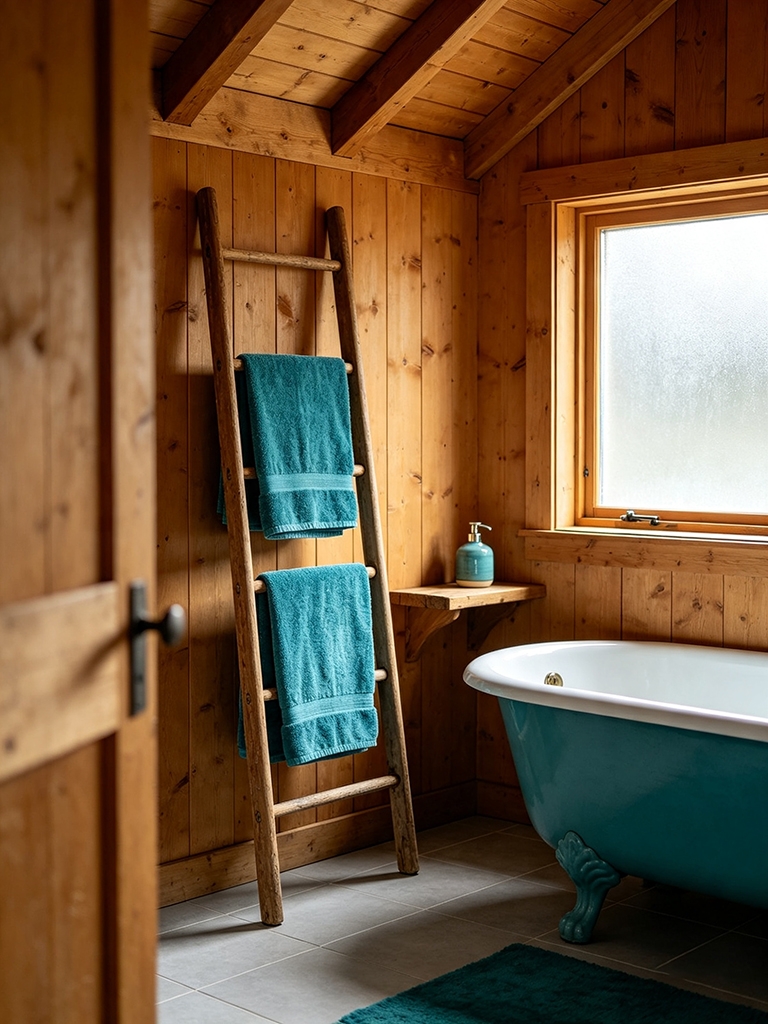
Best For: Any bathroom that needs a fast style upgrade without a real renovation.
Quick Overview: A leaning wooden or metal ladder that holds a few folded towels. Small, cheap, and it does more for the “styled” look than people expect from a $60 purchase.
Key Features: Freestanding, leans against the wall, holds 3-5 towels or a robe.
Pros: No installation, moves easily, works in nearly any style.
Cons: Not a full storage solution, purely for towels on display.
Price Range: $40-$150. Shop it at Amazon or Walmart.
Why We Recommend It: If your budget is under $100, start here.
Freestanding Mirror With A Shelf
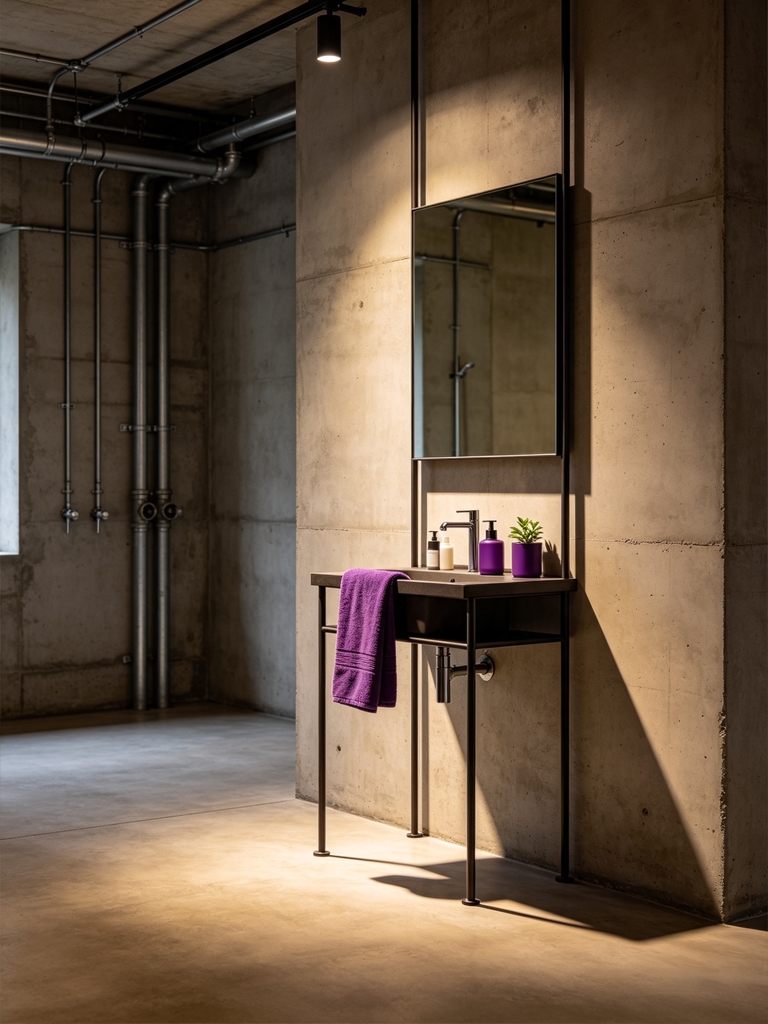
Best For: Rooms without vanity storage that still need a mirror.
Quick Overview: A full-length or vanity-height mirror with a small attached shelf gives you a place to set a candle or a stack of hand towels, without wall-mounting anything.
Key Features: Leaning or freestanding frame, integrated narrow shelf, wood, metal, or rattan trim.
Pros: No drilling required, adds light-bouncing reflectiveness to a small room, easy to relocate.
Cons: Small shelf capacity, can tip if bumped and not anchored.
Price Range: $80-$300. Shop it at Wayfair or Walmart.
Why We Recommend It: Great renter option when a medicine cabinet install isn’t allowed.
Pull-Out Under-Sink Storage System
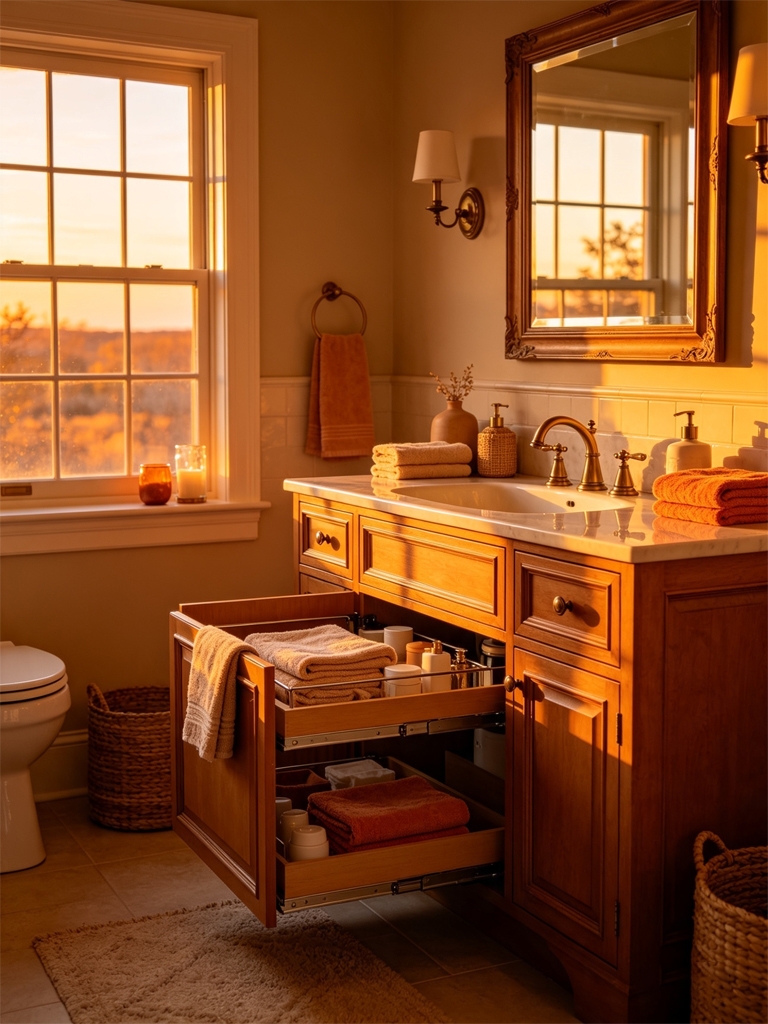
Best For: Fixing the dead, crawl-around-the-pipes space every vanity cabinet has.
Quick Overview: A sliding drawer or basket system built to work around plumbing under the sink. This is the cheapest fix on the entire list, and it might be the highest-value one.
Key Features: U-shaped or two-tier sliding baskets, fits around standard P-traps, adjustable width.
Pros: Turns wasted cabinet space into usable storage, inexpensive, no tools for most models.
Cons: Doesn’t fit every cabinet depth or pipe layout; worth measuring first.
Price Range: $30-$120. Shop it at Amazon or Walmart.
Why We Recommend It: Before buying anything else on this list, fix your under-sink cabinet. It’s the highest return for the lowest cost, by far.
Glass-Front Wall Cabinet
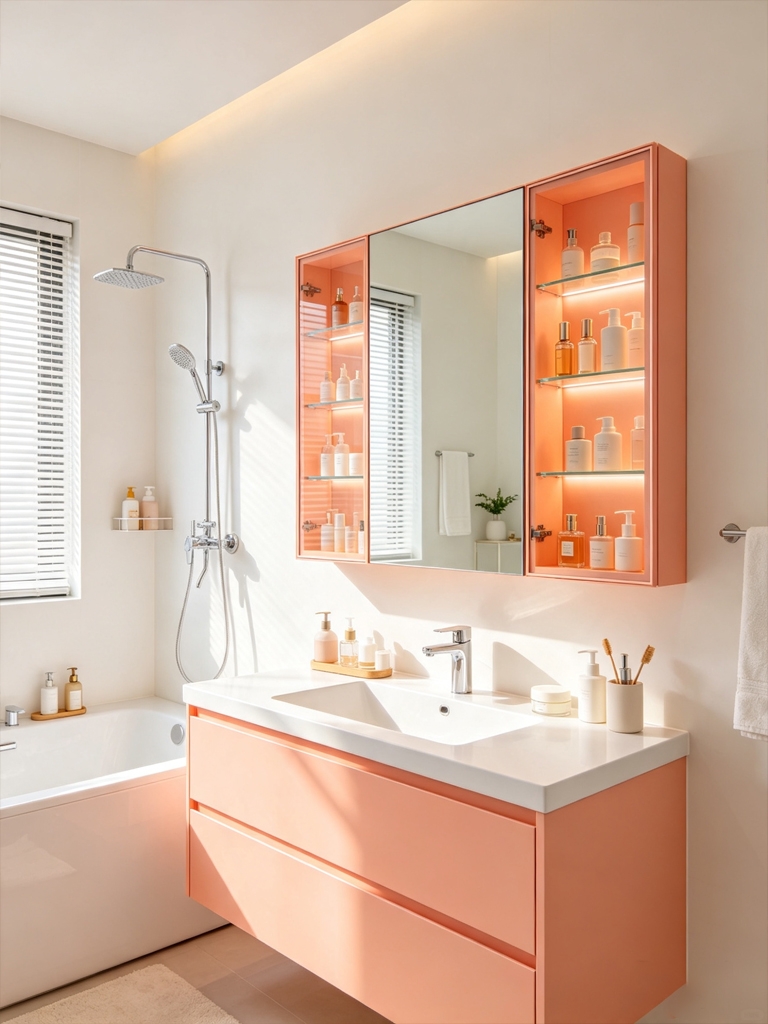
Best For: Displaying nice products instead of hiding everything.
Quick Overview: A wall-mounted cabinet with glass doors turns storage into display, which works well if what you’re storing actually looks good: glass bottles, folded white towels, a candle collection.
Key Features: Wall-mounted, glass or seeded-glass doors, adjustable interior shelves.
Pros: Adds visual interest, keeps items dust-free while visible, works well above a toilet or console.
Cons: Only flatters tidy, good-looking products; everything else needs to go elsewhere.
Price Range: $120-$400. Shop it at 2Modern or Wayfair for a more architectural frame.
Why We Recommend It: Skip this one if your bathroom products are a mismatched mess. It’ll only draw attention to that.
Comparison Table
| Piece | Materials | Assembly | Water Resistance | Price | Overall Value |
|---|---|---|---|---|---|
| Floating Vanity | Wood, MDF, quartz top | Professional install recommended | High (sealed) | $180-$900 | Very High |
| Linen Tower | Solid wood or MDF | DIY, 30-60 min | Medium | $150-$500 | High |
| Over-Toilet Etagere | Metal, bamboo | DIY, under 30 min | Medium | $60-$220 | Very High |
| Medicine Cabinet | Wood or metal frame, mirror | DIY or professional (recessed) | High | $100-$450 | Very High |
| Marble-Top Console | Marble/quartz, metal legs | Professional install | High | $500-$2,000 | High |
| Pull-Out Under-Sink | Metal or plastic baskets | DIY, under 15 min | Medium | $30-$120 | Very High |
Which Option Is Right For You?
Best Overall: Floating Vanity. It solves storage and visually enlarges the room at the same time, which nothing else on this list does in one move.
Best Budget: Pull-Out Under-Sink Storage System. Under $50 in most cases, and it fixes wasted space you already own.
Best Premium: Marble-Top Console Table. The closest thing to a hotel-bathroom feel you can buy off the shelf.
Best Small Space: Over-Toilet Étagère. No drilling, no wall space needed, and it works in nearly any layout.
Best Family Choice: Vanity With Integrated Hamper Drawer, because it solves an actual daily problem instead of just adding shelves.
Best Long-Term Investment: Recessed Niche Shelving, since it’s built into the wall and never needs replacing.
Bathroom Furniture Buying Guide
Size
Measure your available space carefully before ordering. Check door swings, toilet clearance, and walking paths, leaving at least 21 inches of clear floor space in front of the vanity or toilet for comfortable everyday use.
Materials
Choose moisture-resistant materials such as solid wood, sealed MDF, teak, bamboo, stainless steel, or powder-coated metal. Avoid unfinished particleboard or low-quality veneers, which can warp, swell, or peel in humid bathrooms.
Water Resistance
Look for furniture with sealed finishes and water-resistant construction, especially if it will sit near a sink, bathtub, or shower. Proper sealing helps prevent moisture damage, stains, and premature wear.
Storage Needs
Think about everything you need to store, including towels, toiletries, hair tools, cleaning supplies, and extra toilet paper. Selecting furniture that matches your storage needs keeps countertops organized and reduces visual clutter.
Budget
Expect to spend $150-$500 for quality entry-level bathroom furniture, while premium vanities with stone countertops or custom finishes typically range from $700-$2,500+. Investing more in your primary vanity usually delivers the greatest long-term value.
Assembly & Installation
Freestanding cabinets, shelves, and storage towers are generally simple DIY projects. Floating vanities and other wall-mounted pieces require secure installation into wall studs and are often best installed by a professional.
Warranty
Choose furniture backed by a manufacturer’s warranty whenever possible. A minimum one-year warranty on cabinetry is a good baseline, while premium countertops and hardware may include coverage lasting 5 to 10 years, providing additional peace of mind.
Common Mistakes
The biggest one I see, over and over, is buying storage before you’ve actually measured what needs storing. People fall in love with a five-tier linen tower at Target or Wayfair, bring it home, and within a month it’s either sitting half-empty (because they only own three sets of towels) or spilling over with rolled-up hand towels wedged into every gap.
Before you buy anything tall and shelved, pull everything out of your current bathroom storage and sort it into piles – towels, toiletries, cleaning supplies, extras. Measure the piles. That number, not the aesthetic of the piece, should decide what you buy.
The second mistake is choosing open shelving when you already know, deep down, you won’t style it consistently. Open shelves look incredible in photos because someone folded those towels five minutes before the shutter clicked. In real life, open shelving is a commitment, not a shortcut.
It means every towel gets folded the same way, every bottle gets decanted into a matching container, and every week you’re the one keeping it tidy. If that’s not you – and there’s no shame in that – a cabinet with doors will make your life easier, and your bathroom look calmer, even on a bad week.
The third mistake, and one that costs people real money, is skipping the water-resistance check on a piece that looks pretty in the showroom. A vanity or console that photographs beautifully can still be regular particleboard underneath a thin veneer, and particleboard in a humid bathroom swells and delaminates far faster than most people expect – sometimes within a single season.
Before you buy, ask directly whether the piece is rated for bathroom or high-moisture use, or look for solid wood, plywood, or moisture-resistant MDF in the specs. It’s a five-second question that can save you from having to replace a $300 vanity a year from now.
Expert Tips
My first rule for small bathrooms: buy furniture one size smaller than feels necessary. It sounds counterintuitive, especially when you’re standing in a showroom next to a vanity that seems “just right.” Still, a too-large vanity or storage cabinet is the fastest way to make a small bathroom feel like a narrow hallway instead of a room.
Measure your space, pick the size that feels correct, then go down one size. You’ll thank yourself the first time you’re getting ready with someone else in the room.
Second, if you live somewhere humid, keep a small bag of anti-tarnish strips or silica gel packets tucked into your enclosed cabinets. It’s a tiny habit that protects metal hardware – hinges, faucet fixtures, jewelry if you store any in there – from tarnishing, and it also helps keep wood drawers from swelling and sticking shut, which is one of the most annoying small problems a humid climate can create.
Third, rotate what’s on your open shelves seasonally instead of setting it once and forgetting it. In winter, bring in heavier textures and darker towels – think waffle-weave in charcoal or deep green. In summer, swap to lighter linen and pale, breathable towels in white or sand.
This isn’t just decorative fussiness; it keeps a styled shelf from going stale and gives you a built-in reason to actually look at and refresh the space twice a year, rather than letting it collect dust and clutter indefinitely.
Care & Maintenance
Wood and MDF pieces need to be wiped dry immediately after any splash. This is the detail people miss most often: it’s not ambient humidity that warps wood furniture; it’s standing water left to sit on a surface.
A puddle from a wet hand or a dripping toothbrush cup left overnight does more damage than months of a steamy shower ever will. Keep a small towel nearby specifically for this job, and get in the habit of a quick wipe-down before bed.
If you have a wood vanity or console in a high-use bathroom, plan to reseal it every 12 to 18 months. Sealant wears down with repeated exposure to moisture and cleaning products, and once it’s gone, the wood underneath is vulnerable. Mark it on a calendar if you need to – it’s an easy step to forget until you notice the finish looking dull or feeling rough.
For marble and quartz countertops, reach for a pH-neutral cleaner made for stone, not vinegar and definitely not bleach. Both are common go-tos for a “deep clean,” but both are acidic or harsh enough to etch natural and engineered stone over time, leaving dull, cloudy patches that don’t buff out. A dedicated stone cleaner costs a few dollars more and protects a surface that’s expensive to replace.
Finally, if you have a floating vanity, check the wall-mount brackets once a year. Even a small amount of drywall settling – which happens in most homes gradually – can loosen the mount over time, and a floating vanity that shifts or sags is both a safety issue and a hard one to fix after the fact. An annual check with a wrench takes five minutes and prevents a much bigger repair later.
Frequently Asked Questions
What furniture makes a small bathroom look bigger?
A floating vanity is one of the best choices. Exposing more floor space, it creates the illusion of a larger room while offering the same storage as many traditional vanities.
How much should I budget for bathroom furniture?
Most quality bathroom furniture falls between $150 and $500 for entry-level pieces like storage cabinets or vanities. Premium materials, custom finishes, and stone countertops typically range from $700 to $2,500 or more.
What’s the best storage solution for a bathroom without a closet?
A tall linen tower is usually the most effective option. It maximizes vertical space, stores towels and toiletries in one place, and fits into narrow corners without requiring major renovations.
Are floating vanities worth it?
Yes. Besides making bathrooms appear larger, floating vanities simplify floor cleaning and provide a modern, streamlined look. They do require secure wall mounting, so professional installation is often recommended.
What’s the cheapest way to add bathroom storage?
Start with under-sink organizers, over-the-toilet shelving, or slim rolling carts. Most cost under $50 and make use of unused space without the expense of replacing your existing bathroom furniture.
Final Recommendation
Best Overall: Floating Vanity, for the combined storage and space-opening effect.
Best Value: Pull-Out Under-Sink Storage System, for the lowest cost per problem solved.
Best Premium: Marble-Top Console Table, for the closest match to a genuine luxury-hotel feel.
Best For Beginners: Over-Toilet Etagere, since it needs no tools and no wall damage.
Best Long-Term: Recessed Niche Shelving, built into the wall for good.
Conclusion
The right bathroom furniture does far more than organize toiletries. It determines how spacious your bathroom feels, how easily your daily routine flows, and whether the room looks thoughtfully designed or constantly cluttered.
Whether you’re working with a compact powder room or a spacious primary bath, prioritize pieces that maximize storage without overwhelming the space. Floating vanities, slim linen towers, multifunctional cabinets, and well-chosen shelving can transform even the smallest bathroom into one that feels polished, practical, and surprisingly luxurious.
Choose quality over quantity, measure carefully before buying, and invest in furniture that’s built to withstand humidity. A few smart upgrades today can make your bathroom more functional, easier to maintain, and more enjoyable for years to come.




Add comment