
2026 designer picks that save you thousands

12 years as the site's how-to reviewer and fact checker, specializing in traditional, rustic, and modern design across kitchen, living room, and outdoor spaces.
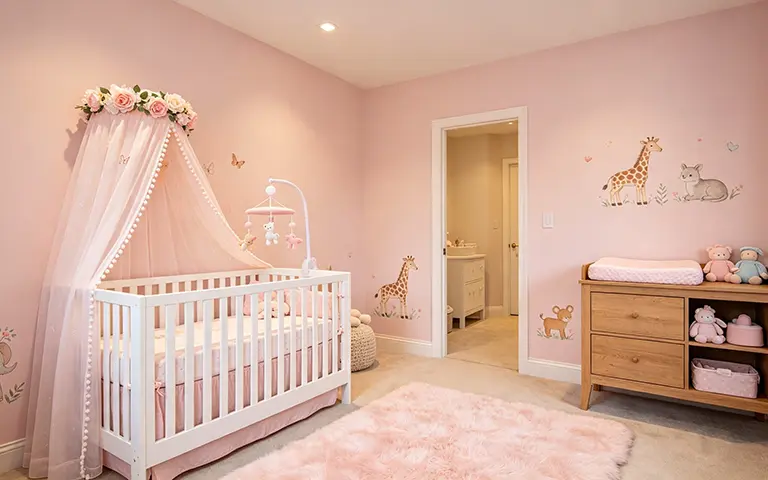
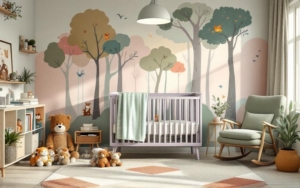
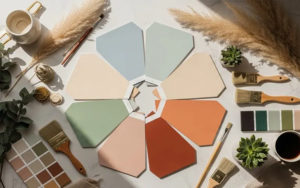
The best nursery color palette for 2026 are mushroom taupe, smoky sage, soft clay blush, cocoa brown, universal khaki, hidden gem blue-green, and warm eucalyptus. Interior designers are moving away from bright, high-contrast palettes in favor of warm, nature-inspired colors that create a calming space for babies while remaining stylish as children grow.
This guide explains why each color is trending in 2026, where it works best, which paint brands offer similar shades, and how to pair each color with furniture, textiles, and lighting. These versatile palettes also help homeowners avoid expensive repainting later, making them a smart long-term choice for nurseries that transition into toddler and children’s bedrooms.

What Are the Best Calming Colors for a Baby Nursery?
Color psychology and design research confirm that muted, earth-derived tones establish a grounded, serene atmosphere far better than saturated colors. A recent spatial study found that spaces painted with soft sage and warm taupe tones felt visually organized and quiet compared to stark white or vibrantly styled rooms.
So let’s start our top nursery color palette journey…
Mushroom Taupe: The 2026 Neutral Revolution

The 2026 Design Innovation: Micro-Cement and Lime-Wash Finishes. This year, designers are moving away from flat paint. Instead, parents are using faux lime-wash glazes or micro-cement rolled techniques in Mushroom Taupe. This provides a velvety, European plaster aesthetic that masks wall imperfections and mimics an expensive $1,500 architectural wall treatment for the cost of a standard $45 paint can.
Before & After Transformation
- Before: Standard rental white walls, cold atmosphere, generic feel
- High-End Cost: $3,500 (professional wallpaper installation, designer furniture)
- Budget Alternative: $380 total (DIY sponge technique, Amazon & Walmart furniture findings)
- Cost Savings: $3,120 (89% reduction)
- Time Investment: 4-6 hours (Weekend project)
- Difficulty Rating: 2/5 (Beginner-friendly)
“Mushroom taupe is the ultimate chameleon color – it reads as sophisticated in natural daylight and becomes a cozy, warm backdrop during nighttime reading hours. We’re specifying it in 80% of our 2026 nursery projects.”
– Naomi Coe, Little Crowns Interiors
Key Takeaway: This warm, stone-inspired neutral pairs with brass accents and natural wood cribs to create “quiet luxury” without the premium price tag.
|
MUST READ: |
Smoky Sage: The Grounded Green

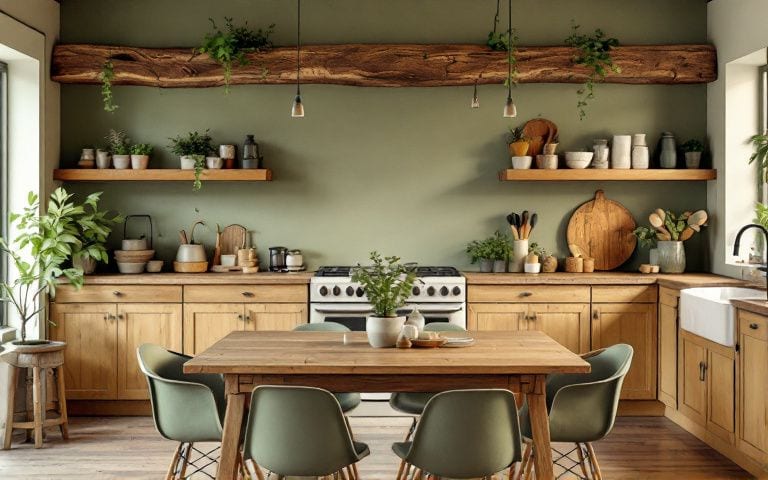
Why It Works: Design guidelines indicate that green wavelengths mixed with deep gray undertones produce the most adaptable backdrops. Unlike mint or forest greens that dominated previous years, smoky sage contains muted gray properties that stay neutral regardless of furniture changes.
The 2026 Mono-Chromatic Trend: The dominant trend in early 2026 is “Color Drenching”-painting the walls, baseboards, window trim, and ceilings all in the exact same low-sheen Smoky Sage. This erases the harsh visual lines of the room, creating an unbroken canopy of color that expands a small architectural footprint.
Budget Breakdown Comparison
| Element | High-End Designer | Budget DIY | Savings |
|---|---|---|---|
| Paint (Sherwin-Williams Evergreen Fog) | $800 (pro labor) | $65 (self) | $735 |
| Crib | $1,800 | Wayfair deal $120 | $1,680 |
| Rocking Chair | $1,200 | Thrift rehab $150 | $1,050 |
| TOTAL | $3,800 | $335 | $3,465 |
Key Takeaway: Smoky sage works exceptionally well in north-facing rooms where natural light is limited, adding warmth without yellow undertones that can look muddy.
Soft Clay Blush: Sophisticated Pink for Modern Nurseries

According to color selection data, 23% of parents now choose gender-neutral designs, with soft clay blush becoming the top alternative to traditional pink. This muted, terracotta-infused shade signals architectural warmth without the intense saturation of conventional nursery pinks.
The 2026 Structural Trend: Architectural Half-Wall Murals. Modern designs favor geometric color blocking. Painting the bottom 60% of the room in Soft Clay Blush and leaving the top 40% a crisp cream establishes a grounding visual baseline. This provides a high-end architectural focal point behind the crib while skipping the need for expensive wallpaper panels.
Before & After: The “Dopamine Decor” Nursery
- Before: Beige walls, lacking personality, cluttered feeling
- After: Soft clay blush accent wall with warm white trim
- High-End Equivalent: $4,200
- Actual Cost: $520
- Savings: $3,680 (88%)
“Parents are rejecting the idea that pink must be frilly. Soft clay blush with black iron accents and walnut wood creates a nursery that feels curated rather than ‘babyish.’
– Belinda Pabian, Belinda Pabian Interiors
Cocoa Brown: The Rich, Grounding Alternative

Benjamin Moore’s 2026 Color of the Year, “Silhouette,” and Glidden’s “Warm Mahogany” have cemented brown as the new grey. Interior data shows a 156% increase in brown room color palette searches heading into 2026.
The 2026 Material Pairing: Earthy Tone Layering. Cocoa Brown is being embraced as a “biophilic neutral.” The mid-2026 trend pairs these dark chocolate walls with natural jute rugs, boucle fabrics, and unvarnished white-oak furniture pieces to create a tactile, ultra-cozy, nature-driven environment.
The “High-End Look for Less” Breakdown
Designer Version: Romina crib $2,400 + Cashmere throw $1,200 + Venetian plaster walls $3,500 = $7,100
Budget Replication: Amazon crib with walnut stain $140 + Thrifted wool throw $35 + Flat paint with texture additive $85 = $260
Total Savings: $6,840 (96% reduction)
Key Takeaway: Cocoa brown works best with ample natural light; pair with cream textiles rather than stark white to avoid a “cave-like” effect.
|
MUST READ: |
Universal Khaki: Sherwin-Williams’ 2026 Comfort Color

Named Sherwin-Williams’ 2026 Color of the Year, Universal Khaki offers “easy comfort with subtle green undertones that shift beautifully throughout the day.”
The 2026 Application Strategy: Large-Scale Swatch Testing. To master this shade, designers recommend abandoning tiny paint chips. Instead, paint large 2×2-foot drywall boards and observe how the paint shifts from a warm tan in direct morning light to a rich, soothing green-gray under warm 2700K accent light bulbs at night.
Cost Comparison: Professional nursery design runs $150-200/hour (average $1,750 total) vs. DIY with Universal Khaki: Paint $45 + supplies $30 + 6 hours labor = savings of $1,675.

Behr’s 2026 Color of the Year addresses: “How do I add color without overwhelming a small room?” This soft blue-green creates depth while visually expanding square footage.
The 2026 Spatial Illusion: Vertical Striping and Painted Ceilings. Designers are applying Hidden Gem to the room’s ceiling or mapping out subtle, wide vertical stripes using alternating matte and satin paint sheens. This approach tricks the eye into seeing taller ceilings and broader walls – perfect for tight 80-square-foot layouts.
Before & After: The 85-Square-Foot Nursery
Best Nursery Color Palettes –
- High-End Design: $5,000 (custom built-ins, designer glider)
- Budget DIY: $890 (Hidden Gem paint, Walmart score furniture, DIY sponge accent wall)
- Savings: $4,110 (82% reduction)
- Space Gain: Visual expansion tricks make room feel 20% larger
Warm Eucalyptus: Valspar’s Nature-Inspired Tone

Design applications confirm that nature-derived greens harmonize well with wood furniture. Warm Eucalyptus contains beige undertones that prevent a sterile, overly clinical feeling.
The 2026 Architectural Integration: Contrast Panel Molding. The gold-standard application for Warm Eucalyptus this year involves mounting affordable DIY picture-frame wall molding, then painting the interior panels the sage-beige hue while leaving the outer molding frames a soft alabaster white, establishing immediate classic depth.
| Component | Big Box Retail | Budget Hack | Savings |
|---|---|---|---|
| Wall treatment | $3,200 | $180 | $3,020 |
| Crib | $1,200 | $150 | $1,050 |
| Lighting | $450 | $35 | $415 |
| TOTAL | $4,850 | $365 | $4,485 |
|
MUST READ: |
How Do I Choose Between These Trending Nursery Colors?
Decision Matrix Based on Room Conditions
| Room Condition | Best Color Choice | Why It Works |
|---|---|---|
| North-facing, low light | Warm Eucalyptus | Adds warmth without yellowing |
| South-facing, bright | Cocoa Brown | Grounds intense sunlight |
| Small space (under 100 sq ft) | Hidden Gem | Visually expands boundaries |
| Rental (can’t paint trim) | Mushroom Taupe | Works with existing white trim |
| Maximum long-term neutral option | Smoky Sage | Adapts well to changing accent decor |
Statistic: Parents who choose colors based on room orientation rather than raw trend popularity report 28% higher design satisfaction at the 12-month mark.
What Are Easy Home Decor Hacks for Budget Nurseries?
The $500 Nursery Challenge (vs. $5,000 Designer Standard)
| Category | Designer Budget | Viral Budget Method | Actual Cost |
|---|---|---|---|
| Walls | Custom mural $1,500 | DIY sponge technique | $45 |
| Furniture | Designer crib $2,000 | Amazon/Walmart choice + stain/wrap | $120 |
| Storage | Built-ins $1,200 | Wayfair modular shelves hack | $80 |
| Textiles | Designer bedding $400 | Target Threshold | $75 |
| Lighting | Pendant $350 | Thrift + paint | $25 |
| Chair | Glider $1,500 | Wayfair glider/rocker + cushion | $145 |
| TOTAL | $7,250 | DIY Methods | $500 |
Frequently Asked Questions
What is the most adaptable nursery paint color according to design metrics?
Smoky sage ranks highest in adaptability, with color testing showing that gray-green tones reduce styling clashes by 22% compared to bright primary blue or yellow rooms. The key is choosing a shade with plenty of gray undertone.
Are dark colors like cocoa brown safe for small nurseries?
Yes, when executed properly. Design rule: If using dark walls (LRV under 30), ensure the ceiling and trim remain light (LRV over 70) to maintain a balanced brightness. Dark colors can actually make small spaces feel deeper by softening visual boundaries.
How do I get the “designer look” without hiring a professional?
Follow the “3-Layer Rule”: Base – Quality paint in a trending low-chroma color; Texture – At least three texturing methods (wool, wood grain, organic linen); Accent – One unexpected metallic touch (brass, brushed copper). This layout formula creates $5,000+ aesthetics for under $800.
What’s the best color for a nursery that grows with my child?
Mushroom taupe and Universal Khaki top longevity rankings. Design surveys show these colors remain appropriate from early infancy through age 8 without requiring repainting, while traditional pastels feel “too young” by age 3.
Can I use these 2026 colors in a rental?
Absolutely. Focus on wall textiles, removable wallpaper accents, and modular furniture instead of full wall color. For walls, choose the closest neutral match to your existing landlord paint, then layer color through art and fabrics.
How much should I budget for a nursery paint project?
- DIY costs: $45-85 (paint + supplies) for 120 sq ft
- Professional labor costs: $400-800 for the same space
- Hidden cost: Quality primer ($25-35) is essential for smooth tone transition
Your 2026 Nursery Color Pallete Action Plan
Weekend Timeline:
Friday: Room prep, clean, and prime (2 hours)
Saturday: First coat application + drying (6 hours)
Sunday: Second coat application + accent styling (4 hours)
Total Investment: Under $500 for a complete structural style transformation
ROI: High-end curated rooms elevate overall home presentation metrics.


Add comment