

Start small, make it yours

20 years of experience as a home decor consultant, specializing in furniture selection, space-conscious layouts, and practical interior solutions.
DIY budget home decor hacks for beginners work best when you start small: a painted thrifted dresser, a gallery wall of old frames, new hardware, and a handmade vase or two. You do not need tools, experience, or a big budget. These eleven projects are ordered by the difference they make, so pick one and finish it in an afternoon.
|
MUST READ: |
Give a Thrifted Find a Chalk-Paint Makeover
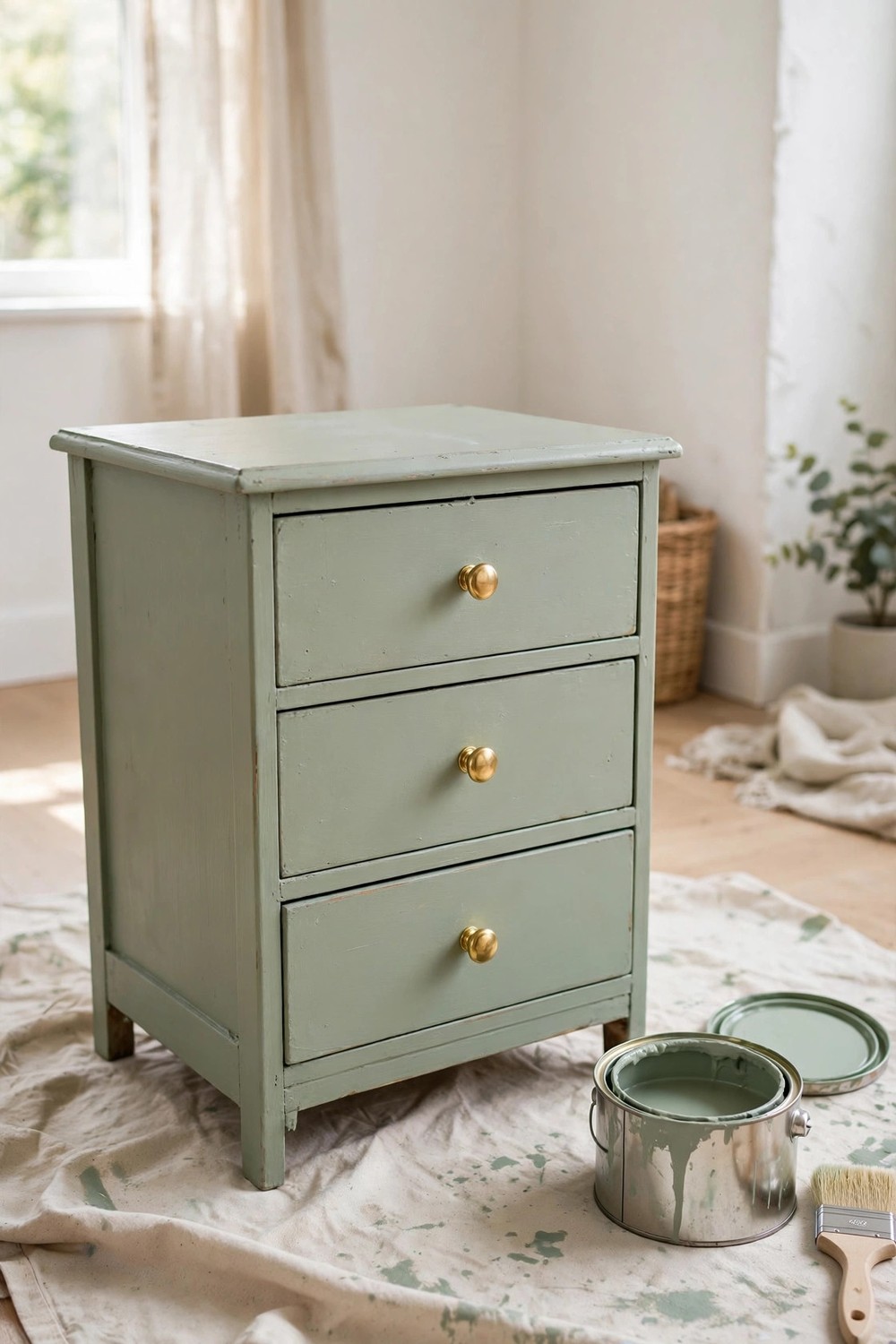
A tired dresser or side table from a charity shop is the best place to start, because the piece already has good bones and the only thing wrong with it is the finish. One tin of chalk paint, a brush, and a free afternoon can turn it into the piece the room was missing.
I like chalk paint for a first project because it forgives a lot. It sticks without heavy sanding, dries fast, and a matte finish hides the small bumps beginners worry about. Pick a soft colour, sage, warm cream, or dusty blue, and keep the rest of the room quiet so the piece stands out. A tin of chalk paint covers a small dresser easily, and these affordable home decor projects are the ones that teach you the most for the least money.
Swap the knobs while you are at it. New hardware is the cheapest part of the makeover and the detail your eye notices first. Two coats, a wax or clear top coat, and the dresser looks like a deliberate choice instead of a rescue job.
Build a Gallery Wall From Thrifted Frames
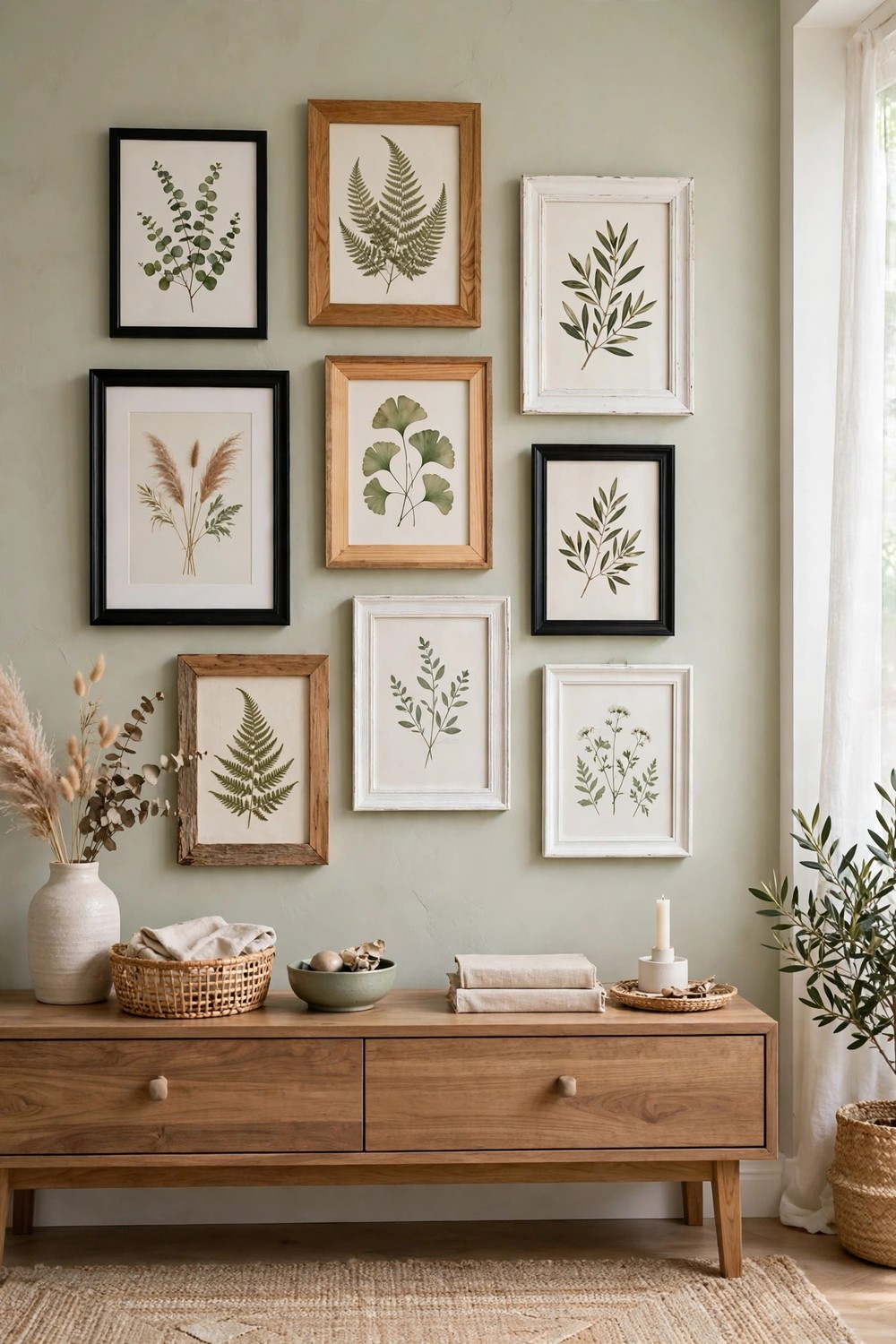
A blank wall makes a room feel rented, even when you own the place. A gallery wall fixes it with frames you probably already have, plus a few cheap ones to fill the gaps. Mix sizes, keep the spacing even, and the wall looks collected rather than random.
I like laying the frames on the floor first and moving them around until the shape feels right. Start with the biggest frame slightly off centre, then build outward. A picture frame set in matching black or natural wood keeps the mix calm, and you can fill the frames with prints, photos, or pages from an old book. These easy DIY home decorating projects take an afternoon and a picture hook or two per frame.
Step back after every third frame, because the wall tells you when the balance is off. Leave a little breathing room between frames, and keep the centre of the whole arrangement at eye level.
Spray-Paint Tired Hardware a New Brass
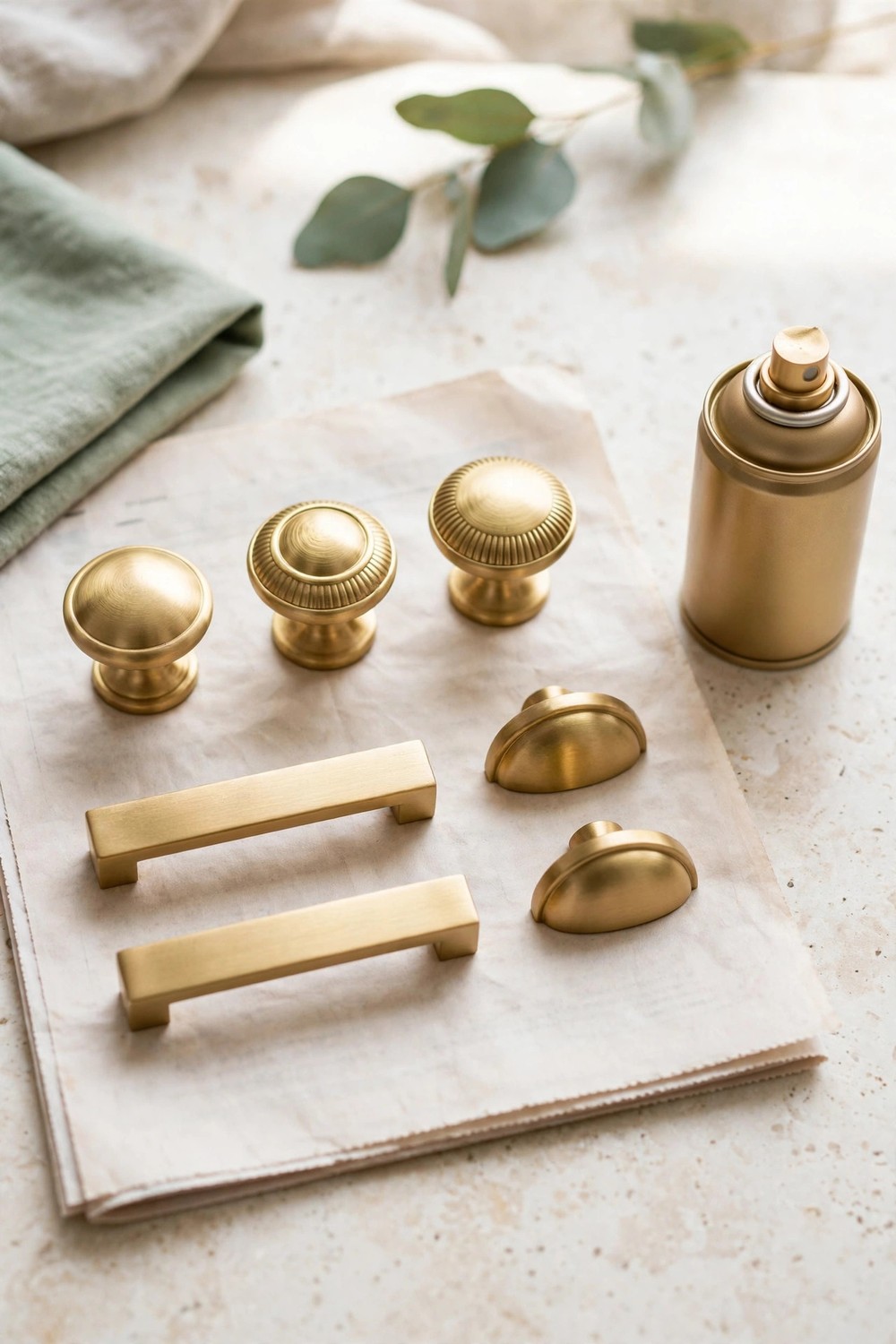
Of all the DIY budget home decor hacks for beginners, spray-painting old hardware is the one with the biggest payoff for the smallest effort. Dated chrome knobs, a dull lamp base, or a plain mirror frame can all go from tired to brass in one afternoon, for the price of a single can.
The trick is the prep, which takes ten minutes and saves the whole job. Wash the pieces, give them a light scuff with fine sandpaper, and spray in thin coats from about twenty centimetres away. Two or three light coats beat one heavy one, which drips. A can of metallic gold spray paint covers a whole kitchen’s worth of knobs, and the finish looks far more expensive than the effort suggests.
These simple budget decorating hacks work because the metal finish is what your eye reads first. Keep every handle the same finish, and if the screw holes do not match, knobs are the safer choice, since they only need one hole each.
|
MUST READ: |
Make No-Sew Cushion Covers in an Afternoon
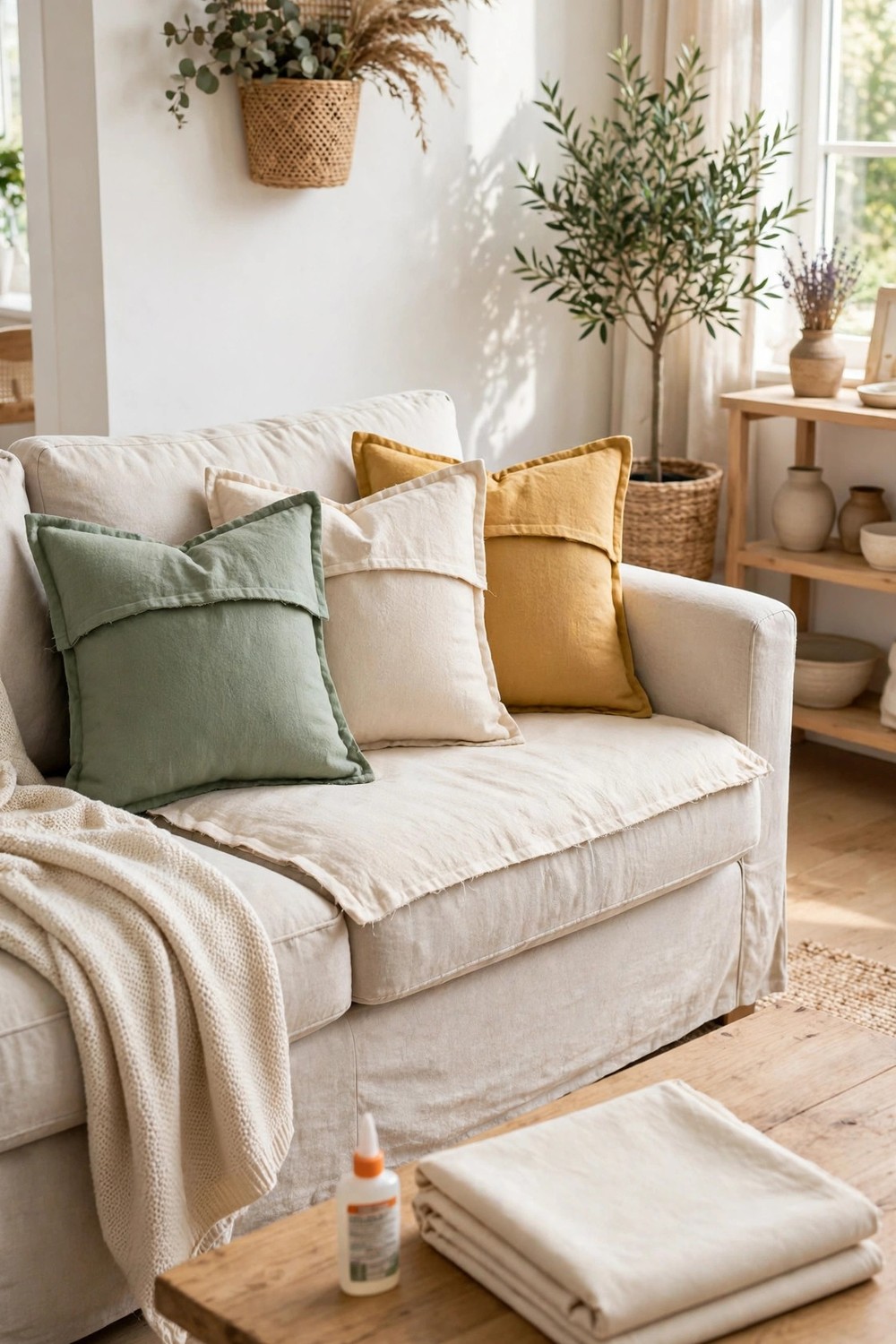
If your sofa looks tired, look at the cushions first. Flat, faded covers make the whole seating area feel worn out, even when the sofa itself is fine. New covers in a fresh colour or a soft texture change the first thing your eye lands on when you walk in, and you do not need a sewing machine to make them.
No-sew covers use fabric glue or iron-on hem tape instead of stitching. Wrap the fabric around the cushion, fold the edges like a parcel, and press the hems flat. I like mixing one solid colour with one pattern and keeping the sizes different so it looks collected rather than matched. A bottle of fabric glue and a metre of cotton canvas is all the kit you need, and these inexpensive home decor crafts are genuinely hard to get wrong.
Here is the part people overlook: the inserts matter as much as the covers. A fuller insert makes a cheap cover sit like a good one, so if your old cushions feel flat, replace the insides and keep the covers you like.
Put Up a Peel-and-Stick Accent Wall
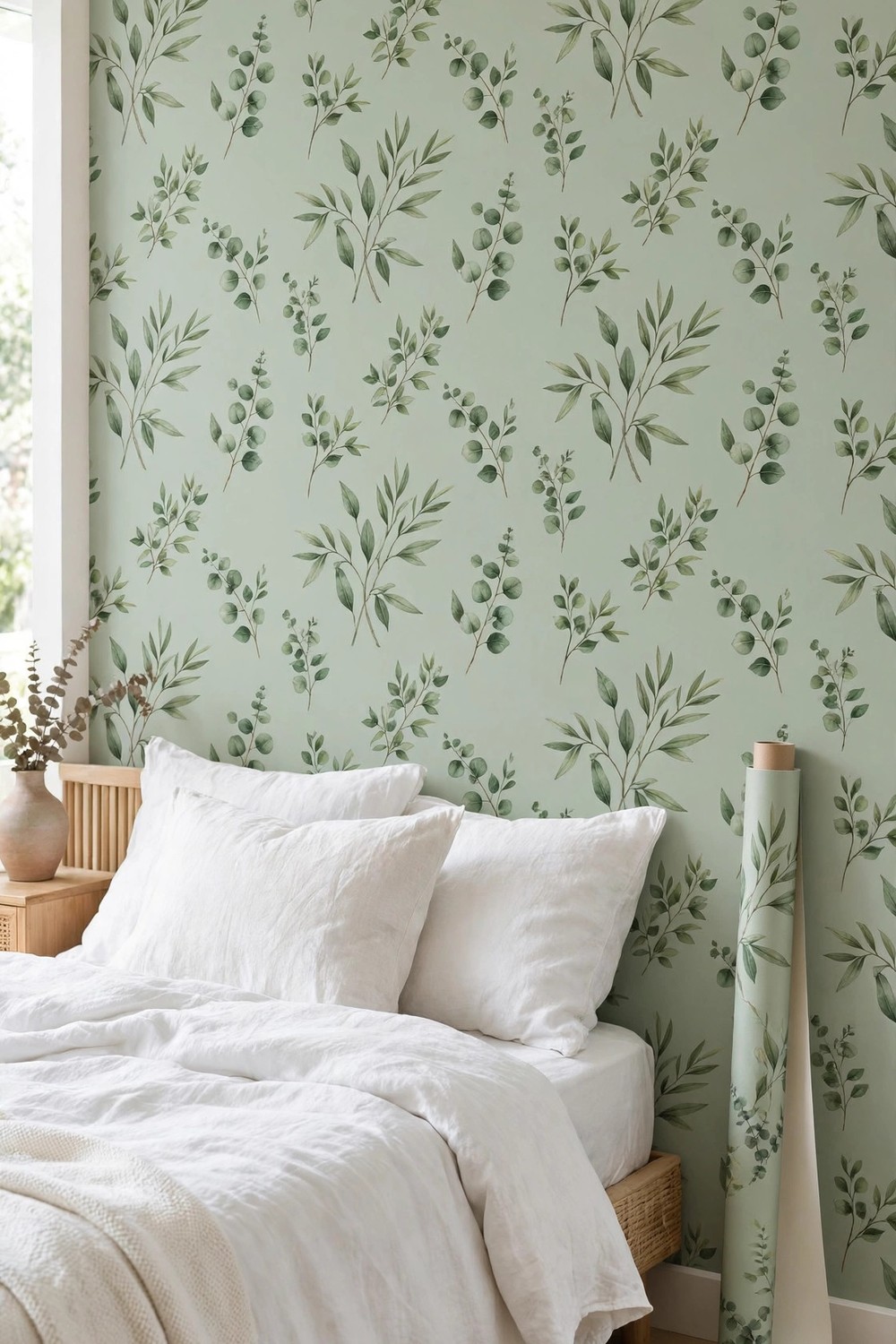
One patterned wall behind the bed or the sofa gives the whole room a focal point, and peel-and-stick paper makes it a beginner job. It goes up without paste, peels off cleanly when you move, and forgives a wobbly first attempt.
I would keep the pattern calm and let one wall do the talking. A soft botanical print or a quiet stripe works in most rooms, while a loud pattern can fight with everything else in the space. These creative DIY room makeover ideas look far harder than they are, which is exactly the point. A roll of peel-and-stick wallpaper covers a small accent wall for less than a dinner out, and the whole job fits into a Saturday morning.
Measure the wall first and order one extra roll, because matching the pattern eats more paper than you expect. Start at the top, smooth downward with a dry cloth, and peel back and re-stick if a bubble appears. It really is that forgiving.
Turn Jars and Bottles Into Vases and Candle Holders
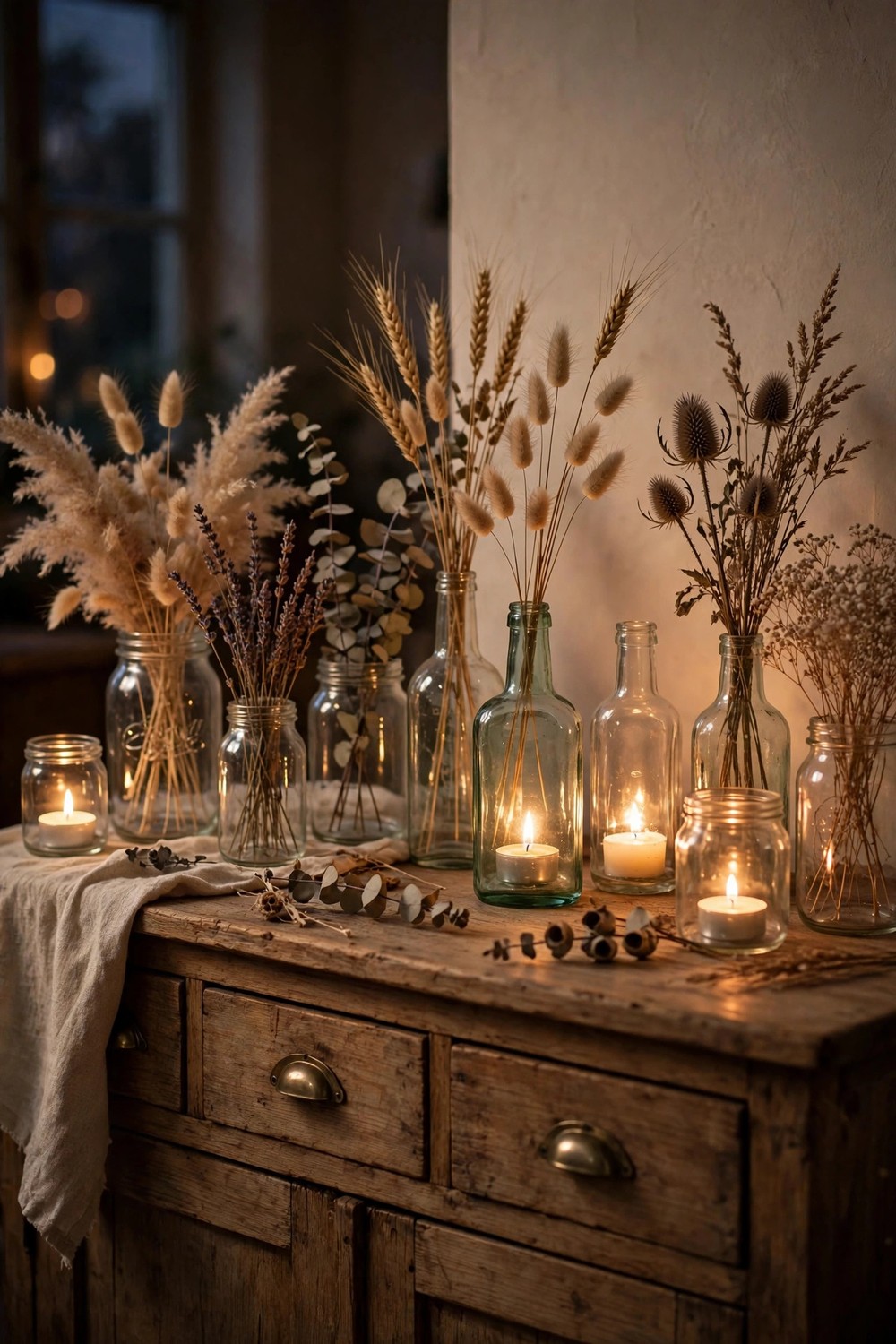
The cheapest vases in the house are already in your cupboard. Old jam jars, sauce jars, and wine bottles make lovely vases and candle holders once the labels soak off, and DIY budget home decor hacks for beginners rarely get simpler than this one.
I like three jars in different heights grouped tightly on a sideboard or a shelf, in one colour family of glass. Clear glass suits every room, while green or amber glass adds a little warmth. A set of mason jars with lids gives you the same shape in a clean, even size, and these homemade decorative accessories cost almost nothing when the jars come from the kitchen.
Leave two of the jars empty and put dried stems in the third, with a tea light in a smaller jar beside them. A jar that is always full of the same faux flowers starts to look like a prop, while an empty jar reads as an object in its own right.
|
MUST READ: |
Hang a Floating Shelf From a Plank and Brackets
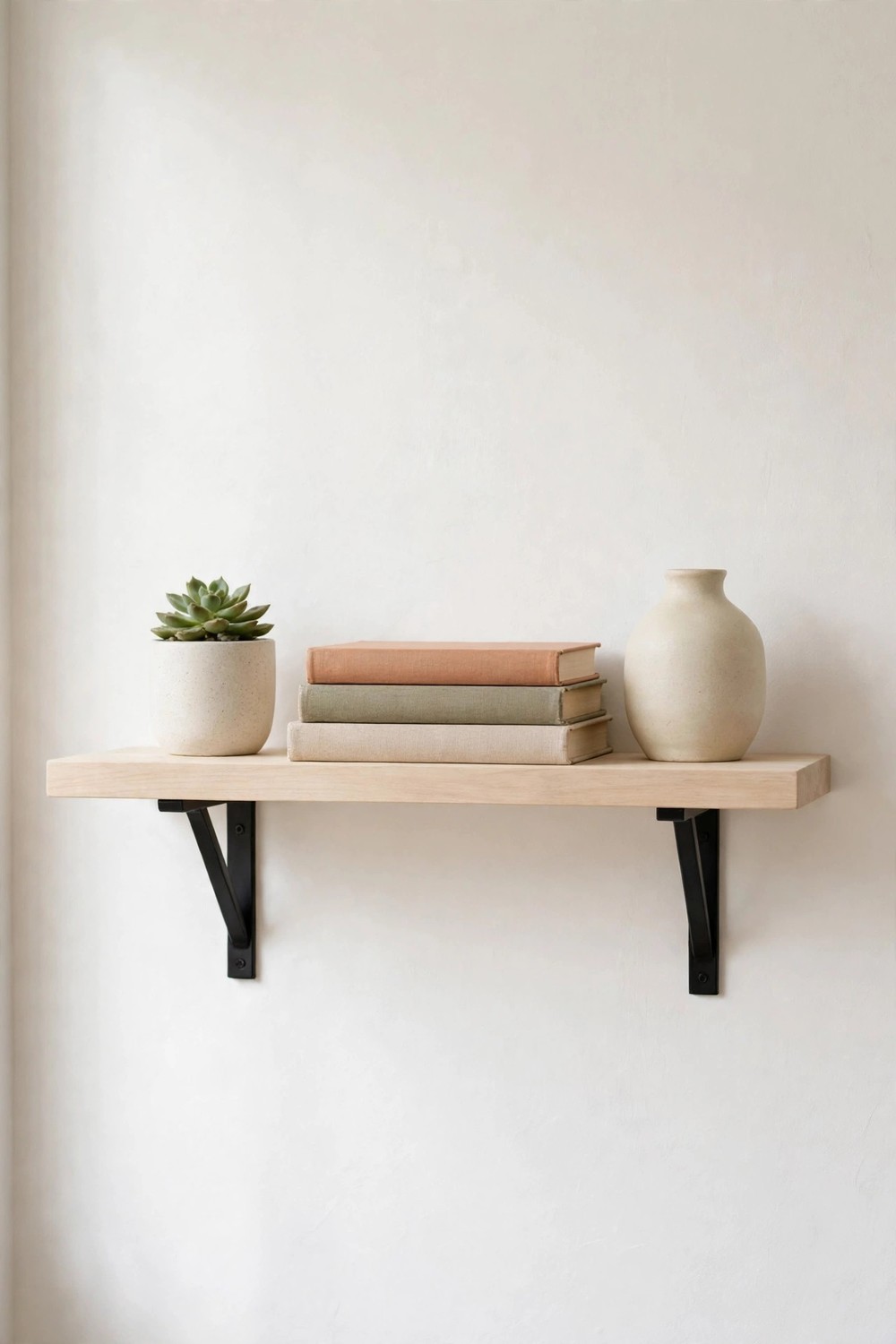
A bare stretch of wall above a desk or beside the bed is wasted space, and a floating shelf fixes it with one plank and two brackets. It holds books, a plant, and a vase, and it makes the wall look finished instead of forgotten.
This is the project that turns a beginner into someone who owns a drill. Mark the bracket holes with a spirit level, check for pipes and wires first, and use proper wall plugs for the wall you have. A pair of floating shelf brackets and a cut-to-size plank from the hardware store cost very little, and beginner DIY interior design starts with exactly this kind of small, useful win.
Keep the shelf styling light. A plant, two books, and one small object is enough, because a crowded shelf looks like storage and an empty one looks like a mistake.
Knot a Simple Macramé Wall Hanging
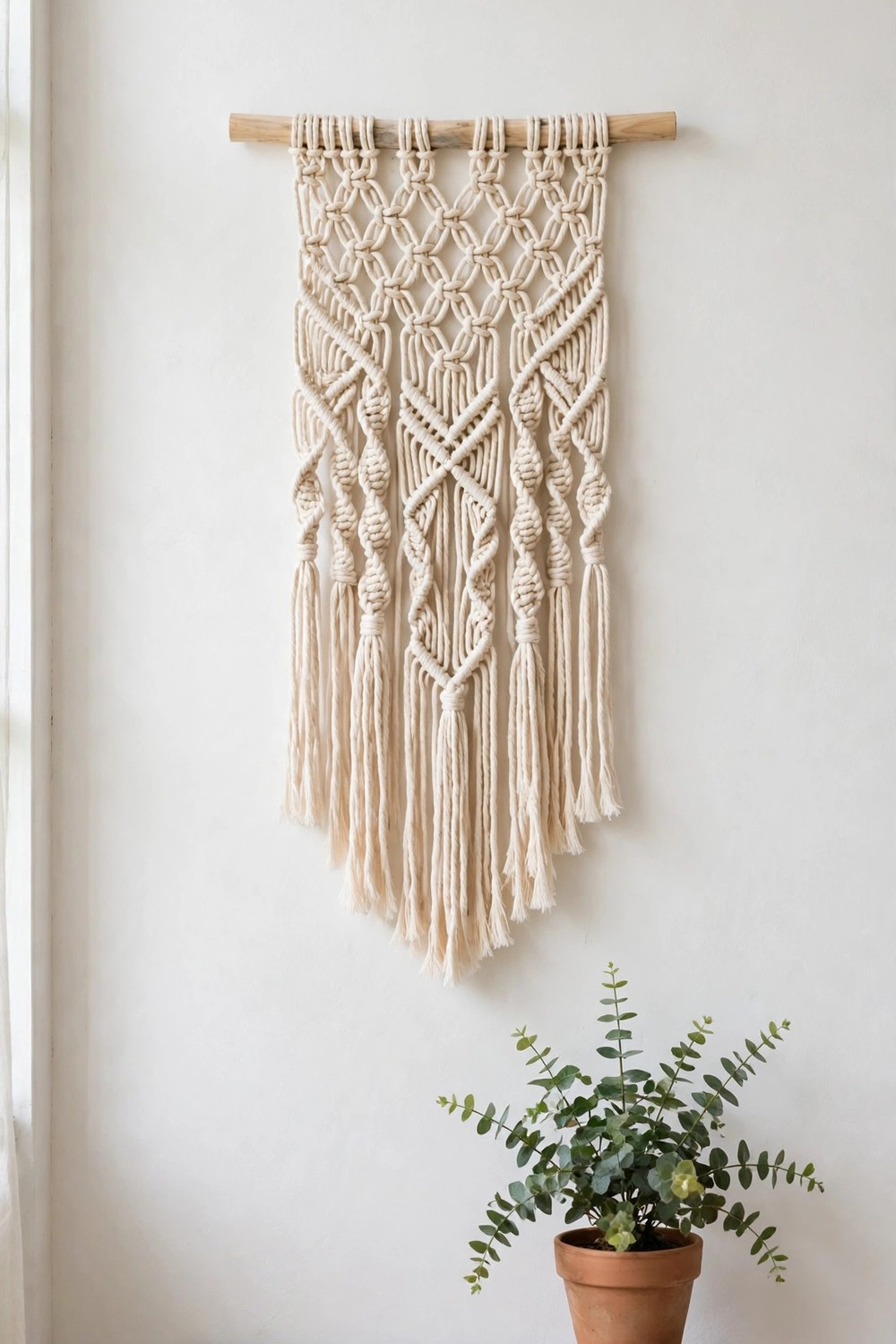
A macramé wall hanging softens a plain wall in a way no picture can, because the texture catches the light and the fringe moves slightly with the air. It looks like a craft fair find, but the knots are simple ones you can learn in an evening.
Start with a wooden dowel, some cotton cord, and two knots: the lark’s head to attach the cord and the square knot for the body. That is genuinely all you need for a first piece. A spool of macrame cord in natural cream costs very little, and these low-cost home decorating projects are the relaxing kind, best done with a cup of tea and a video tutorial open.
Hang it where the light hits it, above a bench or beside a bed, and keep the rest of the wall bare. One textile piece per wall is plenty, two starts to look like a market stall.
Refresh a Tired Lampshade
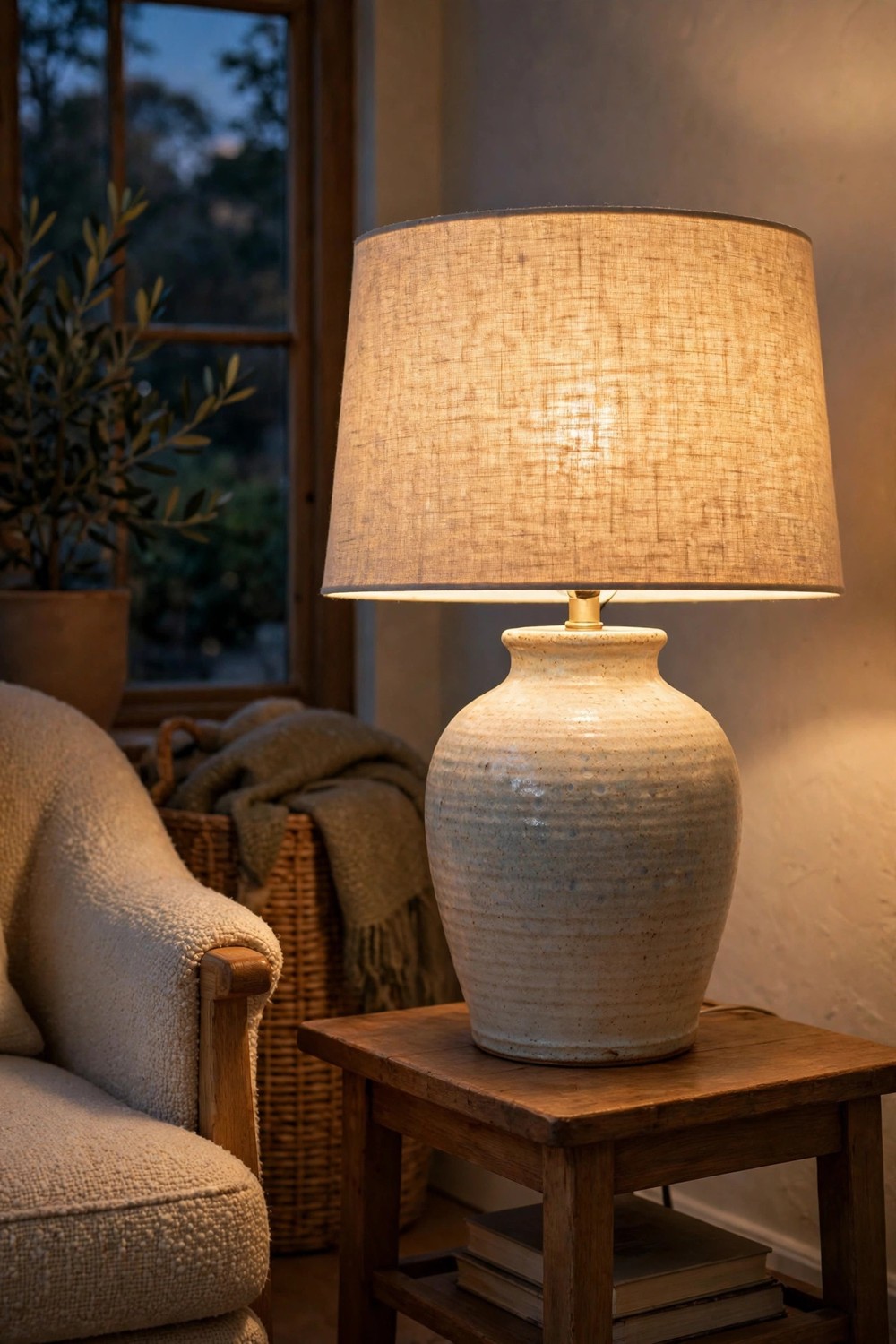
A lampshade you dislike can make you avoid switching the lamp on, and a tired shade yellows the light in a way that flattens the whole room. Recovering it with fresh fabric takes an afternoon and changes the lamp completely, and DIY budget home decor hacks for beginners do not get much more satisfying than seeing it glow that evening.
Peel the old fabric off the frame, use it as a template to cut the new one, and glue the new fabric on with a thin, even layer, rolling it smooth as you go. Natural linen or cotton in a soft neutral suits most rooms, and the matte fabric reads far more expensive than shiny polyester. A drum lampshade in the right size is worth measuring for, because a shade that is too small looks lost on its lamp.
The detail that gives a recovered shade away is a wobbly edge, so trim the top and bottom edges clean and finish them with a narrow ribbon or a folded hem. Switch it on before you call it done, because the light shows every wrinkle the daylight hides.
|
MUST READ: |

Layer a Cheap Rug Over Bare Floor
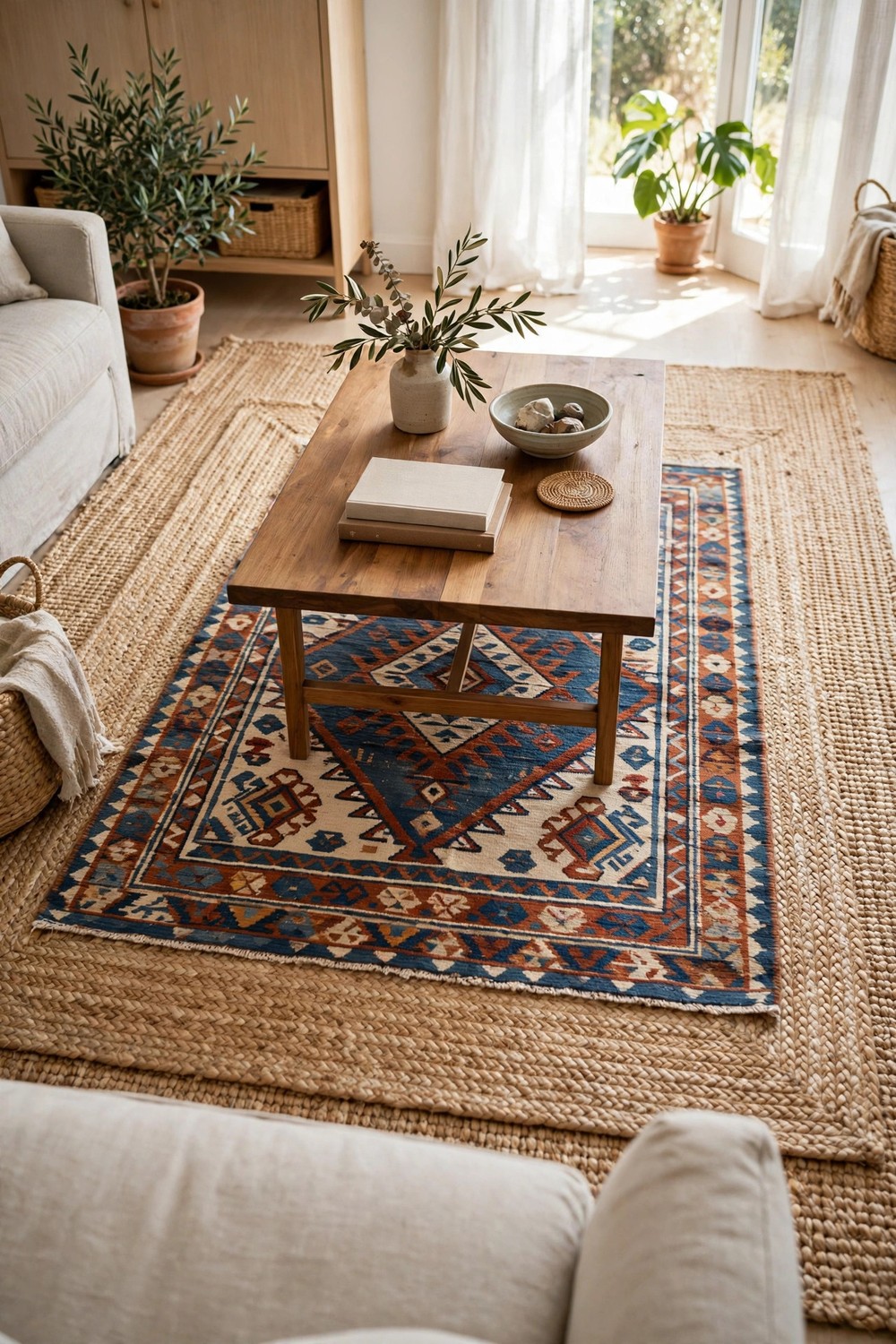
A rug that is too small makes a room look unfinished, and buying a huge new one is rarely cheap. Layering fixes both problems. Put a large, plain base rug down first, then a smaller patterned one on top, and the floor looks intentional instead of bare.
I like a natural jute or flatweave base, because it adds texture without competing for attention. The top rug brings the colour and pattern, and because it is smaller, you can afford a nicer one. A jute area rug in the right size anchors the seating so the sofa and chairs stop floating on bare floor.
The rule I go by: the front legs of the sofa and chairs should sit on the rug. If they do not, the rug is too small, and layering a second one underneath is the cheapest way to fix it.
Shape Decorative Accessories From Air-Dry Clay
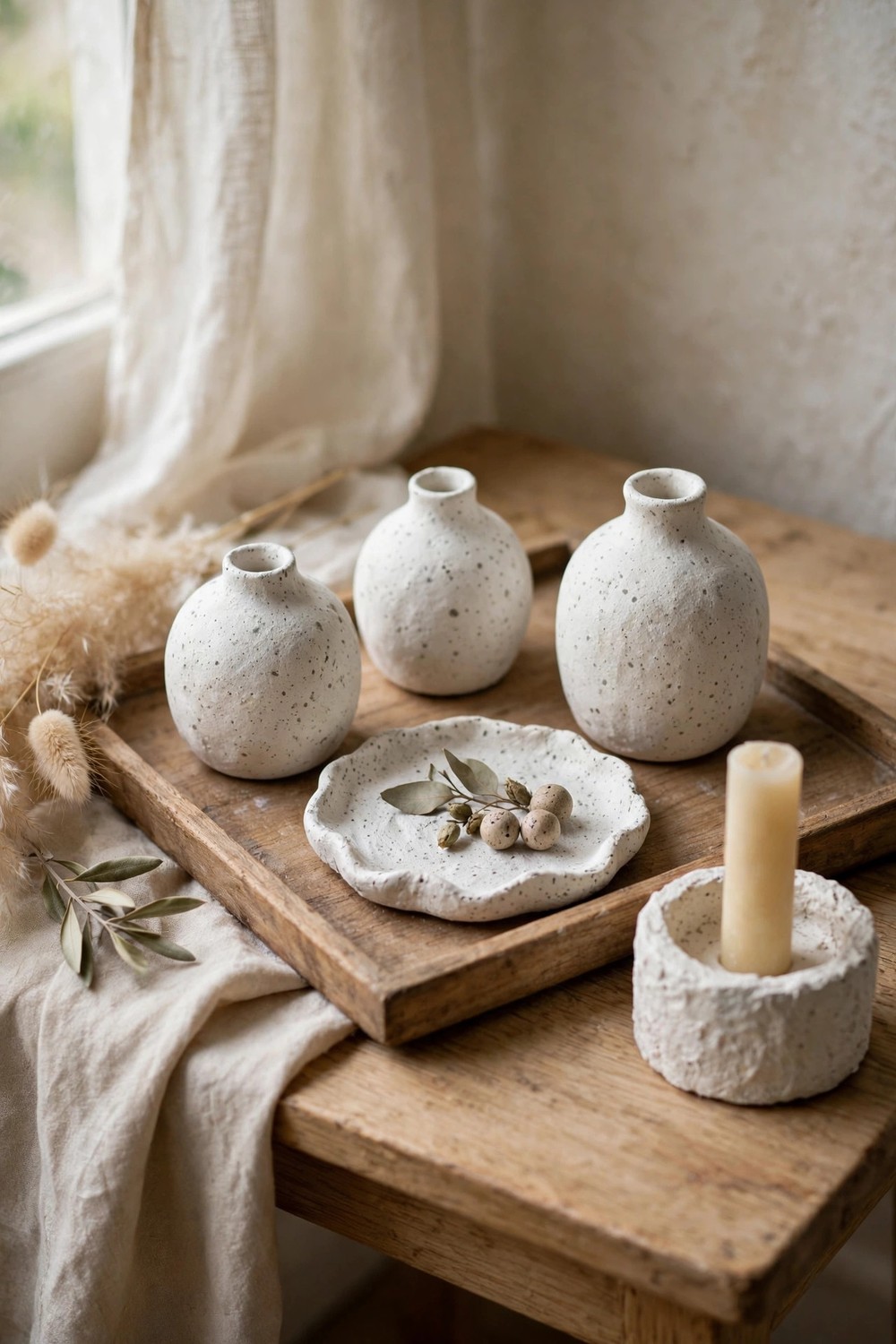
The last project is the smallest one, and it might be the most fun. Air-dry clay needs no kiln and no special tools, just your hands, a rolling pin, and a free evening. Small vases, trinket dishes, and candle holders come out looking handmade in the best sense, slightly uneven and entirely yours.
Roll the clay flat, cut simple shapes with a kitchen knife or a round glass, and let the pieces dry slowly for a day or two so they do not crack. A light sanding when dry takes the rough edges off, and a coat of matte white paint makes them look like something from a ceramics studio. A pack of air-dry clay costs less than lunch and makes a whole shelf of pieces.
Keep the palette to one colour, white or a soft sage, and group the pieces together on a tray. A shelf of matching handmade pieces looks considered, while one lone clay pot can look like an accident.
Key Facts
- Start with the piece your eye lands on first: the furniture, the wall, or the light.
- Chalk paint forgives beginners: no heavy sanding, fast drying, matte finish.
- Measure screw-hole spacing before ordering new knobs or pulls.
- Peel-and-stick wallpaper removes cleanly, so it suits renters.
- Lay gallery wall frames on the floor first and build outward from the largest frame.
- Thin coats of spray paint beat one heavy coat, which drips.
- Check for pipes and wires before drilling for a shelf.
- Layer rugs so the front legs of the sofa and chairs sit on the rug.
- Let air-dry clay dry slowly for a day or two so it does not crack.
- One handmade piece per surface is plenty; group the rest on a tray.
|
MUST READ: |
FAQ
How much do these DIY home decor projects cost?
Most of the projects here cost less than a dinner out, and several cost almost nothing because they reuse things you already own, like jars, old frames, and spare fabric. The priciest is usually a tin of paint or a roll of wallpaper, and both cover more than one project.
Do I need tools or experience to try these hacks?
No. Every project in this list needs nothing more than a screwdriver, a brush, or a free afternoon. Peel-and-stick wallpaper, no-sew covers, and air-dry clay all forgive mistakes, and you can peel the paper off or reshape the clay and try again.
Which project should a total beginner start with?
Start with the jars or the spray-painted hardware, because both take under an hour and the result is obvious straight away. A quick win builds confidence for the bigger jobs, like the shelf or the accent wall.
Can I do these projects in a rental?
Yes, most of them leave no trace. Peel-and-stick wallpaper removes cleanly, gallery walls need only small picture hooks, and painted furniture, cushion covers, and clay pieces move with you when you leave.
How do I make DIY decor look expensive instead of homemade?
Keep the palette calm, use matte finishes, and repeat one metal or one colour through the room. The details that read expensive are clean edges, even spacing, and a bit of weight, so spend the saving on the pot, the frame, or the insert, the part people actually touch.
Start This Weekend, One Small Project at a Time
None of these ideas needs a renovation, a tradesperson, or a big budget. Each one takes an afternoon at most, and most of them take less than an hour to put in place. Start with the project that bothers you most, the bare wall, the tired dresser, the flat light, and fix that first.
These DIY budget home decor hacks for beginners prove that a home does not need new furniture to feel new. Pick one project from this list, try it this weekend, and let the room surprise you. Then pick another, because small projects add up faster than you think.
Sources & Citations
- Better Homes & Gardens, These 27 Budget-Friendly DIY Projects Will Make Every Room Feel Custom
- House Digest, 12 DIY Home Decor Ideas To Upgrade Your Home And Garden On A Budget
- Frugal Jones, Transform Your Space on a Dime: Creative DIY Home Décor Projects You Can Actually Afford
- HGTV, 30 Designer Tips for Decorating on a Budget
- Family Handyman, Cheap Decorating Ideas That’ll Make Your Space Look Expensive

Enjoying our content? Make us a preferred source on Google.





Add comment