
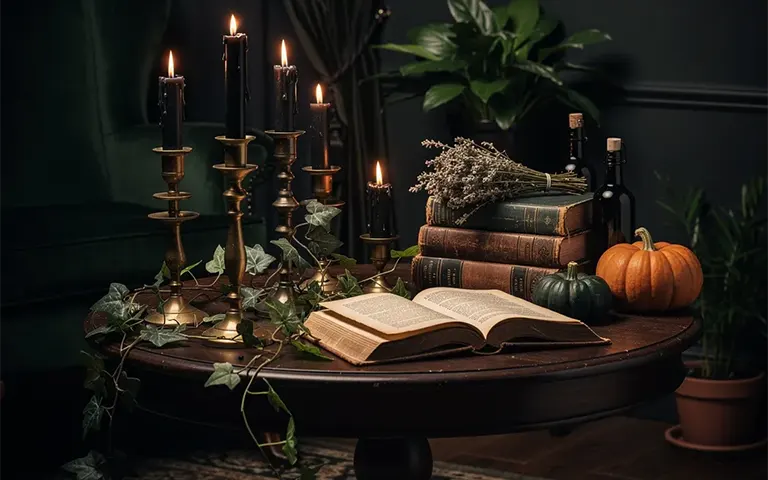
Moody witchy styling

20 years of experience as a home decor consultant, specializing in furniture selection, space-conscious layouts, and practical interior solutions.
If you’re drawn to witchy halloween decor, you’re probably after something moodier and more intentional than the typical orange-and-plastic-spider approach. The appeal of witchy styling isn’t just the aesthetic—it’s that it actually works year-round and gets better with thoughtful layering.
Unlike seasonal decorations that feel out of place the moment November arrives, witchy elements (dark botanicals, candlelight, vintage curiosities) feel at home in October and integrate seamlessly into moody, gothic, or eclectic year-round decor.
What makes witchy halloween decor different is the restraint. It’s about creating atmosphere rather than announcing the season loudly.
You’re working with deep jewel tones, natural textures, flickering light, and collected objects—things that suggest a story rather than scream “HALLOWEEN.”
This guide covers nine witchy Halloween decor practical ideas you can layer into your home, whether you’re transforming a whole room or just refreshing a shelf and entryway.

Layer Candlelight in Varying Heights and Groupings
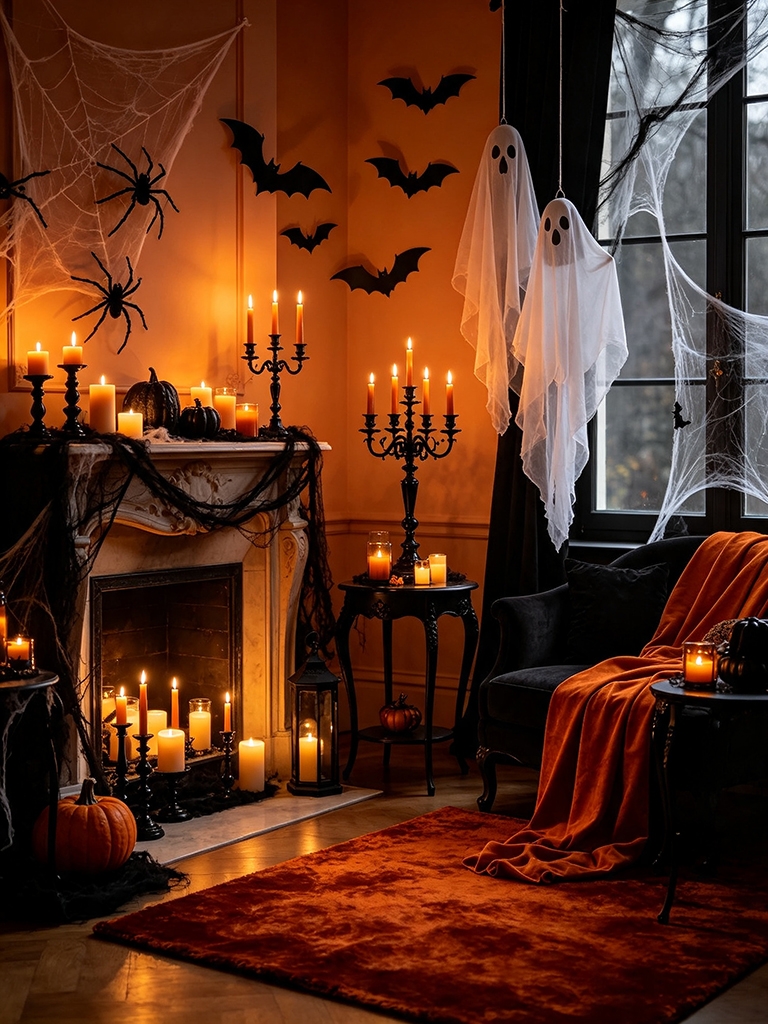
Candlelight is the single most atmospheric tool in witchy decor, and it works because of scale and placement, not just the presence of candles. A single candle on a shelf reads as functional; five or seven candles of different heights clustered together creates an immediate focal point and that signature flickering, amber-hued mood.
The key is varying heights. Use pillar candles in black, deep plum, or cream in holders (or directly on heat-safe surfaces) so they sit at different eye levels. Pair them with shorter votive candles, tea lights, or tapered candles in brass or black candlesticks. This creates visual rhythm and ensures light reaches different parts of the room.
Group clusters on bookshelves, mantels, side tables, or a console—places where people naturally pause and where the flicker catches attention. If you’re concerned about open flames (kids, pets, renters), battery-operated pillar candles with a warm-white LED (not cool white, which feels clinical) do most of the atmospheric work.
The downside is replacement batteries and a less convincing flicker, but they’re genuinely safer and let you build height and grouping without worry. I’d skip the realistic-flame effect ones—go for a simple amber glow instead.
Budget tip: Dollar stores and discount home retailers stock pillar candles and holders for a fraction of specialty boutique prices, and the effect is identical once they’re grouped and lit.
Thrift stores often have brass candlesticks, glass holders, and mismatched candelabras for $2–$8 that feel more collected and interesting than matching sets.
|
MUST READ: |
Use Dark, Dried Botanicals for Texture and Depth
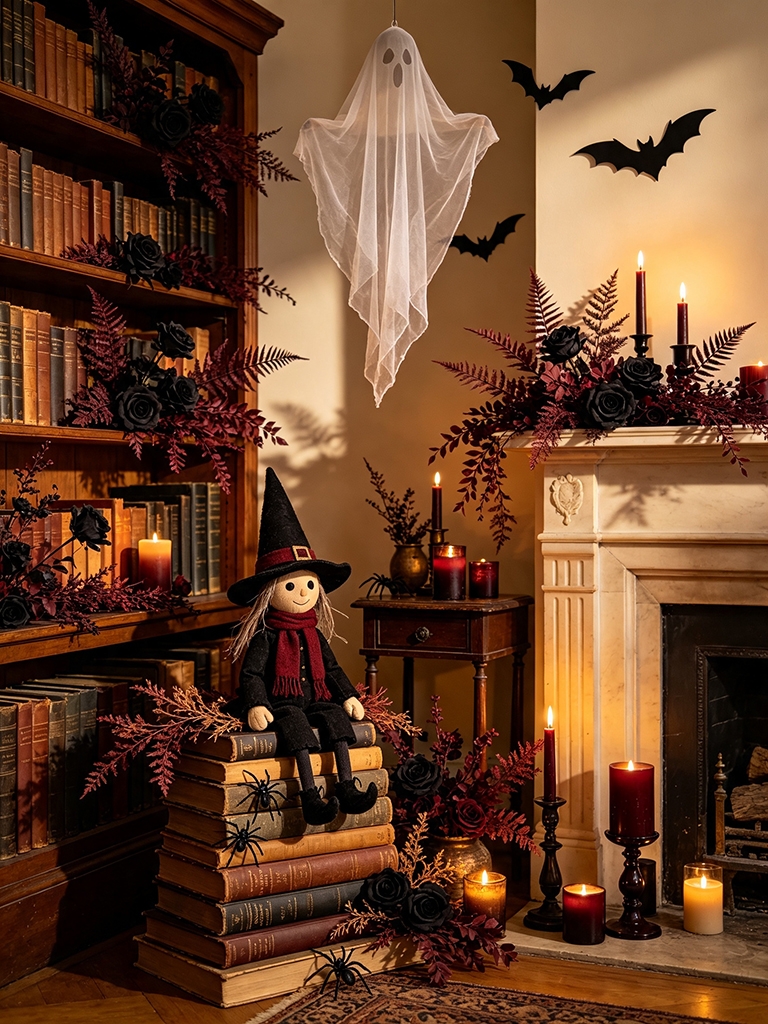
Dried branches, seed pods, black dahlias, wheat bundles, and darkened eucalyptus create that gathered, naturalistic witchy feel without the commitment of fresh florals or the plastic-y look of artificial arrangements. They’re also cheaper, last through the entire season and beyond, and read as genuinely curated rather than purchased.
Tall branches work especially well in empty corners, beside a doorway, or in a large vase near a window—they add vertical interest and fill dead space without crowding a room. Shorter seed-pod sprays or branches of hypericum berries (dyed black or naturally deep burgundy) work well in a low centerpiece mixed with candles and small glass objects.
The texture matter—spiky, spindly, feathery botanicals create visual movement and shadow when lit by candlelight. Where to source: dried flower wholesalers online or Etsy sellers specializing in witchy arrangements.
Local florists often sell dried stems in bulk for $3–$12 per bunch. You can also gather branches from your yard or local parks, dry them indoors for a few weeks, and use them free.
A black dye for botanicals is cheap and transforms ordinary branches into something moodier if needed.
Real limitation: dust collects on dried botanicals, so plan to brush or gently vacuum them every couple of weeks. In humid bathrooms or kitchens, they can develop mildew, so keep them in drier rooms.
Display Vintage Bottles and Apothecary Jars as Decor
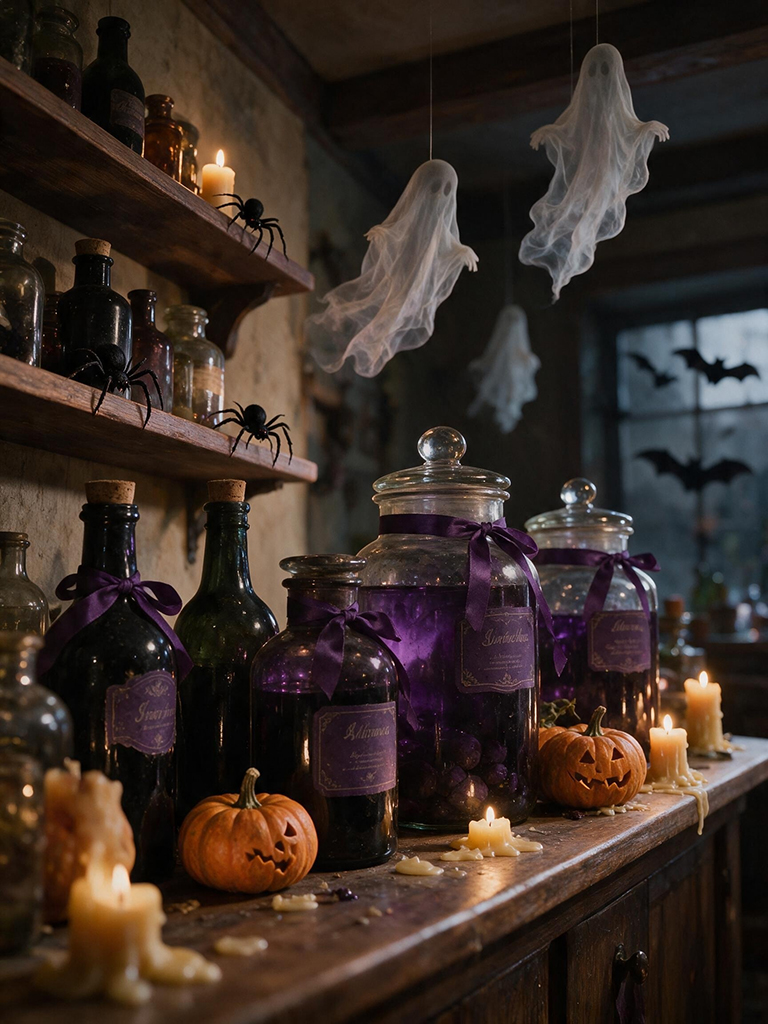
Vintage glass bottles, apothecary jars, and medicine bottles feel inherently witchy—they suggest potions, alchemy, and collected knowledge. The brilliant part is they’re both decorative and functional. You can fill them with dried herbs, tea, small pebbles, cotton balls, or leave them empty for a cleaner look.
They layer beautifully on open shelving, bathroom counters, nightstands, or a small hutch. Grouping is everything here. Three to five bottles of varying heights and widths, clustered together on a shelf, read as a curated collection.
Add some negative space—don’t pack them shoulder-to-shoulder. If the bottles themselves are clear, what you fill them with becomes the visual story: dried lavender, black peppercorns, salt, activated charcoal, or tea. If they’re darker glass (amber, green, cobalt), they’re striking even empty.
Sourcing options: estate sales and antique shops yield authentic apothecary and vintage medicine bottles for $4–$20 each. Etsy sellers offer new apothecary-style jars designed for this purpose, $8–$25 per jar. Thrift stores stock miscellaneous vintage glassware constantly for $1–$3 a piece. The thrifted route feels more authentic and costs less—you’re collecting, not decorating.
Pro move: label a few jars with hand-written or printed botanical names (even if the contents are dried herbs you’d normally cook with). It adds narrative without feeling too costume-y. Brass or vintage-style labels and label makers are inexpensive and elevate the display immediately.

Anchor the Color Palette with Deep Jewel Tones
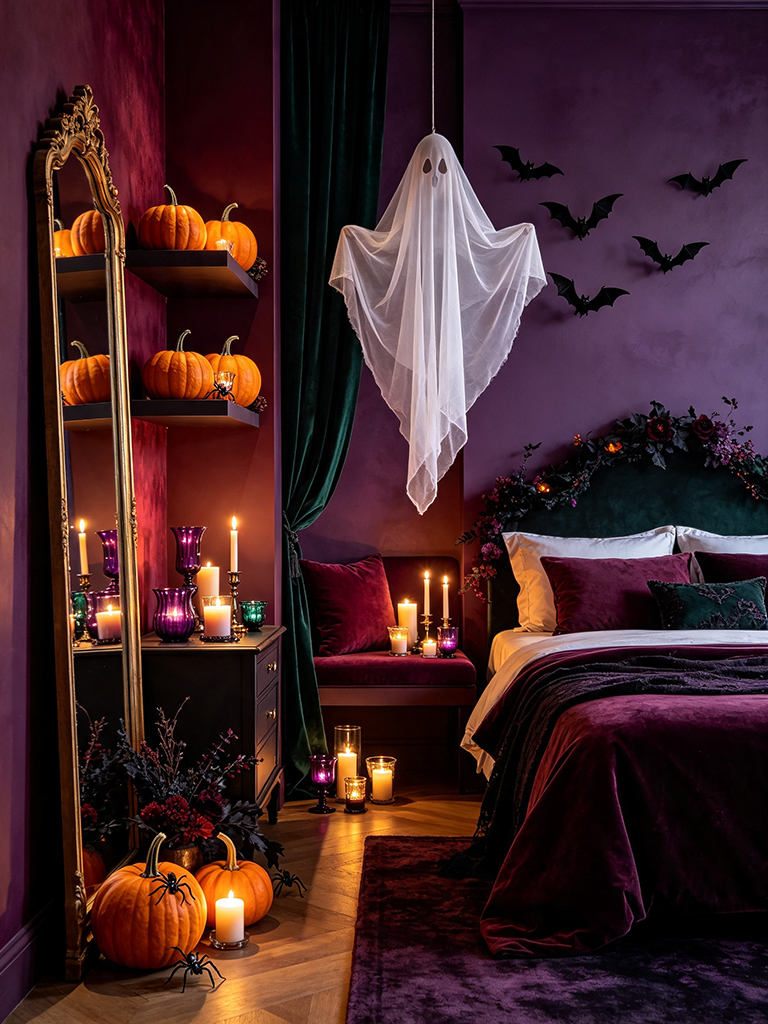
Witchy decor relies on color restraint. Instead of a mishmash of black, purple, orange, and green, choose a cohesive palette from one family: deep emerald, forest green, and olive; or burgundy, plum, and black; or jewel-toned jewel tones across the board.
This doesn’t mean repainting or replacing furniture. It means layering through throws, pillows, wall hangings, and smaller accents so the eye reads a unified mood.
If your sofa or main furniture is neutral (gray, beige, cream, black), layer a jewel-toned throw or drape it over one arm. Add two or three pillows in coordinating shades—velvet is ideal for witchy styling (deep texture, subtle sheen) but linen or cotton work too.
A wall hanging in deep green or burgundy over a sofa or bed anchors the corner without major commitment. Even a dark, moody rug under a coffee table shifts the whole feel of a room.
The advantage of this approach: nothing is permanent, and you can shift the palette year to year or even season to season.
Come November, remove the witchy accents and the bones of the room stay cohesive and warm. No post-Halloween abandonment feeling. Color psychology matters too. Warm-white candlelight and deep jewel tones create richness and coziness.
Cool-white lighting and the same colors read as cold and Gothic in a less appealing way. If you’re adding new light fixtures or bulbs, warm-white (2700K color temperature) is non-negotiable for witchy decor.
Create a Moody Entryway or Threshold Display
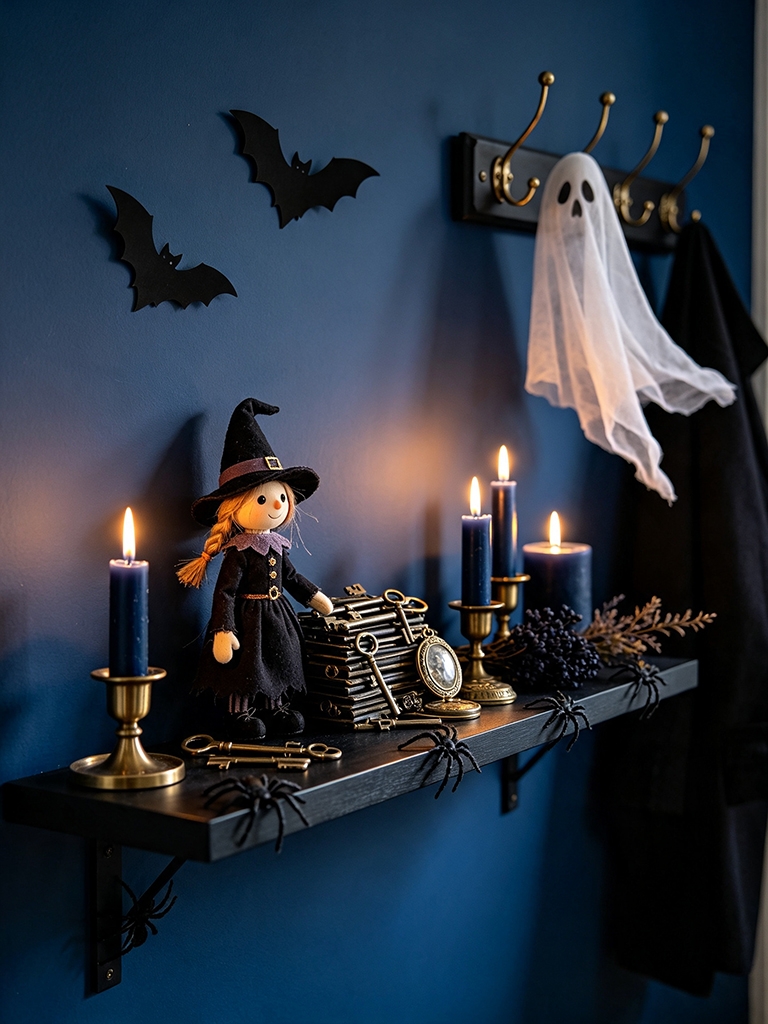
The entryway or threshold is prime real estate for witchy decor because it’s the first thing guests see and it sets the tone for the whole space. It also doesn’t require decorating an entire room—just a focused, dramatic moment that says “something intentional is happening here.”
A console table or narrow shelf becomes your stage. Layer it with candlesticks of varying heights, a dark runner (black, deep green, or burgundy), 3–5 bottles or jars, a small dried arrangement, and maybe one larger botanical element (a tall branch in a vase, a wreath, or a framed botanical print).
The idea is density and verticality—the eye should travel up and around. Keep it asymmetrical: candles on one side, bottles clustered on the other, a branch rising from the center.
Symmetry feels staged; asymmetry feels collected.
Lighting matters enormously in entryways. If you have a wall sconce, install warm-white bulbs or consider adding a small battery-operated string of Edison-style bulbs above the console to backlight the display. The glow transforms the whole scene and makes people pause before entering the main room.
If you don’t have console space, a tall narrow shelf, a small side table, or even a wall-mounted shelf works. The principle stays the same: create layers of height, group objects with intention, use candlelight, and build visual interest through texture and shadow.
|
MUST READ: |

Hang Dark, Botanical Wall Decor
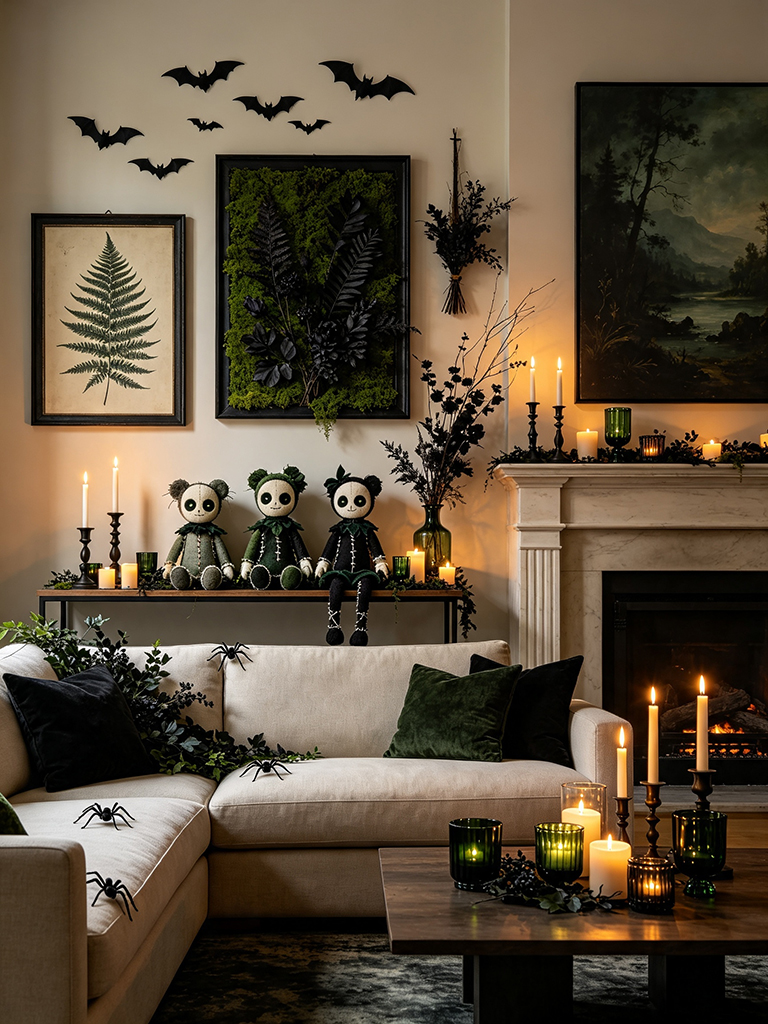
A well-placed wall hanging—dried flower frame, pressed-flower art, botanical print, or even a simple wreath—anchors a room and takes up meaningful visual space without crowding furniture or shelves. Witchy styling favors dark, moody botanicals over bright florals: black dahlias in a frame, dried ferns behind glass, antique botanical prints with darkened pages, or a wreath of dried herbs and branches.
Size and placement matter. A small frame gets lost on a large wall; go bigger than feels safe (a 24″–36″ print or wreath reads stronger than an 8″×10″). Hang it at eye level, or slightly above, and leave breathing room around it rather than clustering other art nearby. One strong statement piece often feels more intentional than a gallery wall.
DIY option: frame pressed flowers, dried leaves, or flat branches yourself using a simple black or dark wood frame and glass from a craft store. Dried botanicals pressed between archival paper inside a frame cost almost nothing and feel deeply personal. This also works with a botanical illustration printed and matted in black paper—affordable and striking.
Sourcing: botanical prints and frames are widely available on Etsy ($30–$120 for a framed original or print), at antique shops, or through craft stores like Michaels.
A simple black or dark wood frame with a matted botanical print starts around $40. DIY versions cost $10–$25 if you’re using supplies you already have.
Layer Textiles in Complementary Dark Tones
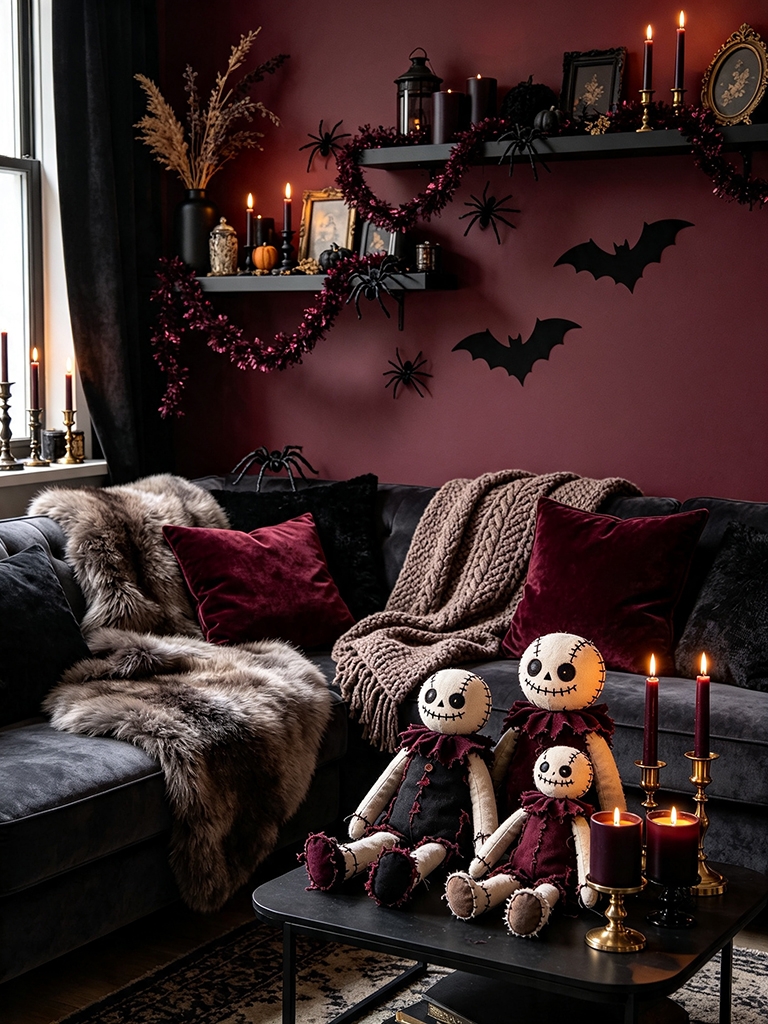
Throws, pillows, curtains, and table runners are where witchy decor really becomes livable. A single velvet throw draped over an armchair or sofa instantly shifts the mood. Add two jewel-toned pillows and the seating becomes a focal point. A dark linen table runner under your candle grouping grounds the display and adds softness.
Velvet is ideal—it has a subtle sheen, catches candlelight beautifully, and feels luxurious without being loud. Linen and heavy cotton work too, especially in deeper weaves that have texture and movement. Avoid overly smooth, synthetic-feeling fabrics that cheapen the aesthetic.
Mix depths: a forest-green throw with a burgundy pillow and a plum runner create richness because the tones sit at different levels of saturation. Repetitive color (three pillow covers in identical plum) can feel flat. Vary texture too—a velvet pillow next to a linen pillow next to a chunky knit creates visual interest and makes the space feel considered rather than matched.
Budget tip: thrift stores stock vintage throws, blankets, and table linens in jewel tones for $3–$10. Even if the fabric is slightly worn, a worn vintage velvet throw reads as authentic witchy decor. Ikea and Wayfair offer affordable throws and pillows in solid colors, $15–$50. Splurge on one quality velvet piece if budget allows; layer cheaper linen or cotton around it.

Add Curiosities and Collected Objects to Shelving
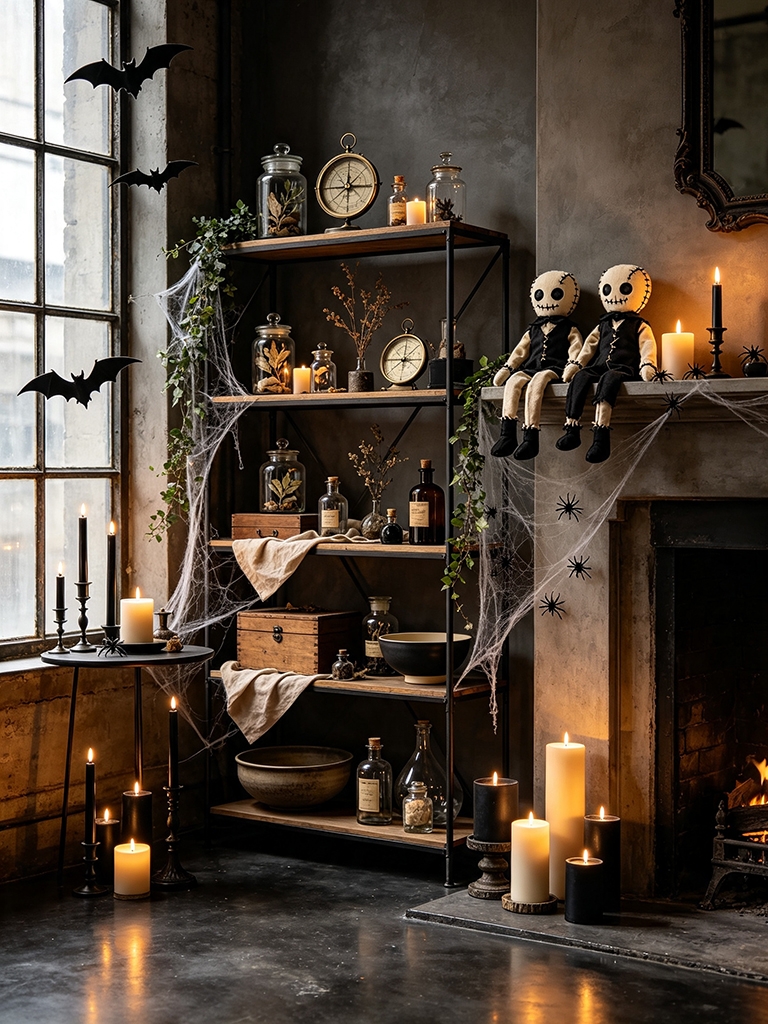
Witchy decor thrives on the sense that things were gathered over time, not purchased as a “witchy collection.” Small objects—brass candlesticks, vintage mirrors, a smooth stone, a small antique box, feathers, crystals, old keys, mismatched vintage silverware—scattered across shelves create narrative and texture.
The key is restraint and grouping, not clutter. Arrange small objects in odd numbers (3, 5, 7) rather than pairs. Group by height or texture: stack a few leather-bound books with a small brass candlestick and a bottle on top, then leave negative space before the next grouping. This creates rhythm and prevents shelves from feeling packed or overwhelming.
Where to source: thrift stores, antique shops, estate sales, and flea markets are ideal—things feel genuinely collected rather than curated. A vintage mirror for $8, an old brass candle holder for $5, a stack of old books for $2–$4, and a single piece of quartz or stone from a nature walk cost almost nothing but create massive visual impact when grouped thoughtfully.
Etsy also sells deliberately “curated” curiosity collections if you want to shortcut the hunting process, though the thrifted route feels more authentic.
Real consideration: avoid taxidermy or animal bones if they make you or guests uncomfortable. The witchy aesthetic doesn’t require them—dark botanicals, glass, brass, and stone do the same work and feel less divisive.
Use Warm, Dimmable Lighting to Set the Mood
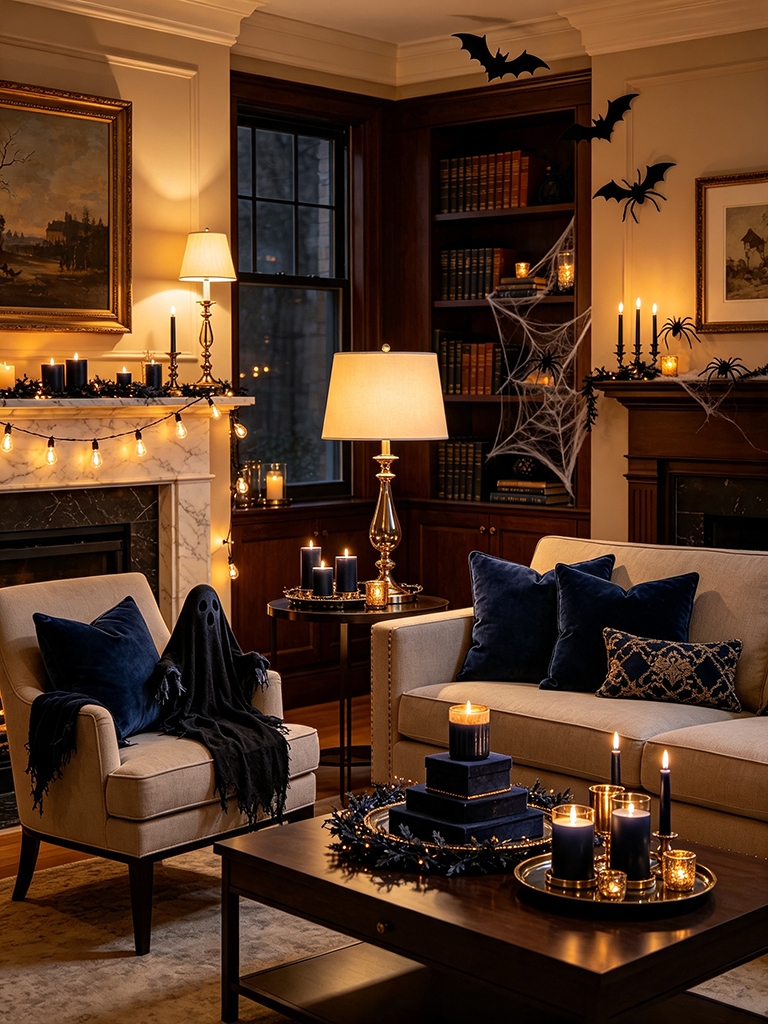
Lighting is, frankly, more important than the decor itself. A room with mediocre witchy decorations and excellent warm, dimmable lighting reads as intentional and atmospheric.
The same room with great decor and bright, cool-white overhead lighting feels flat and staged.
If your ceiling fixture has a standard on-off switch, install a dimmer switch. Any electrician can do this in 10 minutes; many people do it themselves. Use warm-white bulbs everywhere—overhead lamps, table lamps, floor lamps. The color temperature matters more than the fixture style. A $10 warm-white LED in a basic lamp creates more atmosphere than a $200 cool-white statement piece.
Layer your light sources. Overhead lighting alone flattens everything. Add a floor lamp in a corner, a table lamp on a side table, and candles or string lights at eye level. The mix of heights and warmth creates depth and shadow, which is the whole point of witchy styling.
String lights with Edison-style bulbs or tiny warm-white LEDs work well draped along a mantel, wound through dried branches, or tucked behind bottles on a shelf. They’re inexpensive, renter-friendly, and add that low glow that makes ordinary objects feel theatrical.
Real limitation: dimmer switches require compatible LED bulbs. Cheap LEDs sometimes flicker or buzz on a dimmer, so check the packaging for “dimmable.” If you’re renting and can’t change switches, smart bulbs with app-based dimming are a solid workaround.
|
MUST READ: |
Key Takeaways
- Candlelight is the backbone of witchy decor—group pillar candles of varying heights in dark colors or clear holders to create focal points and ambiance without commitment to permanent fixtures.
- Dark, dried botanicals (branches, seed pods, black dahlias) add texture and a collected-over-time feel that mass-produced decorations can’t match, and they cost less than fresh florals.
- Vintage glass bottles and apothecary jars work as both decor and functional storage, letting you display small objects while keeping shelves organized and visually interesting.
- Deep jewel tones (emerald, burgundy, plum, black) tie witchy elements together cohesively without requiring you to repaint or buy new furniture—layer them through textiles and accents instead.
- Moody lighting (warm-white bulbs, dimmer switches, string lights with Edison bulbs) matters more than the decor itself—the right light transforms ordinary objects into atmospheric props.
- Thrifted and collected pieces feel more authentic than new “witchy” collections—brass candlesticks, old books, taxidermy, and mismatched vintage glassware tell a stronger visual story.
- Keep your base decor neutral and add witchy layers seasonally so pieces work beyond October—this makes the investment feel smarter and the refresh feel fresh each year.
- Group small decorative objects in odd numbers and on different levels to avoid a “arranged for display” feeling—asymmetry and clustering feel more naturally curated.
FAQ
How do I keep witchy Halloween decor from looking costume-y?
The secret is restraint. Choose a few atmospheric pieces, such as apothecary jars, brass candlesticks, dried botanicals, or old books, instead of filling every surface with Halloween symbols. Keep your colors cohesive and materials natural. If an item screams costume shop, skip it. Aim for moody, collected, and slightly mysterious rather than obviously seasonal.
Can I pull off witchy decor in a small apartment or rental?
Absolutely. Small spaces can actually make witchy styling feel more intentional because fewer pieces create a stronger mood. Start with warm lighting, battery-operated candles, and one dramatic vertical element, such as dried branches. Add a small arrangement of bottles, books, or candlesticks to a shelf or side table. No fireplace or built-ins required.
What’s the cheapest way to start building a witchy look?
Start by shopping your own home. Look for dark glass bottles, old books, brass objects, candleholders, baskets, and neutral textiles. Thrift stores are excellent for inexpensive vintage pieces, especially candlesticks and glassware. You can also collect fallen branches and dried botanicals outdoors. Spend money only where it matters, such as warm-white lighting or quality candles.
How do I transition witchy Halloween decor into year-round styling?
Build your look around pieces that feel atmospheric rather than explicitly Halloween-themed. Dried branches, dark textiles, vintage bottles, brass accents, candles, and moody lighting can work throughout the year. After Halloween, simply remove pumpkins, orange accents, fake spiders, and obvious symbols. Keep the darker textures, natural elements, and warm lighting for an understated, year-round aesthetic.
Are battery-operated candles convincing enough for the look?
Yes, especially when they are used as part of a larger lighting arrangement. Choose warm-white LED pillar candles with a subtle flicker rather than overly realistic flame effects. Use real candles only where they can be safely monitored, and choose LEDs around curtains, children, or pets. Group candles at different heights to create depth and believable ambient glow.
Conclusion
Witchy Halloween decor works best when it feels gathered, not staged. Start with lighting and one strong focal point—a clustered candle display, a tall branch arrangement, or a moody textile layer—then build slowly.
The pieces that last are the ones with texture and history: thrifted brass, dried botanicals, vintage glass. You don’t need to transform an entire room to get the effect.
Even a single well-lit shelf with odd-numbered objects and a dark throw can shift the whole feeling of a space. Pick one idea from this list, try it this weekend, and let the rest follow.





Add comment