
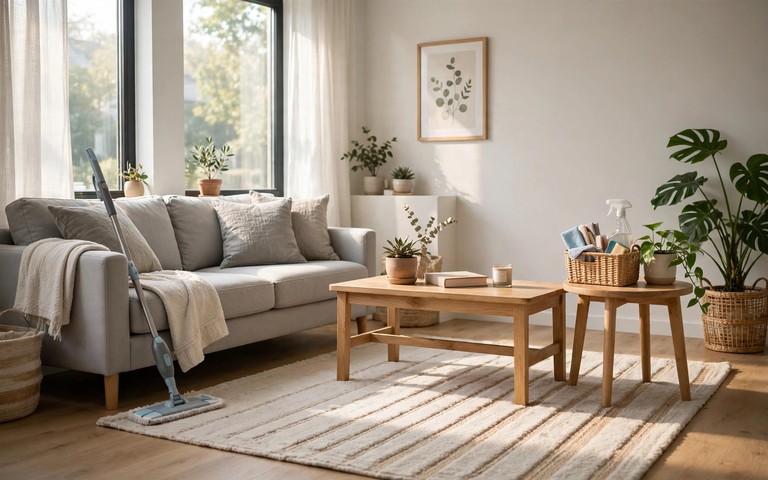
Small habits, a calmer home

20 years of experience as a home decor consultant, specializing in furniture selection, space-conscious layouts, and practical interior solutions.
These house cleaning tips come down to one idea: clean from top to bottom, one room at a time, with a short routine you can actually repeat. Dust the high spots first, vacuum before you mop, let cleaners sit and do the work while you move on, and finish with a ten-minute reset each evening. Below are 15 practical tricks for kitchens, bathrooms, floors, laundry and rugs, plus the small set of tools that makes the whole job faster.
Most house cleaning tips and tricks lists read like a chore chart written by someone who has never actually cleaned a house on a tired Sunday evening. This one is built around how cleaning really works in a lived-in home: the dust falls down, the grease needs time, and the rooms you use most get dirty fastest. If you have ever wondered how to clean a house without losing a whole weekend to it, the answer is not a harder scrub. It is a better order of operations, a few decent tools, and habits small enough to survive a busy week.
The fifteen tips below are grouped into eight short chapters, one for each part of the job. None of them needs special skill or expensive equipment, and each one takes minutes rather than hours. Start with the first chapter, even if the rest of the house is waiting. A clean ceiling corner and a vacuumed rug change how a room feels faster than any deep clean ever will.
|
MUST READ: |
Start at the top and work your way down
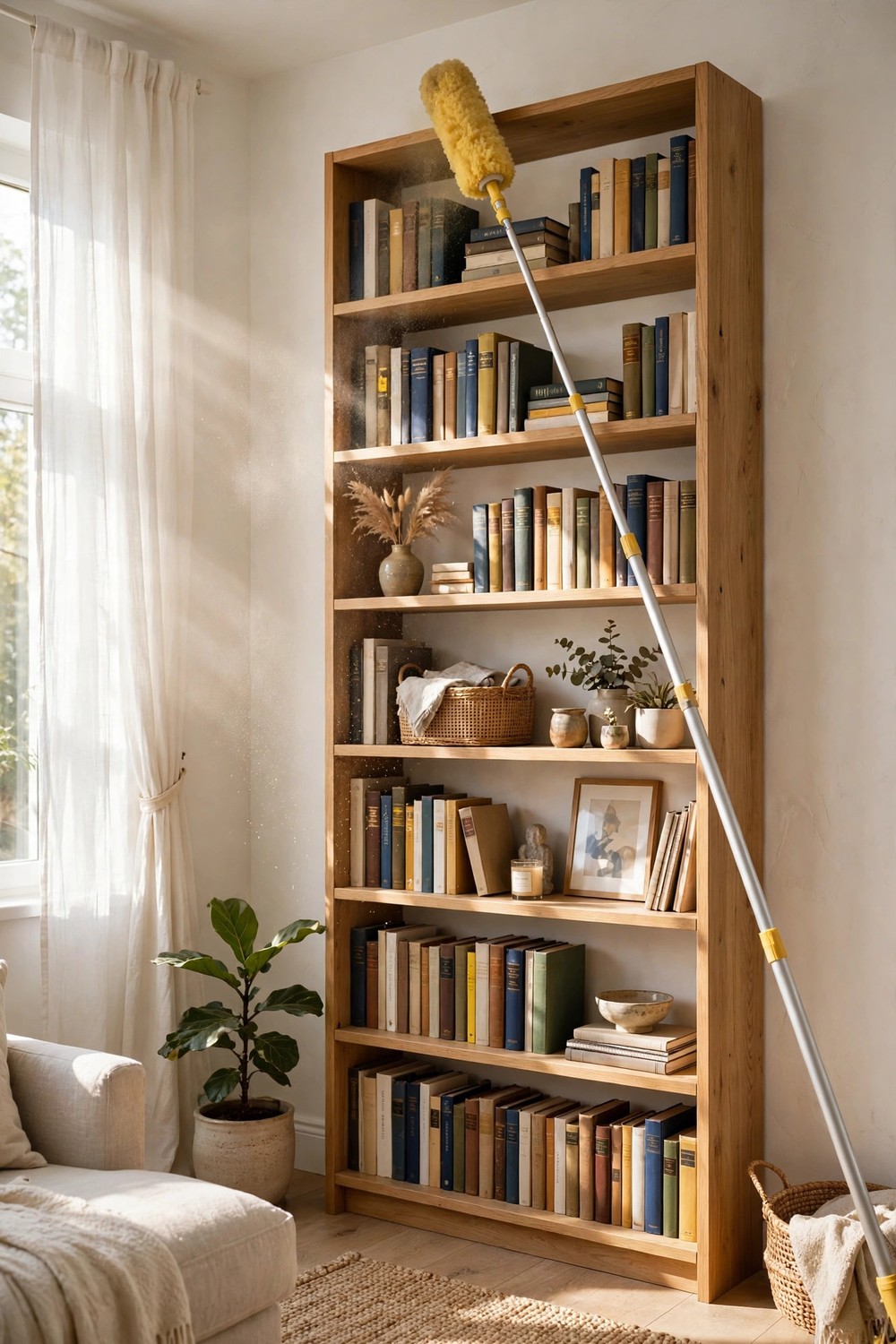
Tip 1: dust high first. Dust is obedient in one useful way: it falls down. So start with the highest surfaces in the room, the tops of shelves, picture frames, light fixtures and ceiling corners, and let whatever you dislodge land on the floor you are about to clean anyway. I like a long-handled duster for this, because it reaches the cobwebby corners without a chair, and a quick pass over the top of a door frame takes ten seconds and makes the whole room look cared for. Work your way down in layers, and by the time you reach the skirting boards, the dust has already done most of its travelling.
Tip 2: finish one room before starting the next. It is tempting to dust everywhere, then vacuum everywhere, then mop everywhere, but a half-finished house feels endless and a finished room feels like progress. Pick the room you use most, close the door on the rest of the house, and work through it top to bottom. When one room looks properly clean, the next one feels easier, and you get a small win every twenty minutes instead of one big one at the end of the day.
The tool that earns its keep here is an extendable microfibre duster with a telescopic pole. It bends into ceiling corners, slides along the top of a wardrobe, and stretches to a full hundred inches when you need it, so the cobwebby bits get done without a chair. The UIMO microfibre duster kit comes with three bendable heads for different spots, and the heads come off for a wash. Keep one in the hallway cupboard where you can actually reach it, because a tool buried in a back cupboard might as well not exist.

Declutter first, then clean
Tip 3: a five-minute pickup before you clean anything. Here is the part people overlook: you cannot clean a surface you cannot see. Before a cloth touches anything, give the room a five-minute pickup. Shoes to the rack, mugs to the kitchen, the pile of post to one tidy stack. It feels like a detour, but wiping a clear table takes thirty seconds while wiping around six objects takes three minutes and leaves dust rings behind every one of them. Cleaning and organization are the same job in two passes: first everything finds a home, then everything gets clean.
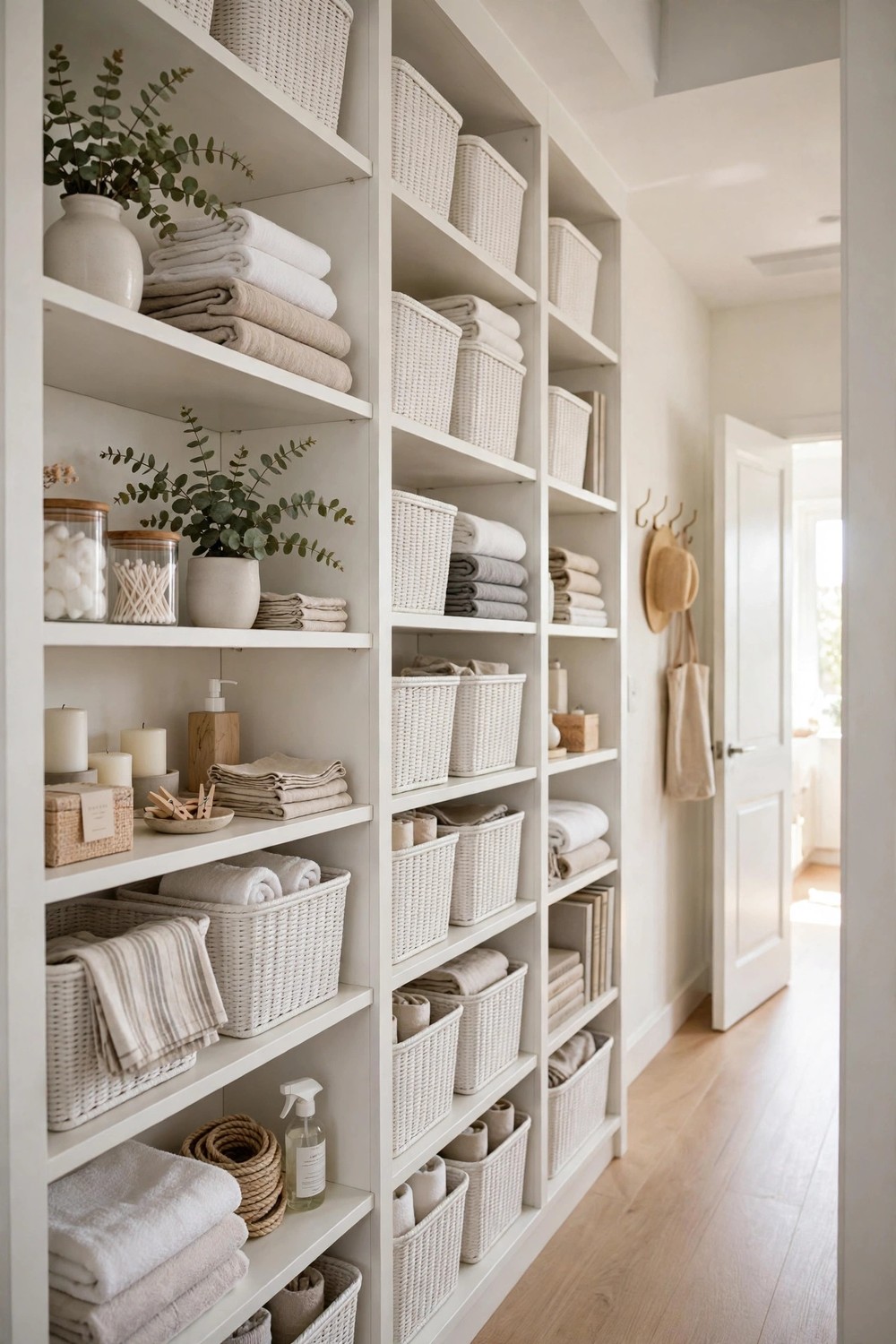
Tip 4: give the clutter somewhere to go. A basket by the door for the things that belong upstairs, a tray on the hallway table for keys and sunglasses, a laundry basket in each bedroom instead of a chair that becomes a mountain. I would skip the fancy labelled systems and start with one basket per room; if it takes longer than a minute to put something away, the system is too clever for real life.
A few simple storage baskets do more for a tidy home than most cleaning products ever will. The Mainstays storage baskets are sturdy plastic with cut-out handles and a mesh design, so you can see what is inside even on a high shelf, and because they look neat, you will actually keep using them. Buy one size and repeat it through the house: matching baskets look intentional, mixed ones look like a jumble sale.
Floors: vacuum slowly, then mop
Tip 5: slow down with the vacuum. A vacuum cleaner rewards patience. Slow, overlapping passes pick up far more than fast ones, especially on rugs, where dust settles deep in the pile. Do the edges and corners with the crevice tool, because that grey line along the skirting board is where a room starts to look grubby even when the middle of the floor is spotless. And always vacuum before you mop: mopping over dust just moves it around in a thin grey film.
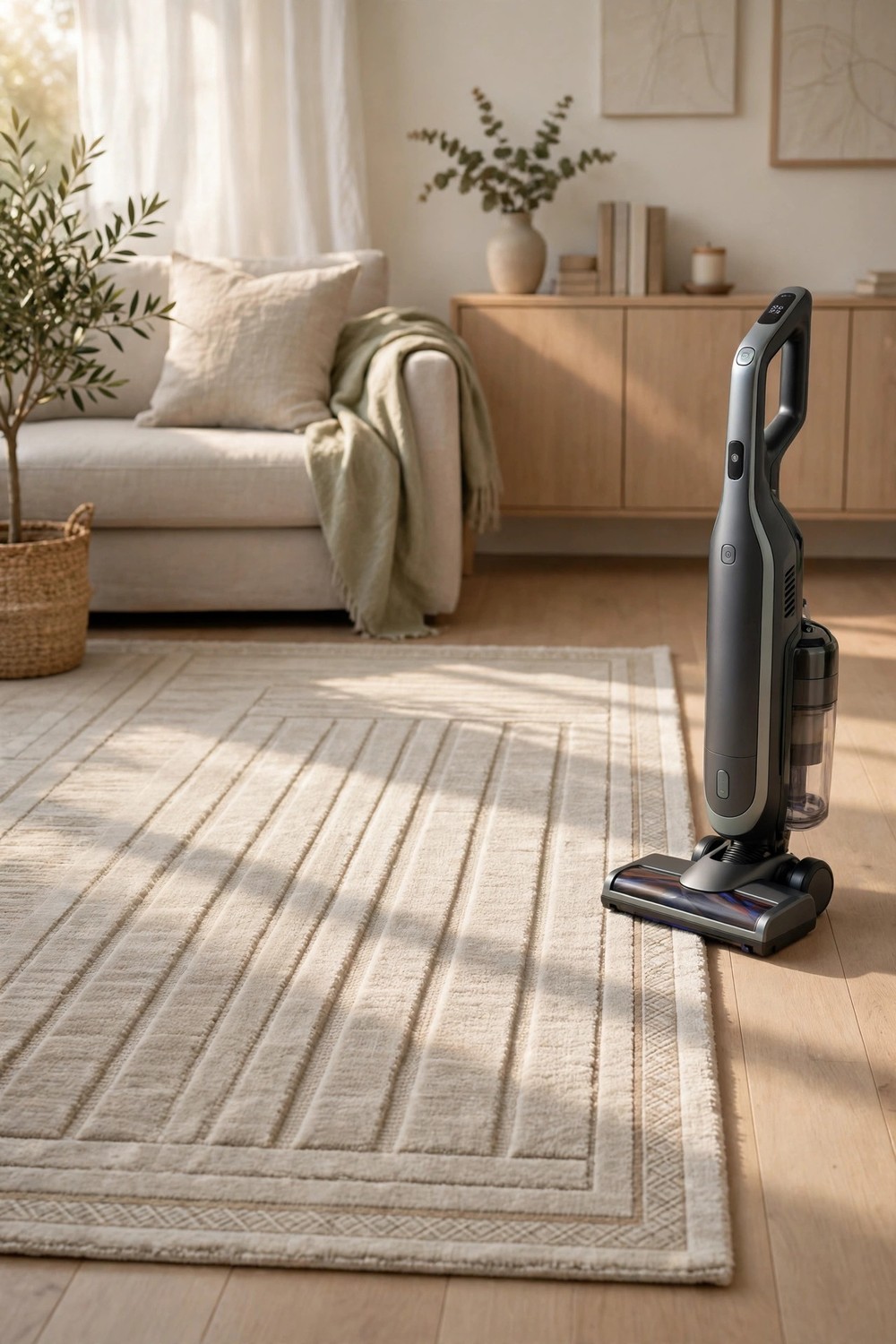
Tip 6: wash rugs gently, and dry them fully. Rugs deserve their own routine. Start by taking small ones outside for a good shake and a beating over a line, then vacuum both sides. For spot cleaning, blot, never rub, with a little washing-up liquid in warm water, and always check the care label before any wet wash. If you have ever wondered how to wash rugs without ruining them, the short answer is: less water than you think, a gentle cycle for washable ones, and a full air dry, flat, away from direct heat. A damp rug left folded is a musty rug, and no amount of spray will fix that.
For hard floors, I like a spray mop with a washable microfibre pad. You control how much spray goes down, which matters on wood and laminate, and the pad goes in the washing machine instead of the bin. The Bona hardwood floor spray mop comes with its own cleaner in a refillable cartridge, and a quick pass after vacuuming keeps floors looking polished between proper mops. It takes about three minutes in a normal kitchen.
|
MUST READ: |
The kitchen: let the cleaner do the scrubbing
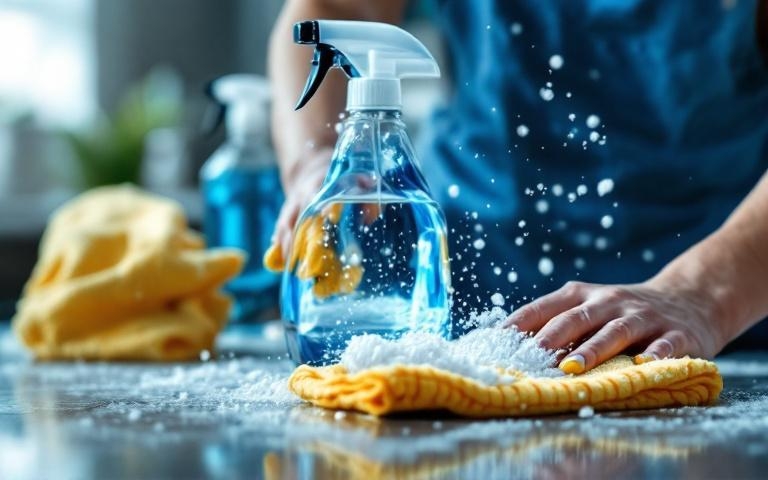
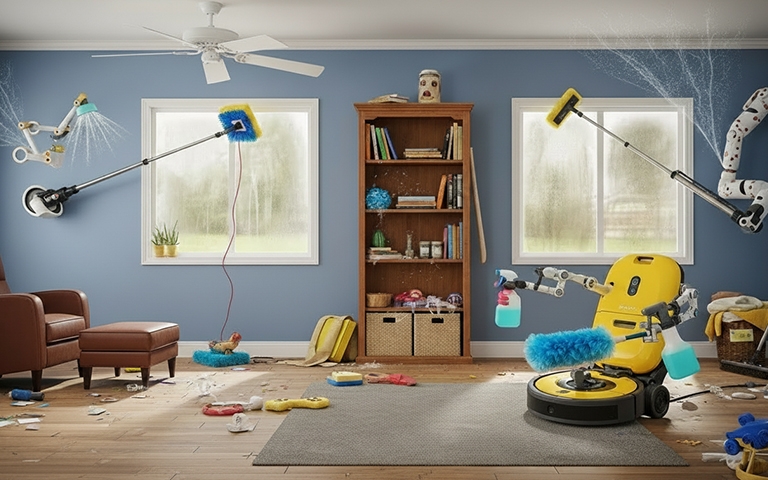
Tip 7: spray first, wipe later. If I had to keep just one of these house cleaning tips, it would be this one: spray first, wipe later. Grease and burnt-on food do not need harder scrubbing; they need time. Spray the hob, the backsplash and the inside of the microwave, then go and do something else for ten minutes. When you come back, most of it wipes off with a damp cloth, and the elbow grease you save is the difference between a kitchen you clean weekly and one you avoid for a month.
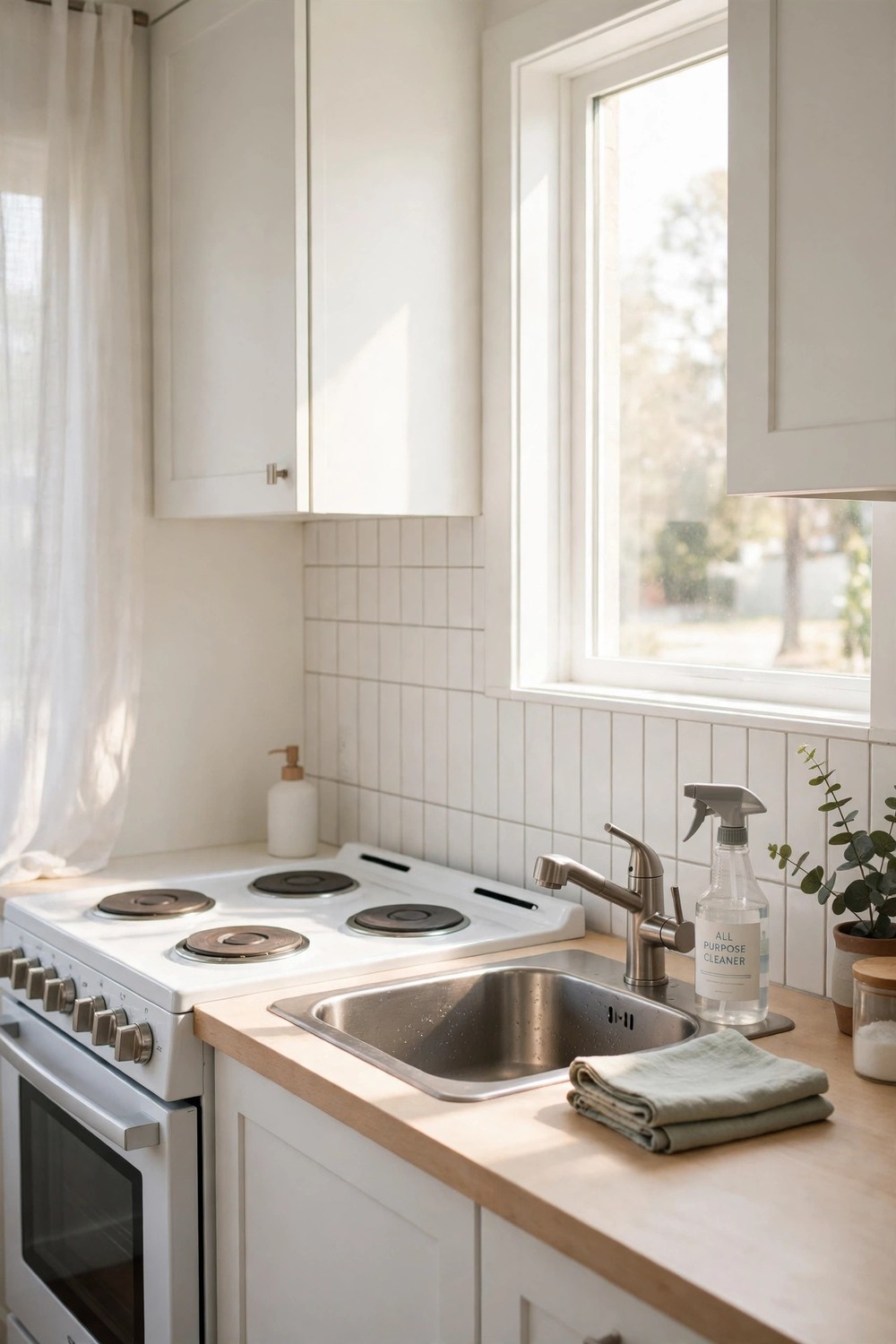
Tip 8: finish with the sink. The sink collects everything you have just rinsed off, so leave it until last. A quick scrub, a rinse, then dry the taps with a cloth so water spots do not form, and the whole kitchen suddenly looks finished. And give your sponge a proper home: wrung out, upright, somewhere it can dry between uses. A soggy sponge left in a puddle smells like a bin within a day, and a smelly sponge makes the whole kitchen feel dirty no matter how clean the counters are.
For everyday kitchen cleaning, a simple all-purpose cleaner and a stack of microfibre cloths will handle almost everything, from counters to cupboard fronts. The Great Value all purpose cleaner with bleach works on hard, nonporous surfaces and costs a few dollars a bottle. I keep one cloth for counters and one for the floor-level jobs, in different colours, so they never get mixed up. These cleaning tips for home work best when the tools are already in the room: a spray bottle under the sink beats a perfect product kept in the garage.


Bathrooms: spray, wait, then wipe
Tip 9: dwell time beats scrubbing. Bathrooms run on the same rule as kitchens: dwell time beats scrubbing. Spray the shower, the tiles and the basin, then leave the room. Brush your teeth, fold a towel, make a coffee. Ten minutes later, the limescale and soap scum have softened enough to wipe away instead of being scraped off, and you have spent the waiting time on something useful instead of standing in a steamy room with a sponge.
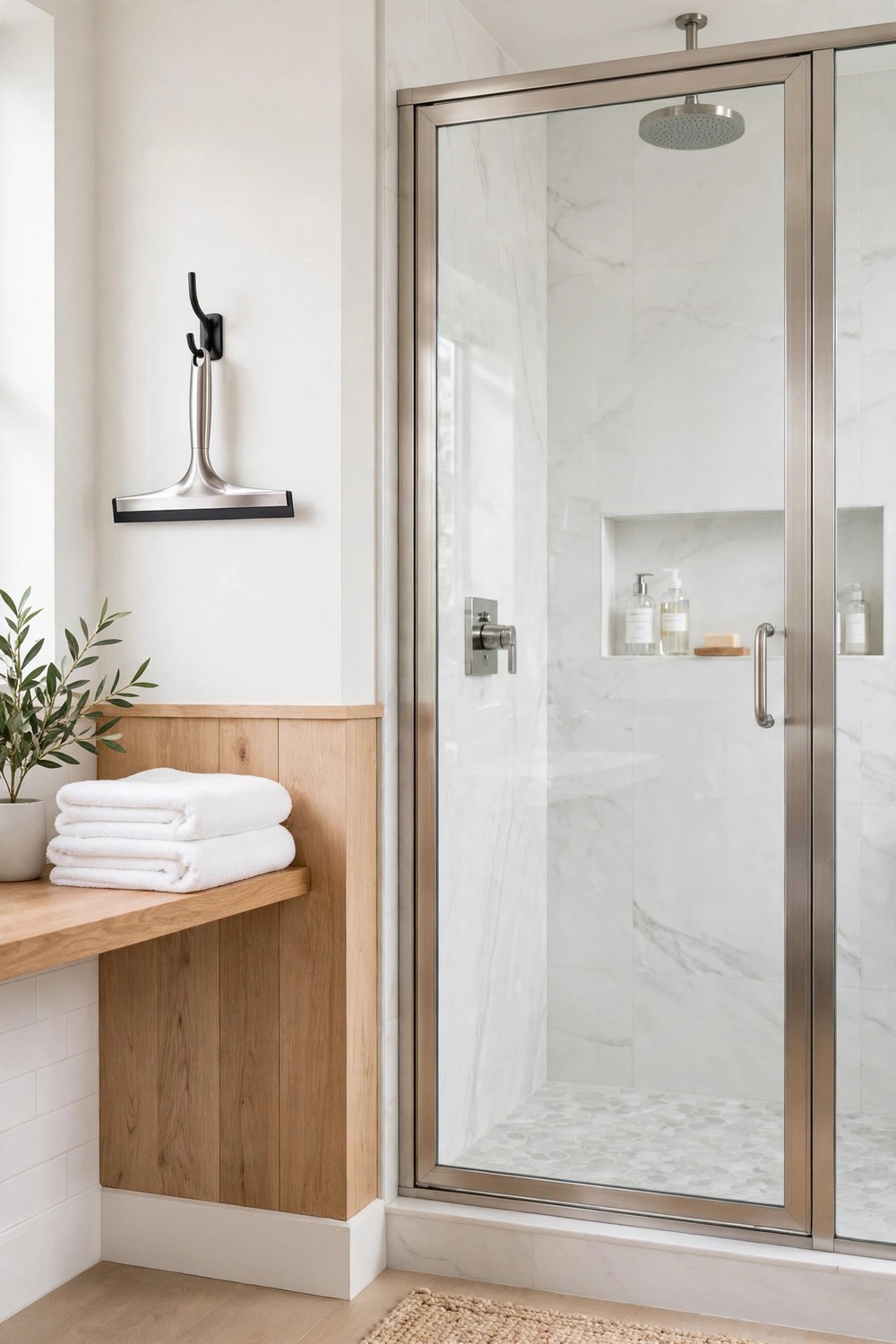
Tip 10: squeegee after every shower. The habit that saves the most work is also the smallest: a squeegee after every shower. Thirty seconds on the glass and tiles keeps water spots and soap film from building up, which means the deep clean stays a monthly job instead of a weekly battle. Hang it right next to the shower, at eye level, where the next person cannot miss it. A squeegee in a cupboard under the sink is a squeegee nobody uses.
A sturdy stainless steel squeegee with a wide rubber blade costs very little and does the job quietly for years. Look for one with a comfortable grip and a blade that sits flat against the glass, because a wobbly blade leaves stripes and a good one leaves nothing at all. The Hiware all-purpose shower squeegee comes with small adhesive hooks, so it can hang right in the shower where you will actually reach for it, and at twelve inches wide it clears a standard shower door in three easy passes.
Laundry: small habits, fresher clothes
Tip 11: sort by soil level, not just colour. Laundry goes wrong in the sorting, not the washing. Sort by how dirty things are, not just by colour: gym kit and tea towels deserve a hotter wash than a lightly worn jumper, and a full load cleans better than two half loads rattling around the drum. Wash cold where the label allows it, and always check pockets. The tissue that survives a wash will decorate every dark jumper you own, and it only takes one to teach you the habit.
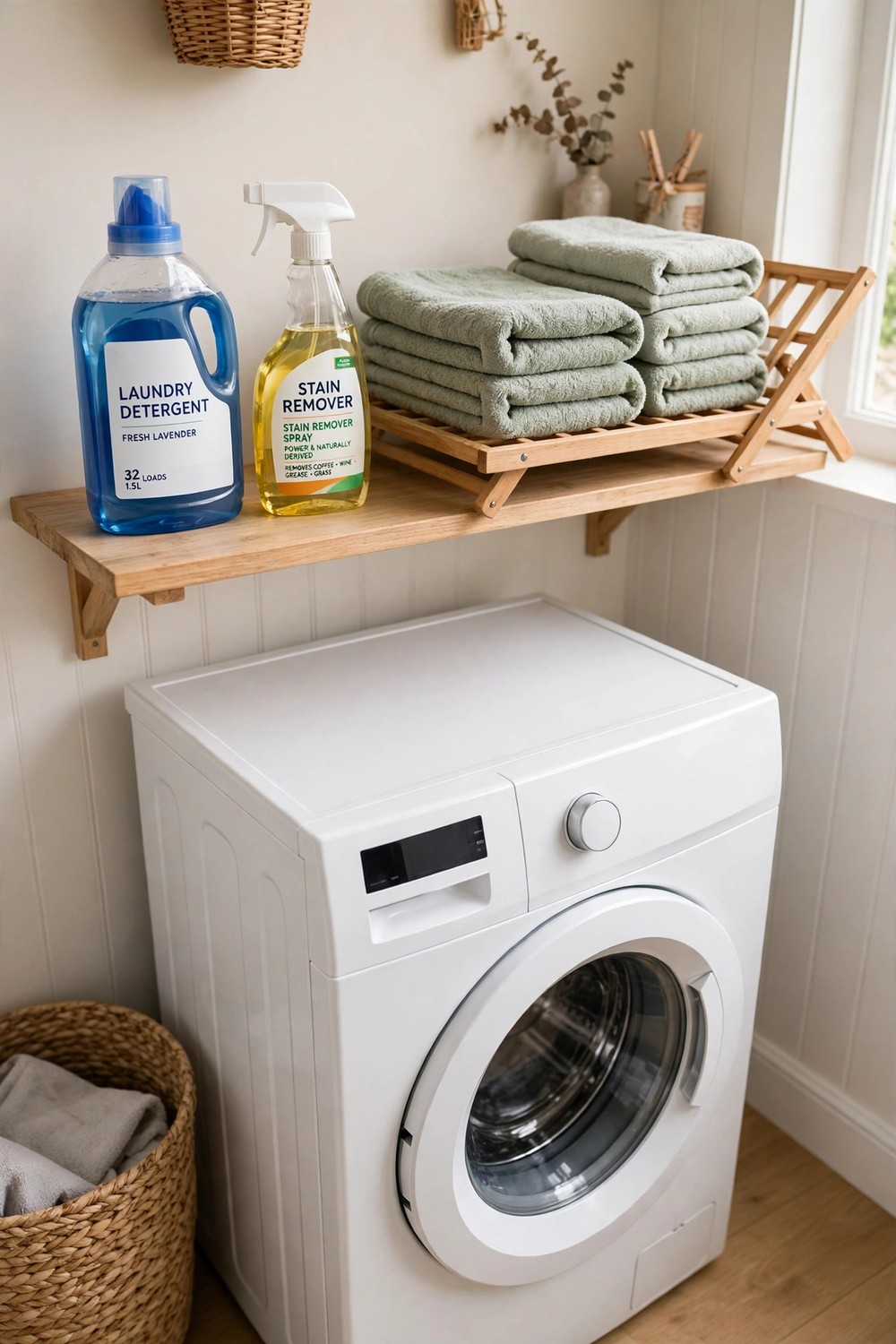
Tip 12: keep the laundry kit simple. Keep the laundry essentials products simple: one detergent you trust, a stain remover for the inevitable, and a drying rack that actually fits your space. Treat stains straight away, while they are fresh, with a dab of stain remover and cold water, because a stain that has been through the dryer is a stain that has moved in permanently. And resist overfilling the machine: clothes need room to move, or they come out smelling of detergent instead of clean.
For the stain remover slot in the cupboard, a spray like OxiClean Max Force laundry stain remover covers most of what a family throws at it, from food and grass to coffee and mud. Spray it on, wait five minutes, and wash as normal. It is the kind of unglamorous product that quietly saves a surprising number of favourite shirts, and because it is colour-safe, it works on everyday clothes without a second thought.
|
MUST READ: |

The details people actually notice
Tip 13: mirrors and glass in daylight. Nobody walks into a house and compliments the skirting boards, but everyone notices streaky mirrors and cloudy glass. Wipe mirrors with a damp cloth first, then a dry microfibre, in a slow S pattern rather than circles, and do it in daylight so the streaks show themselves. The same trick works for windows: clean glass catches the light, and a room with clean glass feels brighter even on a grey day. These are the clean home hacks that make guests think you cleaned for hours, and they take about five minutes per room.
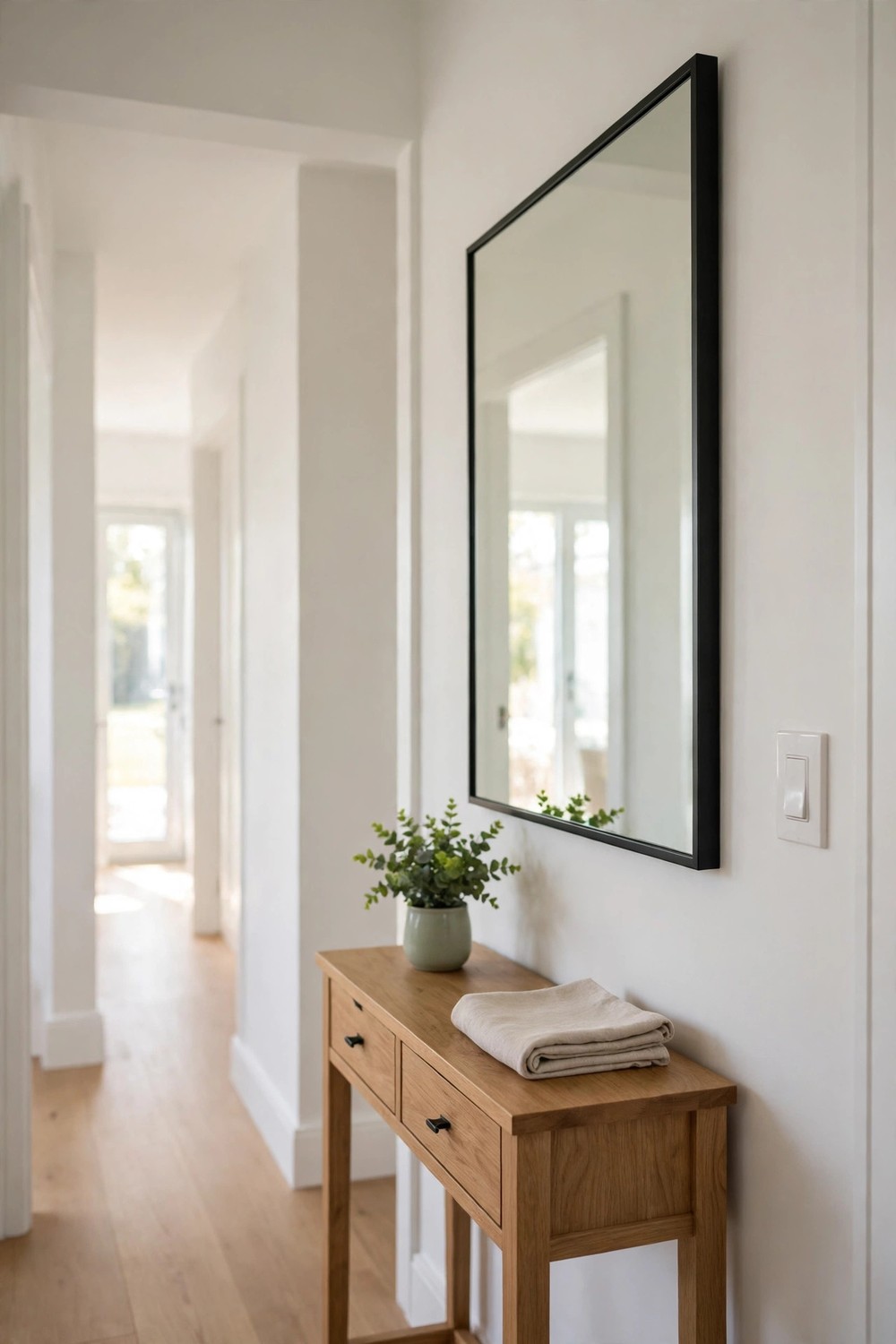
Tip 14: thirty seconds on the high-touch spots. Then give the high-touch spots thirty seconds each: door handles, light switches, the kettle handle, the remote control. They collect more grime than almost anything else in the house, and they are the first thing a visitor touches. One of the house cleaning tips I come back to most is this one, because a clean handle is a small detail that signals the whole house is looked after. A quick wipe during the weekly clean is all it takes; nobody needs to sanitise their own light switches daily.
A pack of plain microfibre cloths in different colours is the hardest-working purchase in this whole article. One colour for glass, one for kitchens, one for bathrooms, and they go through the wash and come back for more. The Amazon Basics microfibre cleaning cloths come in a 24-pack, and I would buy the thickest-feeling pack you can find: a thin cloth pushes dirt around, while a plush one actually lifts it.

The ten-minute reset that keeps it clean
Tip 15: a nightly reset, every night. Here is the truth about a clean home: it is not the big monthly deep clean that does it, it is the ten minutes every evening. Dishes into the dishwasher or washed, counters wiped, a quick sweep of the kitchen floor, and everything back where it belongs. It is not glamorous, and it is not a routine anyone will photograph, but a house that gets a small reset every night never reaches the state where cleaning it feels like a punishment.
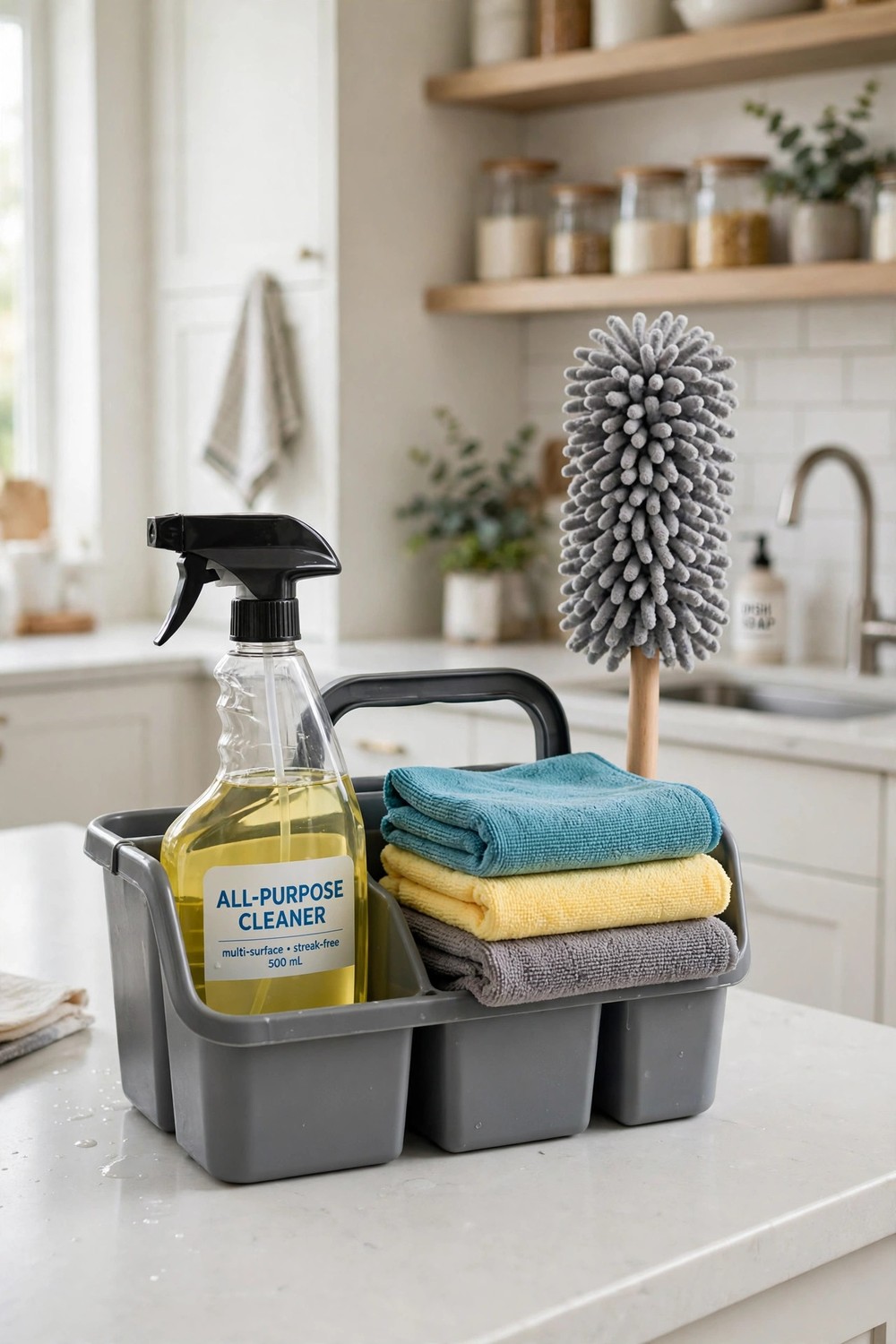
Make it easy on yourself with a caddy that holds the cleaning must haves in one place: an all-purpose spray, a couple of cloths, a duster and a bin bag or two. Carry it from room to room instead of fetching things one by one, and the ten-minute reset stays ten minutes. The best house hacks are boring like this: a basket by the door, a caddy under the sink, a squeegee in the shower. Nothing clever, just the right thing in the right place.
A simple carry caddy with a handle and divided compartments turns the nightly reset from a chore into a quick lap of the house. The Mainstays small portable caddy costs less than a coffee, holds a spray bottle, cloths and a duster in three separate sections, and slides back under the sink when you are done. If the caddy is always stocked, the reset takes ten minutes; if you have to hunt for supplies first, it takes thirty and you will skip it.
Key Facts
- Dust high surfaces first and work down; vacuum before mopping, never the other way round.
- Let cleaners sit for ten minutes before wiping; dwell time replaces scrubbing.
- Check care labels before washing rugs, and dry them flat and fully to avoid musty smells.
- Sort laundry by soil level as well as colour, and treat stains before they go through the dryer.
- A ten-minute nightly reset keeps a home clean far more reliably than a monthly deep clean.
FAQ
How often should I deep clean my house?
A full deep clean every season is plenty if you keep up the weekly routine and the ten-minute nightly reset. Kitchens and bathrooms benefit from a deeper pass once a month, because grease and limescale build up quietly, while bedrooms and living rooms can usually wait for the seasonal one. The trick is to never let a room get so dirty that cleaning it feels like a project.
What is the fastest way to clean a messy house?
Start with a five-minute pickup in every room, then clean one room at a time from top to bottom. Clear surfaces first, dust high, vacuum, and mop last. If guests are coming in an hour, focus on the rooms they will see: the entryway, the living room, the kitchen and the guest bathroom, and close the doors on the rest.
Can I use the same cleaner on every surface?
Not quite. A general all-purpose cleaner suits most sealed surfaces, but natural stone, unsealed wood and glass each have their own rules, and bleach cleaners should never be mixed with anything else. When in doubt, read the label and test a hidden spot first. Keeping two or three cleaners, each for its own job, is simpler than finding out the hard way.
How do I keep my house clean with pets?
Vacuum high-traffic areas and rugs more often, keep washable throws on the sofa and the pets’ favourite spots, and wipe paws at the door when the weather is wet. A rubber broom or a damp rubber glove lifts pet hair off upholstery faster than a vacuum attachment, and a quick daily pass beats a heroic weekly one.
What should I clean first in a dirty house?
The room you use most, from the top down. Dust the high surfaces, clear and wipe the surfaces at eye level, then vacuum and mop the floor last. Finishing one room completely gives you a visible win and a clean base to work from, which makes the next room feel much easier.
A calmer home, ten minutes at a time
That is the whole system: fifteen small moves, none of them heroic, and these house cleaning tips only work because they are small enough to repeat. Start tonight, not on Saturday. Pick one room, dust the high spots, vacuum the rug, and do the ten-minute reset before bed. Tomorrow the house will feel a little calmer, and by the end of the week you will wonder why cleaning ever felt like a project.
Sources & Citations
- HGTV — How to Clean Your House Fast & Efficiently: https://www.hgtv.com/lifestyle/clean-and-organize/clean-your-house-in-45-minutes-or-less
- The Spruce — A Realistic Weekly Cleaning Schedule to Get You Started: https://www.thespruce.com/house-cleaning-schedule-for-every-day-3129149
- American Cleaning Institute — Room by Room Cleaning Guide: https://www.cleaninginstitute.org/cleaning-tips/home/room-guide

Enjoying our content? Make us a preferred source on Google.





Add comment