

Gentle ways to keep walls spotless

20 years of experience as a home decor consultant, specializing in furniture selection, space-conscious layouts, and practical interior solutions.
Cleaning walls hacks for young couples that actually work: dust first, test your paint finish in a hidden spot, then wash with two buckets, one soapy and one for a clean rinse, working from the bottom up with a well-wrung sponge. Treat scuffs one at a time with the gentlest method that works: a damp cloth, then a baking soda paste, and a melamine sponge only with a feather-light hand. Split the job between the two of you and a whole apartment takes about 20 minutes a month to maintain.
When we moved into our first place together, the walls were the one thing that made it feel like ours: fresh, bright, and completely unmarked. Six months later, our hallway looked like it had been attacked by luggage. There was a grey arc where the vacuum cleaner kept kissing the skirting board, fingerprints blooming around every light switch, and a mysterious dark smudge behind the sofa that neither of us would admit to.
We are renters, so repainting was not really an option, and honestly, we did not want to spend our weekends repainting anyway. So we did what young couples do: we tested everything the internet suggested, ruined one small patch of paint behind the bookcase (more on that below).
In the end we covered it with an X-PROTECTOR touch-up paint pen filled with the leftover wall paint, which hid it far better than more scrubbing ever would, and slowly worked out which cleaning walls hacks actually work. This is the routine we landed on. It is cheap, it uses things already under our sink, and it has kept our walls looking freshly painted for two years.
|
MUST READ: |
Why our walls got grubby so fast
Nobody warns you that walls are basically giant, vertical dust magnets. Cooking vapour drifts out of the kitchen and settles on the paint. Dust lands on every horizontal edge and gets smeared the first time you brush past with a laundry basket.
Add two adults coming and going with bags, bikes and gym kits, and the high-traffic zones (the hallway, around door handles, beside the bed) start to look tired long before the rest of the room does.
The good news is that most of what looks like “damage” is just dirt sitting on top of the paint, not in it. In our flat, a proper dust and a gentle wash made the entryway look newly painted again. The marks below are the usual suspects, and every one of them came off with the methods in this post. That is why cleaning walls hacks for young couples start with that simple dusting step.
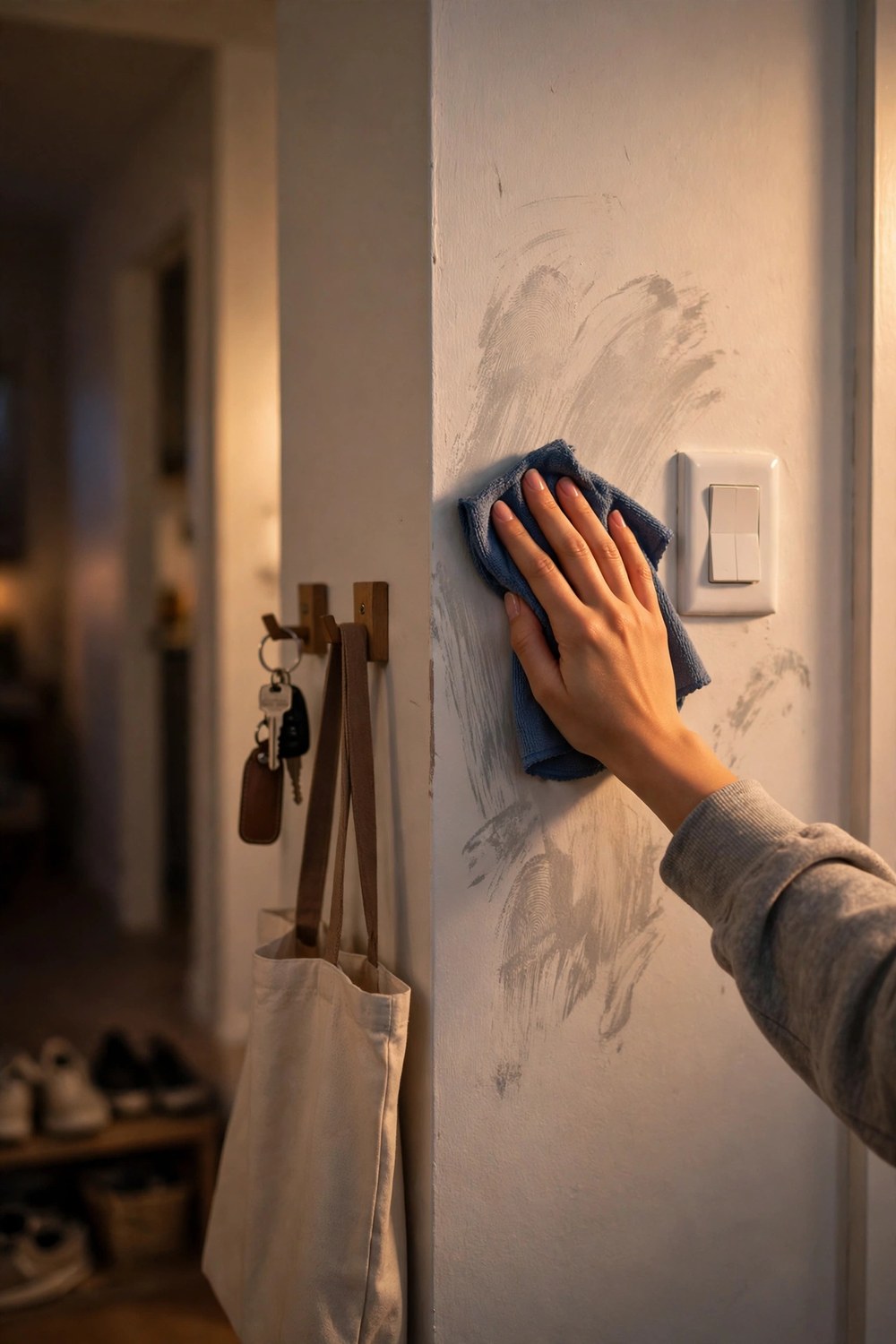
Before you wash anything, do the boring step that makes everything else work: dust the wall dry, top to bottom, with a microfibre cloth or a flat mop. For the tops of the walls and the ceiling corners, we reach for the Great Value extendable microfibre duster we keep in the hallway cupboard.
The longer handle means neither of us has to balance on a chair to get the cobwebby bits. Dust plus water equals grey sludge smeared across the paint. We learned that the messy way, so you do not have to.
Test first: know your paint finish before you wash
This is the step that separates a hack that works from a hack that costs you your deposit. Paint finishes behave very differently when they get wet and rubbed.
Flat or matte paint is the most delicate, so scrub it and you can polish a permanent shiny patch into it, which is exactly what we did behind the bookcase. Eggshell is a little hardier, satin and semi-gloss can take a proper wash, and gloss is the toughest of all.
Not sure what you have? Hold a bright light sideways against the wall and look along the surface. We use the Swiss Tech Steigern flashlight that lives in the kitchen drawer, but a phone torch works too.
No shine at all means flat or matte; a soft sheen is eggshell or satin; a clear reflection means semi-gloss or gloss.
Then test whatever cleaner or tool you plan to use first on a hidden patch, behind the sofa or inside a cupboard, with the same soft cloth you plan to wash with, and let it dry fully before you judge it. A test spot that dries clean means you are safe to carry on.
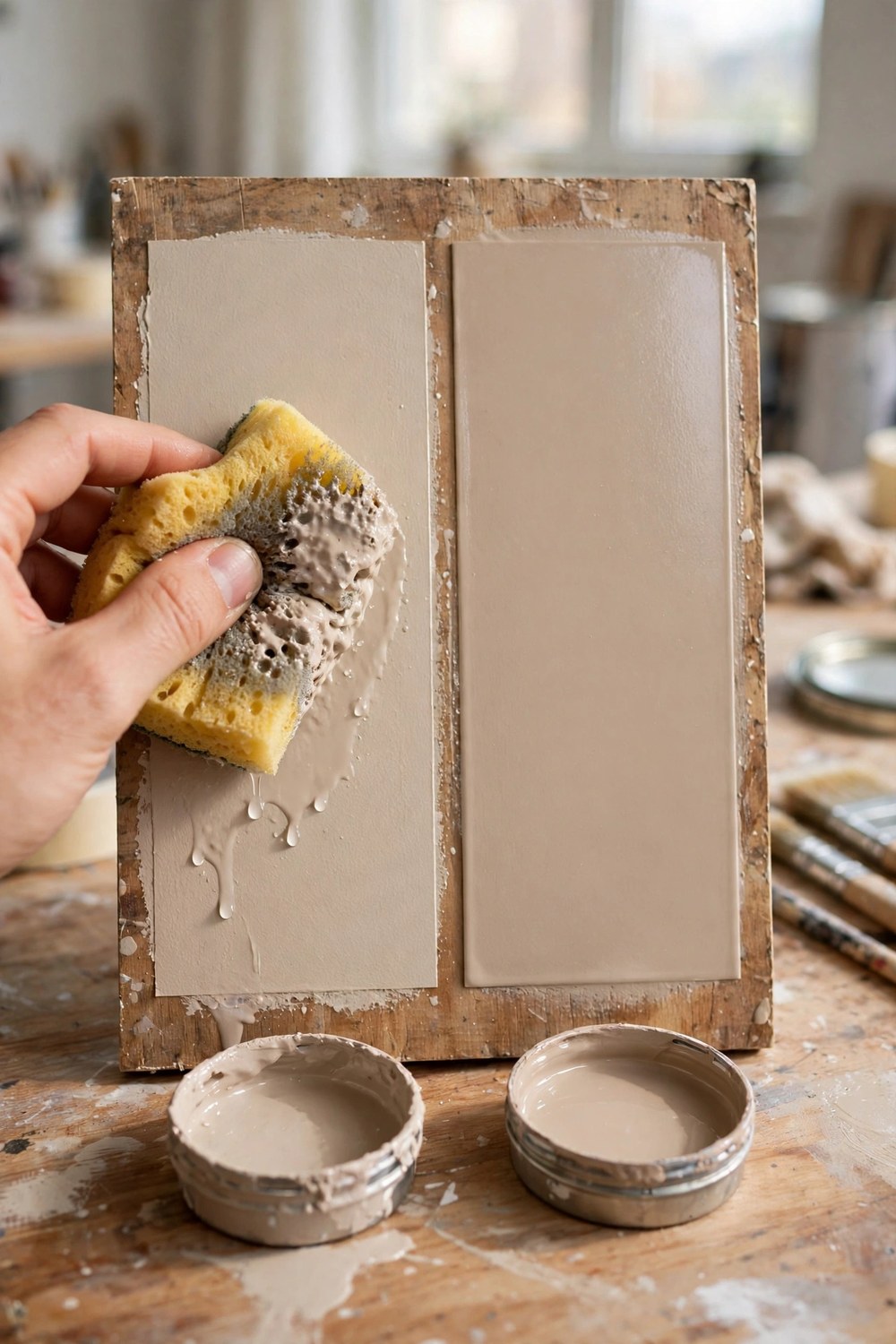
Our house rule now: the shinier the paint, the braver we can be; the flatter the paint, the softer everything gets. That means a barely damp cloth, blot instead of rub, and no abrasive tools at all.


The two-bucket wash that works on almost every wall
Here is the wash itself, the one we use on every wall in the flat. Fill one bucket with warm water and just a few drops of washing-up liquid. You want it barely soapy, not bubbly. Fill a second bucket with plain warm water for rinsing. Lay a towel along the skirting board to catch drips, and move furniture just far enough out that you can work comfortably.
Dip a soft sponge in the soapy water and wring it until it is damp, not dripping. Ours are the Scotch-Brite Zero Scratch sponges, because the rough green side of an ordinary sponge is one of the easiest ways to scratch paint, or use a microfibre cloth.
Wash in small sections, and here is the counter-intuitive part: work from the bottom of the wall upwards. Dirty drips running down a dirty wall leave streaks; drips running down an already-clean section wipe straight off. Rinse each section with the clean-water cloth, then buff it dry.
For a whole wall we often swap the sponge for our Rejuvenate PowerMax spray mop. A light spray and the flat pad keep the wall damp rather than wet, which is how the finish stays streak-free. One of us washes, the other follows with the rinse and the dry cloth.
It halves the time and stops anyone getting bored and scrubbing too hard, which is why cleaning walls hacks for young couples like this one are easier with two people: one washes while the other rinses. And if you do not have two buckets to spare in a small flat, the Libman Rinse ‘N Wring mop system does the same separation in a single unit. Its dual-chamber bucket keeps the clean water and the dirty water apart, and the flat microfibre pad is a good size for walls.
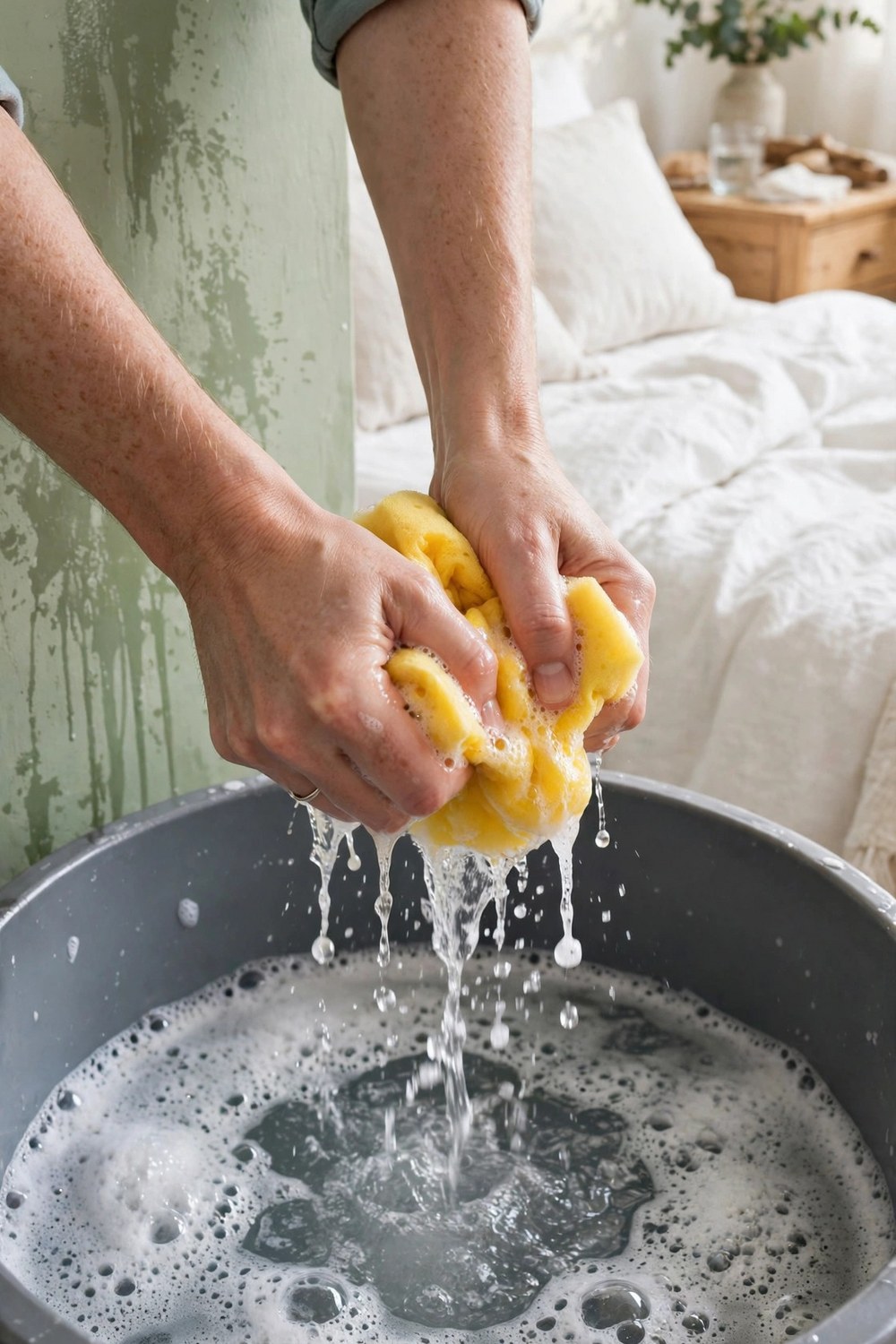
Finish one whole wall before you stop for a tea break. Stopping and restarting mid-wall is how you get visible “wash marks”: tidelines where a cleaned patch dried next to a dirty one. A full wall, start to finish, takes us about ten minutes.
Scuffs, crayon and mystery marks: fixes that actually lift them
General dirt washes off. Individual marks need individual treatment, and the golden rule is to start with the gentlest method and only step up if the mark survives. Our ladder looks like this: first a dry microfibre cloth, then a barely damp cloth.
Then use a paste of baking soda and water, just the ordinary box from the baking cupboard, on a soft cloth rubbed in tiny circles. And only then, on satin, semi-gloss or gloss paint, and only after a test spot, use a melamine sponge. Melamine sponges (the “magic eraser” kind) genuinely feel like magic on shoe scuffs and furniture rubs.
The ones in our cupboard are Mr. Clean Magic Eraser Extra Durable sponges. They work by micro-abrasion. They are effectively ultra-fine sandpaper. On shiny paint that is fine with a light hand.
On flat or matte paint, a few enthusiastic rubs will strip the finish and leave a glossy patch that catches the light forever. Dampen the sponge, wring it almost dry, use the lightest pressure you can, and stop the second the mark lifts.
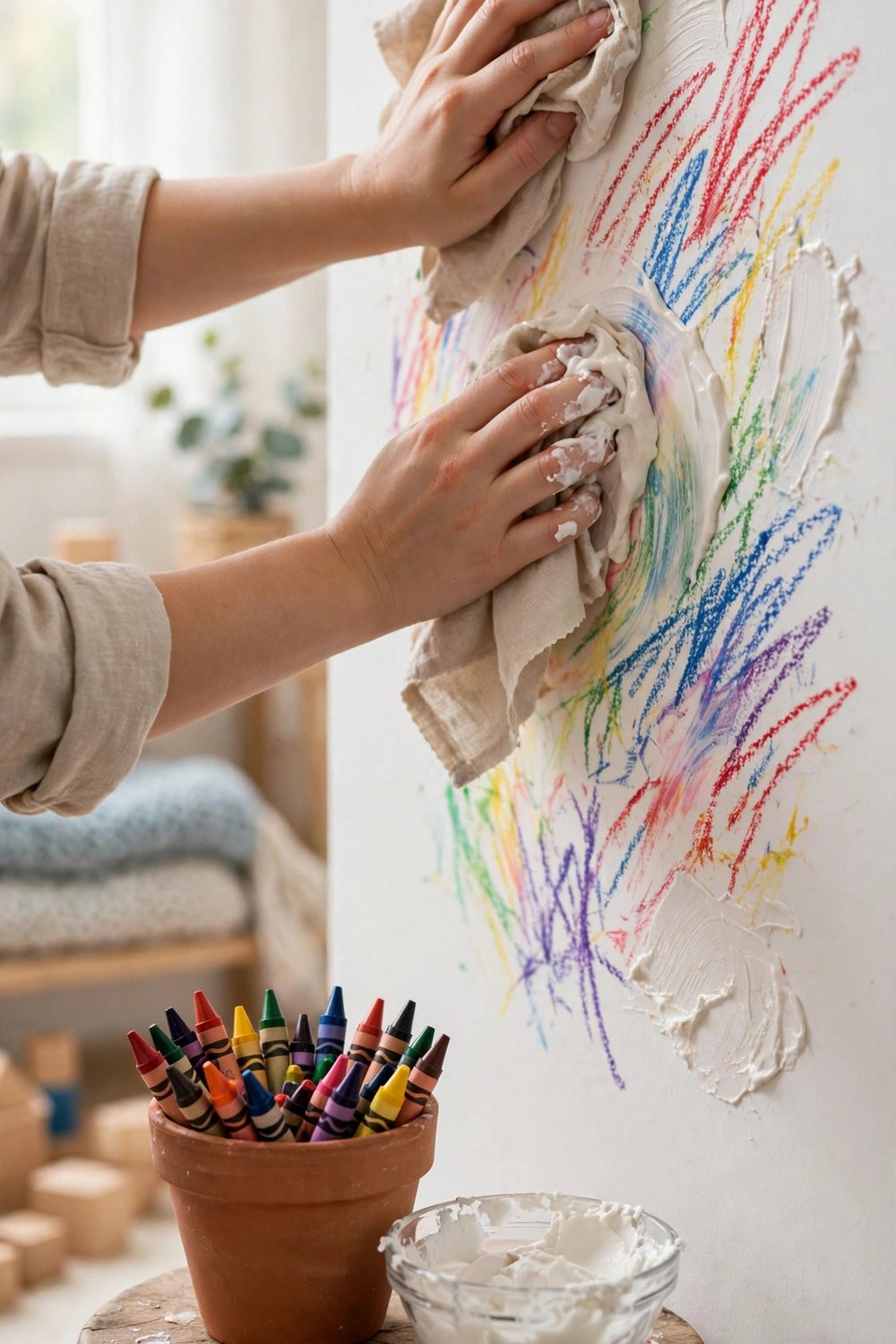
For crayon, warmth helps: hold a hairdryer on low a few centimetres from the mark for half a minute to soften the wax, then wipe with the soapy cloth. And if a mark has genuinely taken the paint off, stop scrubbing. You can see a bare or shiny patch. A dab of leftover paint on a cotton bud is a two-minute touch-up, and it will always look better than a bigger scrubbed patch.
|
MUST READ: |
Kitchen grease and bathroom steam: the two problem rooms
The wall behind and beside the hob collects an invisible film of cooking grease that slowly yellows. Because kitchen walls are usually satin or semi-gloss, they can handle a slightly stronger mix: warm water, a few drops of washing-up liquid, and a splash of white vinegar in the bucket.
For the stubborn patch right beside the hob, we first dab a little Mr. Clean Clean Freak degreaser onto the cloth itself, never sprayed straight onto the paint. Let it sit for a minute, then wash as normal. Wipe, rinse well, and dry. Grease comes off easily when you catch it monthly instead of yearly.
Never use vinegar mixes on stone tiles or grout-heavy splashbacks without testing, and keep it off wallpaper entirely. Bathrooms are less about dirt and more about moisture. Wipe condensation off painted walls after steamy showers when you can, and run the extractor fan or crack the window.
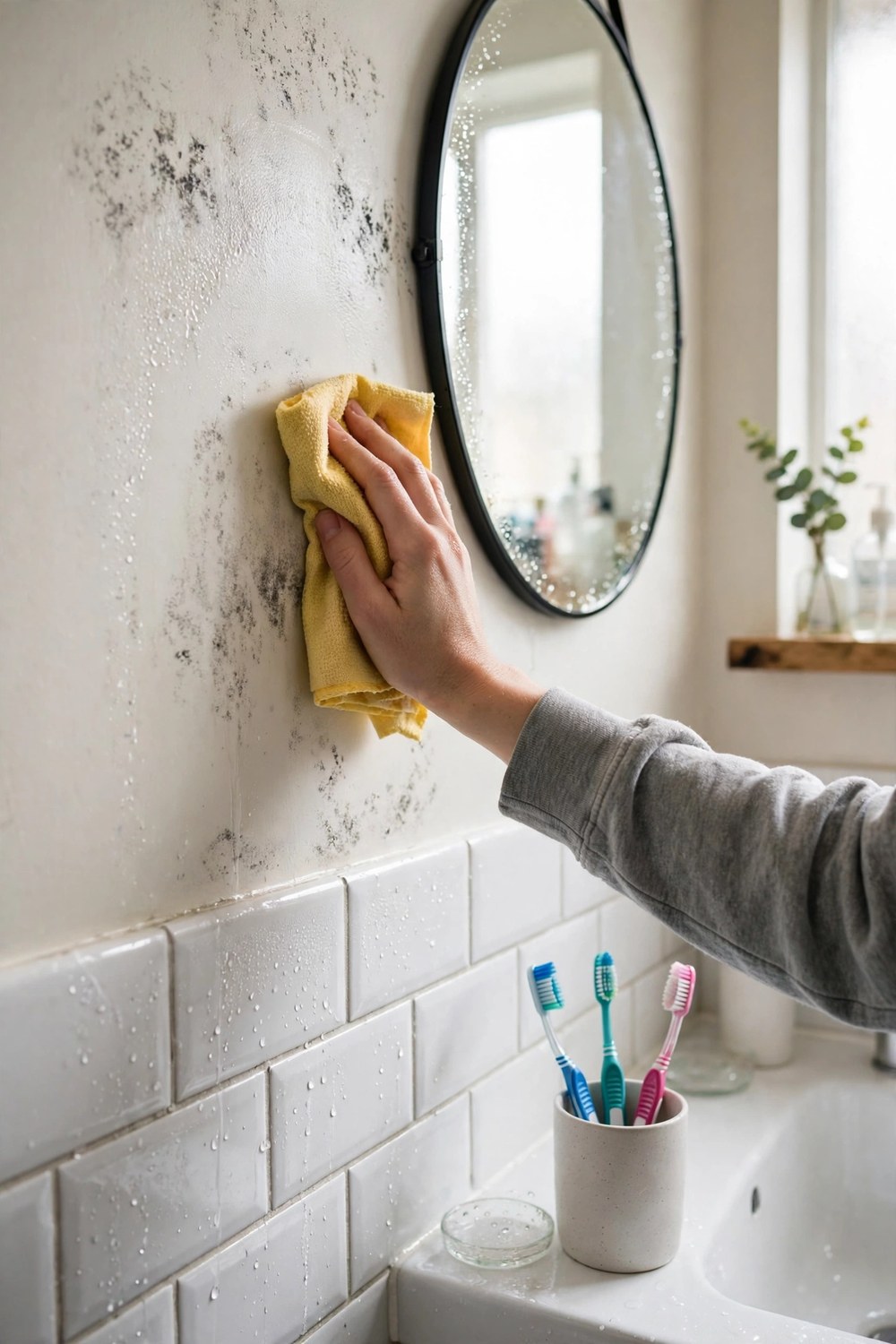
Most bathroom wall marks we see in friends’ flats are just dried condensation trails. If you find actual mould spots, small ones on a hard, shiny bathroom paint can be wiped with a cloth dampened in your soapy mix. Anything larger than a dinner plate, or mould that keeps coming back, is a landlord-and-professional conversation, not a cleaning hack.
One renter-specific tip we wish someone had told us: photograph your walls when you move in, marks and all. When we can prove a scuff was already there, or show how much better the walls look now, deposit conversations get very short and friendly.

Our 20-minute monthly routine, split between two people
Everything above is the deep clean, and honestly we only do the full wash once or twice a year, which is why cleaning walls hacks for young couples are easiest to keep up when the monthly routine is this short. What keeps the walls looking good is the little monthly routine, and because there are two of us it genuinely takes 20 minutes.
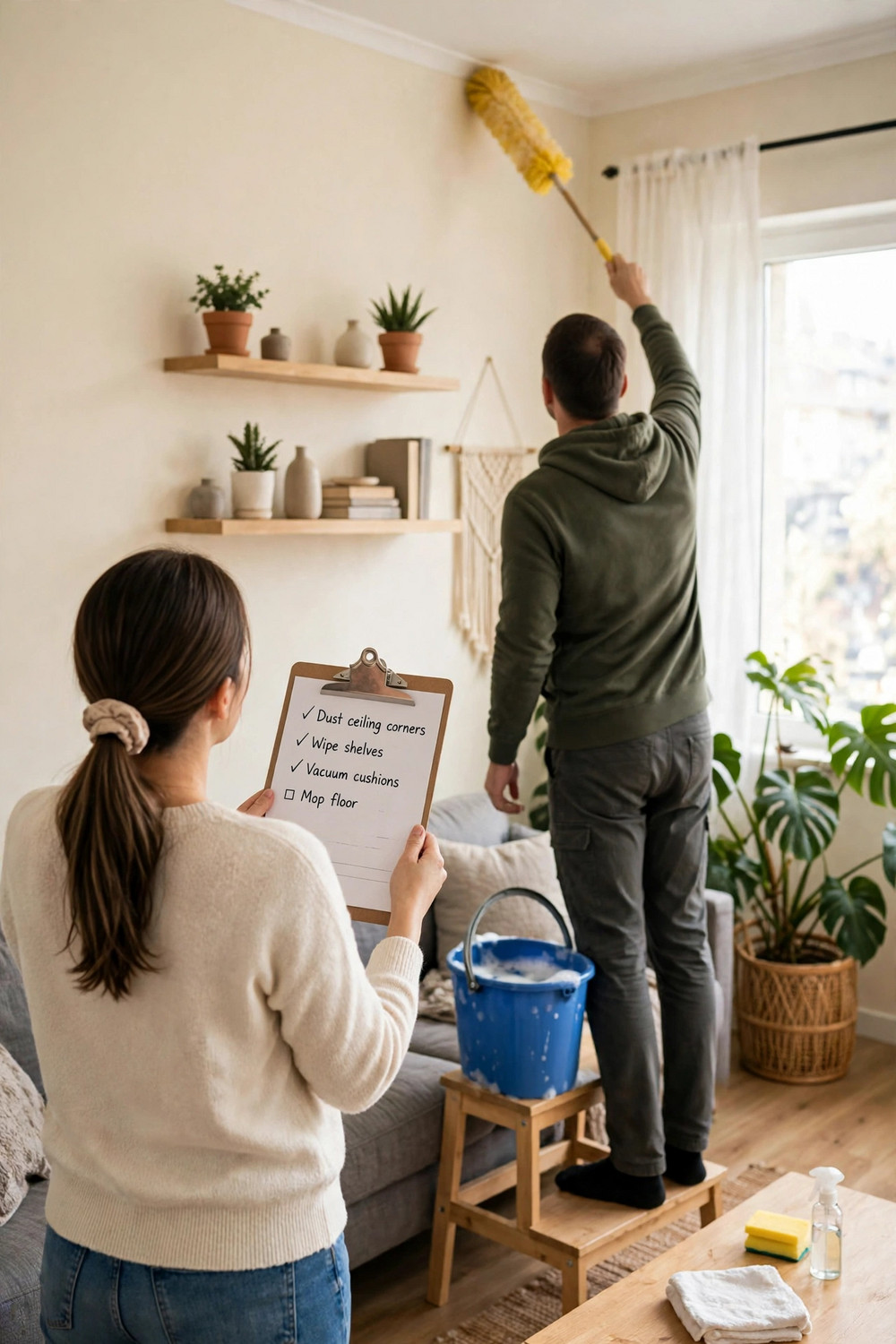
Person one takes the flat mop with a dry cloth on it and dusts every wall top to bottom. They stand on our little COSCO folding step stool for the ceiling corners where cobwebs start. It folds flat behind the door, so it earns its place in a small flat.
Person two follows with a damp cloth and does the high-touch circuit: around light switches, door handles, the hallway scuff zone, and beside the hob. We put music on, we race the playlist, and we finish with the skirting boards, which collect more dust than everything else combined. That is it.
No products to buy, no big spring-clean dread, and no wall ever gets dirty enough to need scrubbing, which, as the test-spot section explained, is where the real damage happens.
If you live in a studio or a house-share, the same split works by zones instead of by person. Dust everything first, then wipe the marks, then the skirting. The order matters more than the team size.
Key Facts
- Dust walls dry before any wet cleaning. Dust plus water makes grey sludge that smears.
- Always test any cleaner or tool on a hidden patch first, and judge it only once fully dry.
- Flat and matte paints are the most delicate; satin, semi-gloss and gloss tolerate a proper wash.
- Wash from the bottom of the wall upwards, with a well-wrung sponge, to avoid streaks.
- Melamine sponges are micro-abrasive: light pressure only, and avoid them on flat paint.
- A full wall wash is a once-or-twice-a-year job if you dust monthly and wipe high-touch spots as they appear.


FAQ
How often should we actually wash our walls?
Dust monthly, wipe fingerprints and scuffs in high-touch areas as you spot them, and do the full two-bucket wash once or twice a year, or before a landlord inspection. Kitchen walls near the hob benefit from a wipe every month because of the grease film.
Can we use a magic eraser (melamine sponge) on matte paint?
Only with great care, and we usually advise against it. Melamine is micro-abrasive and can polish a permanent shiny patch into flat or matte paint. Try a damp microfibre cloth and baking soda paste first, test in a hidden spot, and if you do use one, keep it barely damp with the lightest possible pressure.
What is the safest cleaner for rented apartment walls?
Warm water with a few drops of washing-up liquid, applied with a well-wrung sponge or microfibre cloth. It is gentle enough for almost every finish, leaves no residue when rinsed, and will not stain or strip paint the way strong degreasers or bleach sprays can.
When is touch-up paint better than scrubbing?
When the mark has already damaged the surface, more scrubbing only makes it bigger. You can see a bare patch, a chip, or a shiny burnished spot. A small dab of matching paint on a cotton bud or small brush blends in minutes. Photograph walls at move-in so you can tell old marks from new ones.
Do we need to wash the whole wall, or just the dirty marks?
For a single fresh mark, spot-cleaning is fine. But if you wash only one patch on an otherwise dusty wall, the clean patch can show as a lighter rectangle. For anything beyond a quick spot fix, dust and wash the full wall. It is faster than it sounds and dries evenly.
A cleaner wall, a calmer home
We started this as a deposit-saving exercise and ended up with a flat that simply feels calmer. Clean walls are the background of every room, and when they are bright, the whole place looks looked-after, even on days when the sofa is covered in laundry.
Pick one wall this weekend, dust it, test a corner, and give it the two-bucket wash. When you see the difference, the other walls will not feel like a chore. These cleaning walls hacks for young couples will feel like the easiest room makeover you have ever done. No paint required.
Sources & Citations
- Reader’s Digest: How to Clean Walls with Paint or Wallpaper, Safely and Easily: https://www.rd.com/article/how-to-clean-walls/
- HGTV: How to Clean Walls and Wallpaper, Without Damaging Your Surfaces: https://www.hgtv.com/lifestyle/clean-and-organize/how-to-clean-walls
- Checkatrade: How to Clean Walls: The Ultimate Guide: https://www.checkatrade.com/blog/how-to/clean-walls/

Enjoying our content? Make us a preferred source on Google.





Add comment