


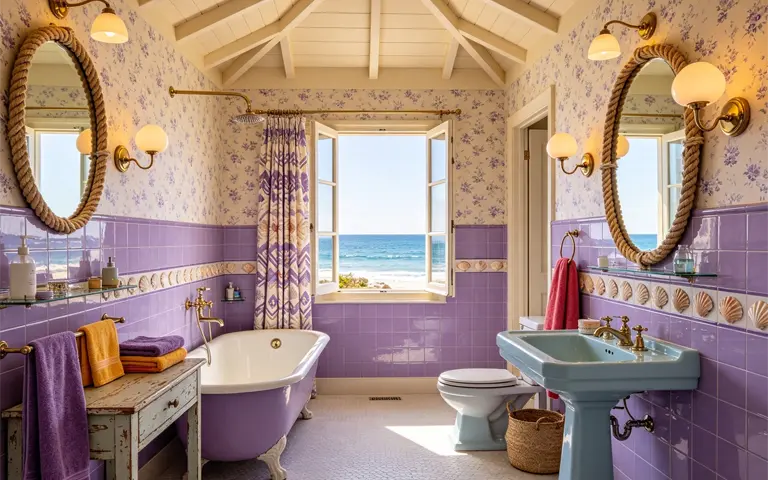
Beach-inspired finishing touches

20 years of experience as a home decor consultant, specializing in furniture selection, space-conscious layouts, and practical interior solutions.
Relaxed luxury coastal design comes from four material choices, not decor: plaster walls, unlacquered metal fixtures, natural fiber textiles, and diffused natural light. That’s the actual formula behind the coastal bathrooms you see in $900-a-night Nantucket rentals – not the starfish-and-blue-bath-mat look most people default to.
Skip the material choices, and you get a hotel gift shop. Get them right, and the room reads as effortless, even though nothing about it was cheap or accidental.
I’ve styled and consulted on enough of these rooms to know where people overspend and where they underspend – and it’s almost always backwards. People splurge on decor and skimp on plaster and hardware, when it should be the reverse.
So here are 15 coastal bathroom decor ideas, in the order I’d actually tackle them if this were my own bathroom.
Key Takeaways
- The “expensive” coastal look comes from texture and tone-on-tone neutrals, not neccessary from beach-themed decor.
- Unlacquered brass is the single highest-impact swap that looks better with age.
- Limewash paint does more for “relaxed luxury” than any single furniture piece in the room.
- Jute and seagrass rugs need a rubber-backed bath mat layered on top near the tub, or they’ll mildew within a season.
- A freestanding tub isn’t required – a well-lit shower with pebble tile and a linen curtain reads just as coastal.
- Natural light matters more than any product on this list; if you can add a window or skylight, do that before anything else.
- Budget the most for plumbing fixtures and the least for wall decor – that ratio is where most coastal bathrooms go wrong.
At-a-Glance: 15 Ideas, Best For, and Price Range
- Whitewashed shiplap: Best for rentals and DIYers ($2-$4 per sq ft)
- Unlacquered brass fixtures: Best for instant upgrade on a budget ($180-$550)
- Freestanding soaking tub: Best for primary bath remodels ($600-$2,500)
- Limewash plaster walls: Best for real luxury feel ($30-$150 per gallon)
- Pebble stone shower floor: Best for walk-in showers ($8-$18 per sq ft)
- Jute or seagrass rug: Best for powder rooms, dry areas ($40-$150)
- Live-edge wood vanity: Best for statement piece ($500-$3,000)
- Rattan storage baskets: Best for hiding clutter ($25-$70)
- Capiz shell or sea-glass mirror: Best for focal point above vanity ($90-$300)
- Open driftwood shelving: Best for small bathrooms ($60-$200)
- Skylight or larger window: Best for interior or windowless baths ($1,200-$3,500 installed)
- Ticking-stripe shower curtain: Best for renters, quick refresh ($30-$65)
- Linen and waffle-weave towels: Best for instant texture ($35-$90)
- Deep navy or seafoam accent wall: Best for adding contrast ($40-$70 per gallon)
- Indoor-outdoor touches (teak stool, louvered door) – Best for connecting to a view ($60-$400)

Why Trust This Guide
This guide was developed using a research-first methodology designed to help homeowners make informed bathroom design decisions. Recommendations were compared with current product availability and pricing from major U.S. retailers, while also incorporating guidance on material durability, bathroom moisture performance standards, and emerging 2026 coastal interior design trends.
Rather than highlighting products solely because they are popular, this guide prioritizes solutions that balance appearance, long-term durability, ease of maintenance, and value for money. Price ranges are intended for budgeting purposes and may change over time as retailers update inventory and promotions.
Whenever possible, buyers should verify current specifications, finishes, dimensions, and pricing before purchasing.
How We Evaluated Each Idea
Every recommendation was assessed using the same evaluation framework to improve consistency and reduce subjective bias. Factors included moisture resistance, suitability for high-humidity bathrooms, material quality, ease of cleaning, installation complexity, long-term maintenance requirements, availability through major U.S. retailers, and overall value within its price category.
Design recommendations were also reviewed for how well they reflect modern coastal interiors rather than overly themed “beach house” decor. Preference was given to timeless materials, neutral color palettes, natural textures, and products that work across a wide range of home styles.
Solutions requiring uncommon installation methods, specialty contractors, or climate-specific conditions were excluded or clearly identified so readers can make practical, realistic purchasing decisions.
Whitewashed Shiplap Walls
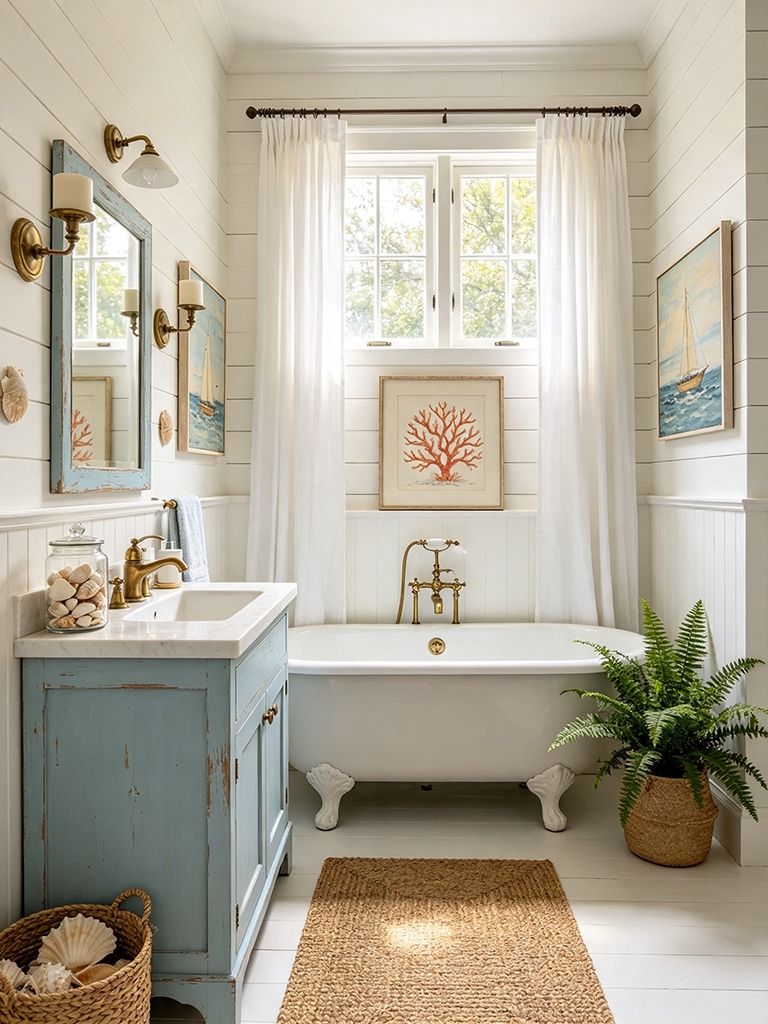
This is the idea everyone starts with, and honestly, it earns the spot. Whitewashed shiplap gives you texture and light-catching grooves without the flat, builder-grade look of drywall. Best for renters and DIYers, since you can often install it over existing walls with liquid nails and skip the demo. Materials run $2-$4 per square foot at Amazon, and a small bathroom’s worth is a weekend project for two people.
Skip pure white paint and go with a warm off-white – something like Sherwin-Williams White Sand – or the whitewash reads cold under bathroom lighting instead of sun-bleached.
|
MUST READ: |
Unlacquered Brass Fixtures
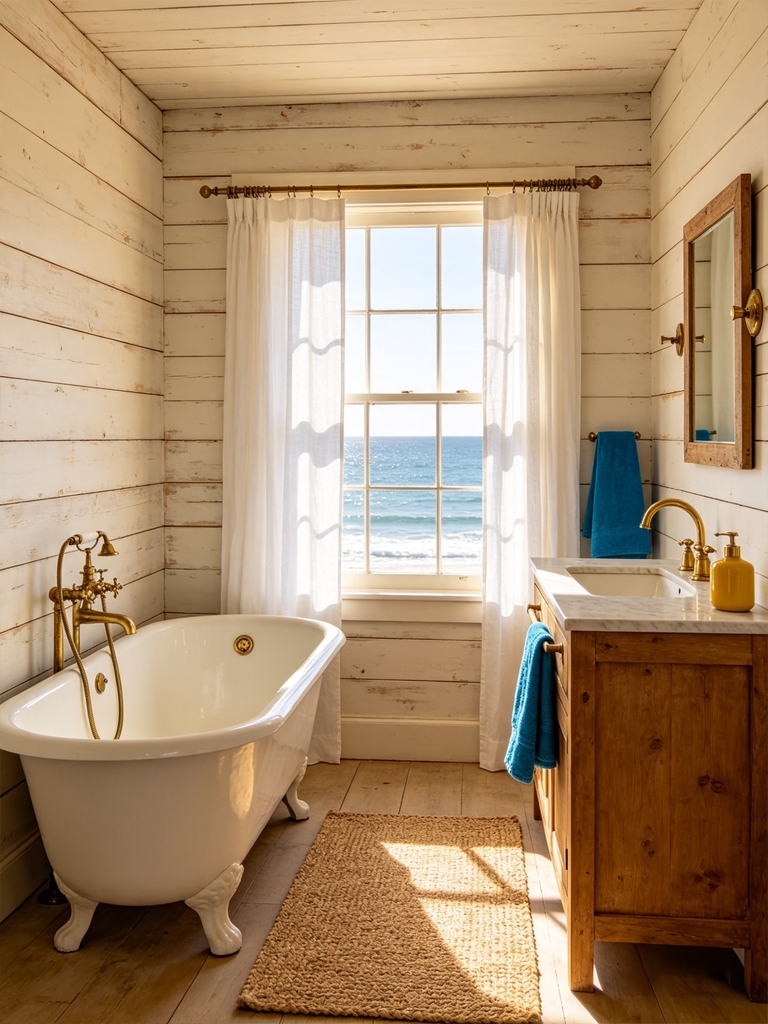
If I had to pick one swap, it’s this one. Unlacquered brass develops a soft patina over months of use, and that living, aging quality is exactly what separates “relaxed luxury” from “matched hardware set.” Best for anyone on a budget upgrade, since a single faucet swap ($180-$550 at Wayfair or a plumbing supply site) can shift the whole room’s mood.
Here’s the honest caveat: unlacquered brass will water-spot and tarnish unevenly, and some people hate that. If you want the warmth without the maintenance, look for a “living finish” version instead of true unlacquered.
A Freestanding Soaking Tub
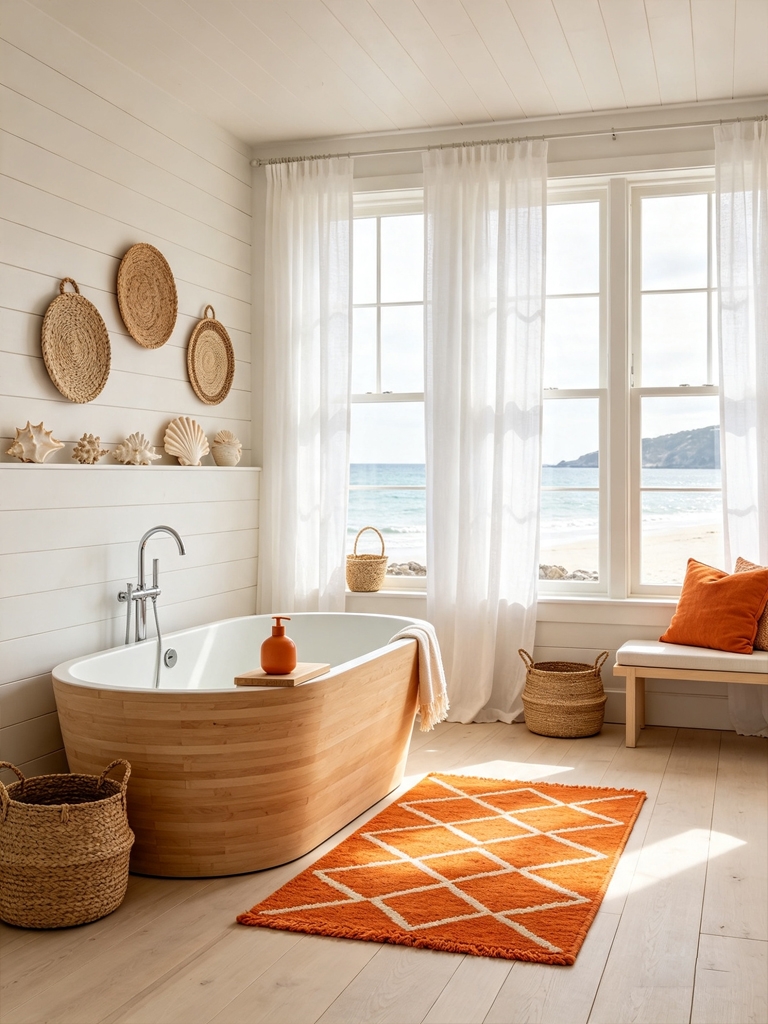
Best for a primary bath remodel where you’ve got the square footage to spare. A matte white or slipper-style freestanding tub is the closest thing to a design cheat code – it reads expensive even in a fairly plain room. Acrylic versions start around $600 at Walmart; cast iron or stone-resin runs $1,500-$2,500.
Who should skip it: anyone in a small or single bathroom home. A freestanding tub takes up floor space and, in many layouts, removes your only shower. Practicality loses to Pinterest here more often than people admit.
Limewash or Textured Plaster Walls
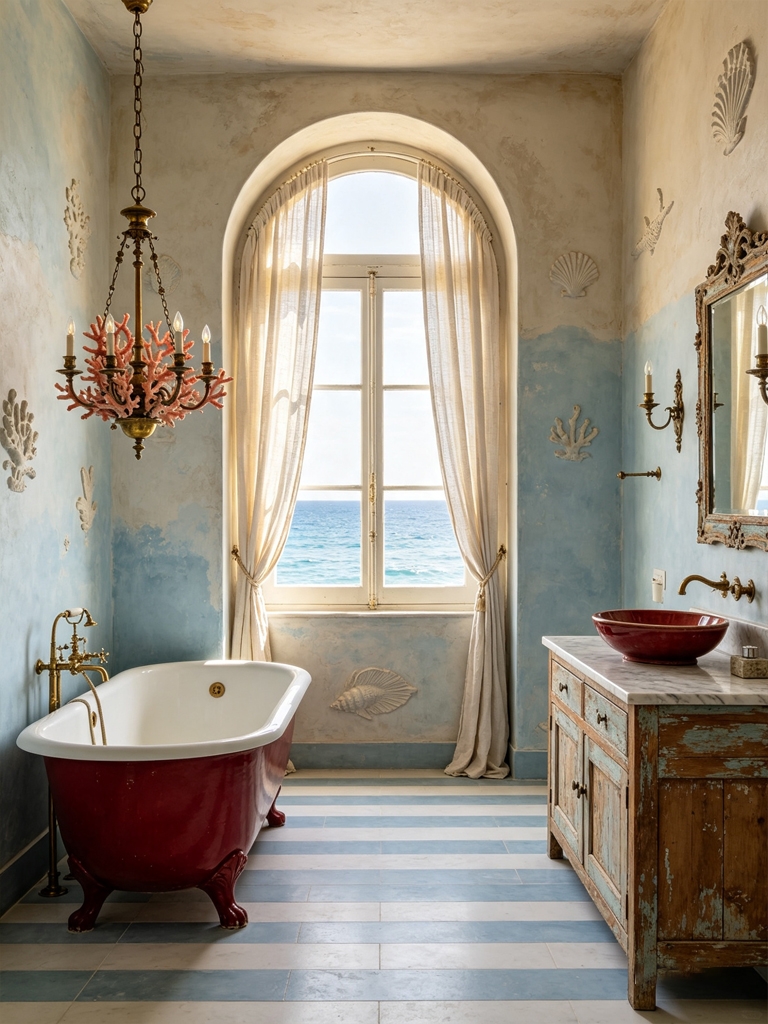
This is the one designers rarely explain, and it’s probably the highest-impact idea on this whole list. Limewash paint dries with a soft, cloudy variation – no two square feet look identical – and that irregularity is what makes a room feel handmade instead of painted. Best for anyone chasing that real, old-money coastal look. Expect $30-$150 a gallon from retailers like Amazon, and budget extra time since it’s a multi-coat, technique-dependent finish.
I’ll be honest: it’s not forgiving for a first-time DIYer. Practice on a scrap board before you touch the actual wall.
Natural Stone Pebble Shower Floor
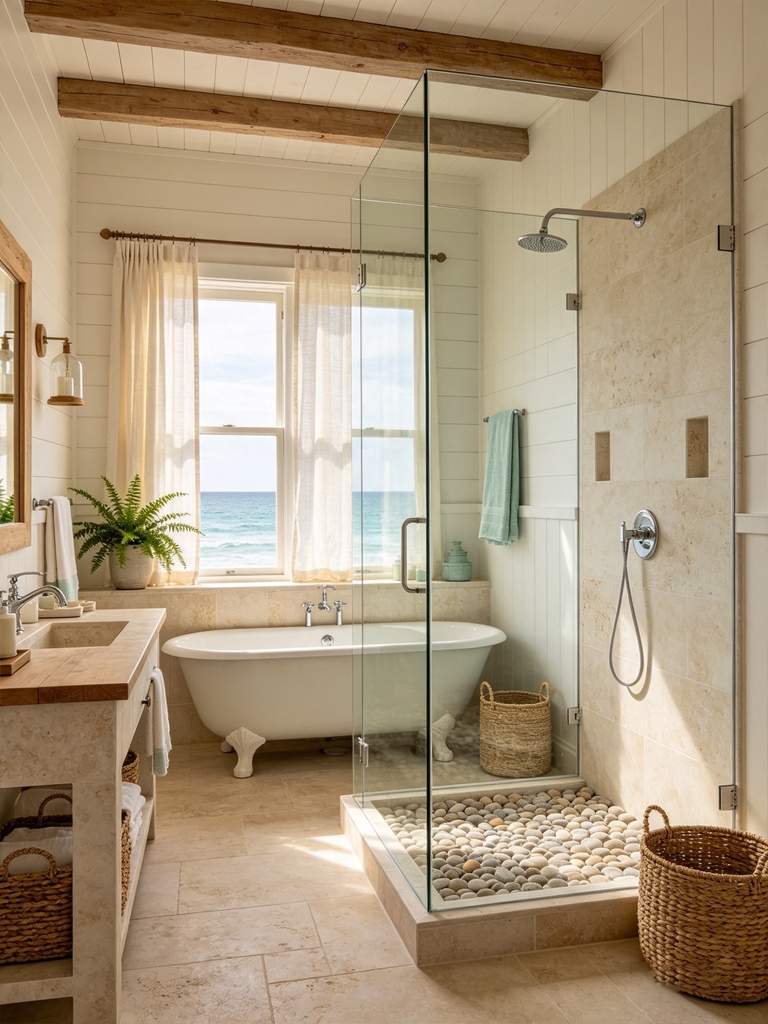
Pebble tile turns a shower floor into a design feature instead of an afterthought, and it’s genuinely one of the more affordable “luxury” swaps on this list at $8-$18 per square foot installed. Best for walk-in and curbless showers where the floor is actually visible.
The tradeoff nobody mentions: pebble tile is textured on purpose for grip, which also means it’s harder to scrub grime out of the gaps. If low-maintenance matters more to you than the look, a large-format matte stone tile gets you 80% of the effect with a fraction of the cleaning.
|
MUST READ: |
Jute or Seagrass Rug
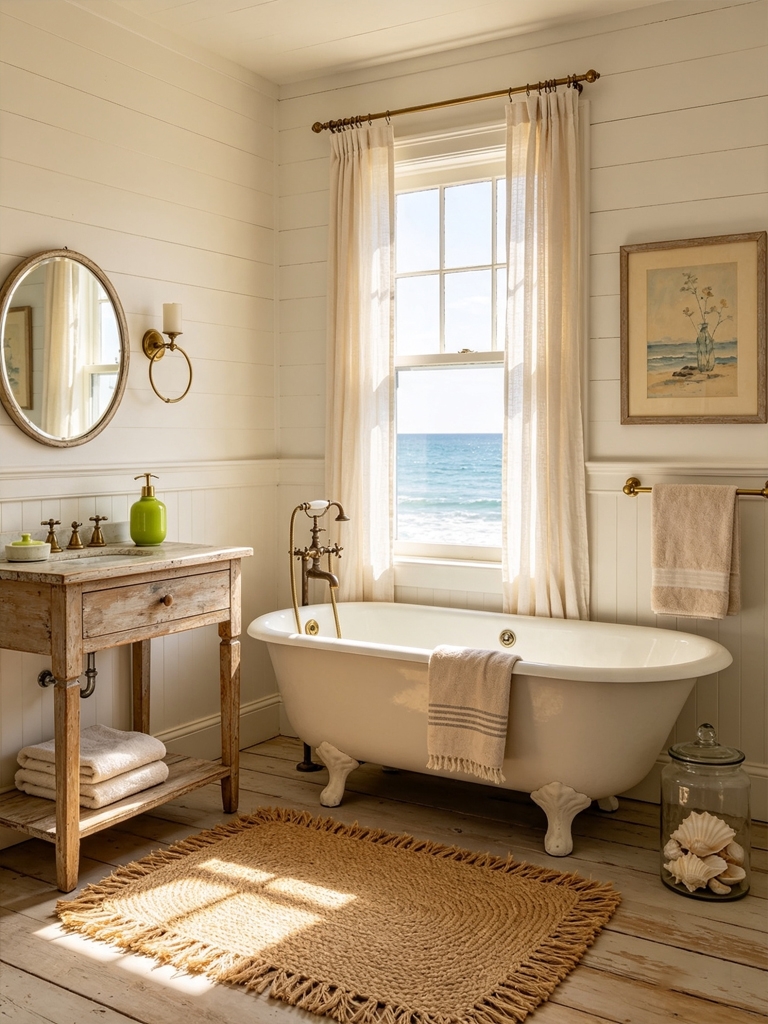
A woven jute or seagrass rug adds warmth and breaks up an all-white or all-tile room fast. Best for powder rooms and the dry side of a bathroom, away from the tub or shower spray. You’ll find solid options for $40-$150 at Wayfair or Amazon, depending on size.
I’m still not fully sold on these near a tub, honestly – natural fiber and standing water don’t mix, and I’ve seen more than one moldy jute rug get tossed after a single humid summer. Layer a rubber-backed cotton mat on top in the splash zone, and you’ll get years more life out of it.
Live-Edge Wood Vanity
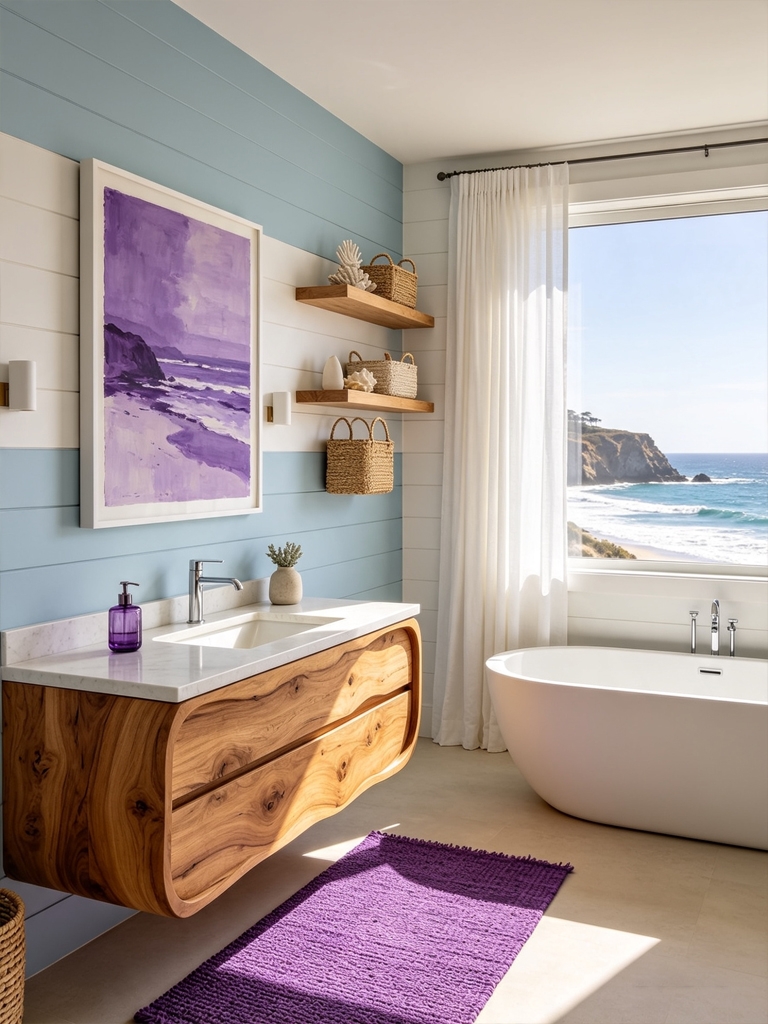
A live-edge or reclaimed wood vanity top is the kind of statement piece that makes a bathroom look custom-designed rather than store-bought. Best for anyone who wants one clear focal point instead of a dozen small touches. Custom pieces run $500-$3,000 depending on wood species and size, with teak and cedar holding up to moisture noticeably better than oak.
Who should skip it: if your bathroom gets heavy daily use by kids, a sealed quartz or stone top will save you a lot of touch-up sanding down the road.
Rattan or Wicker Storage Baskets
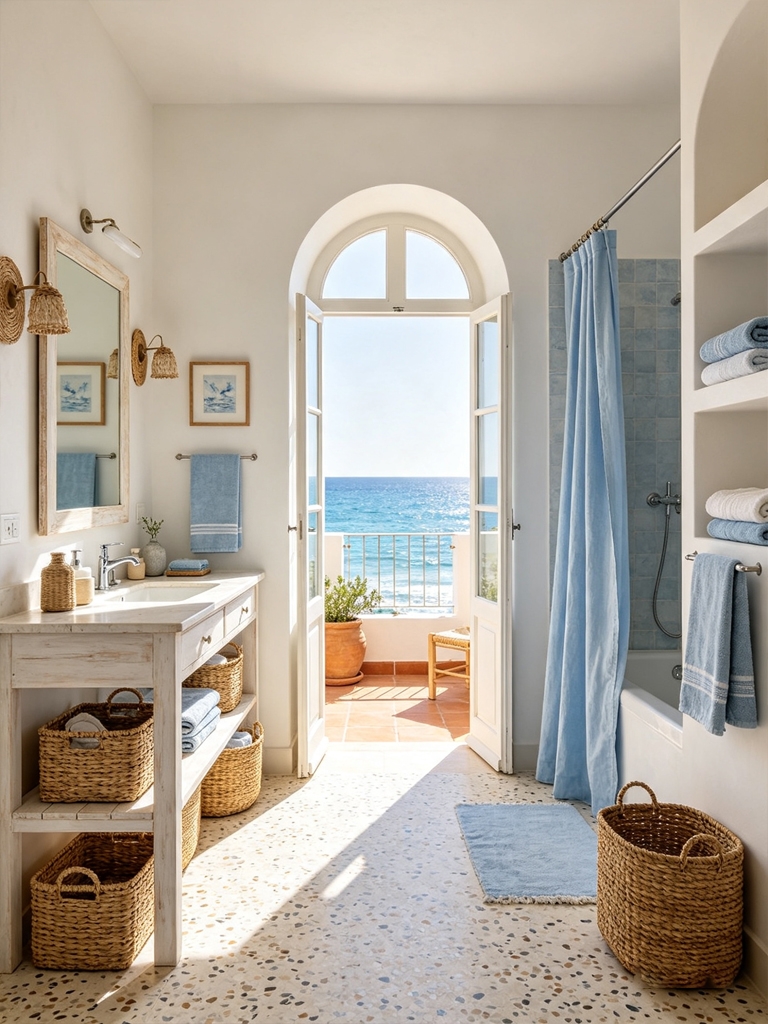
Clutter is the fastest way to kill a relaxed-luxury look, and open rattan baskets solve that without adding visual weight the way closed cabinets do. Best for hiding towels, extra products, and the stuff you don’t want on the counter. CB2, Wayfair, and 2Modern all carry solid options in the $25-$70 range.
Quick tip: buy one size larger than you think you need. Undersized baskets get overstuffed within a month and start looking like the clutter they were meant to hide.
Capiz Shell or Sea-Glass Mirror
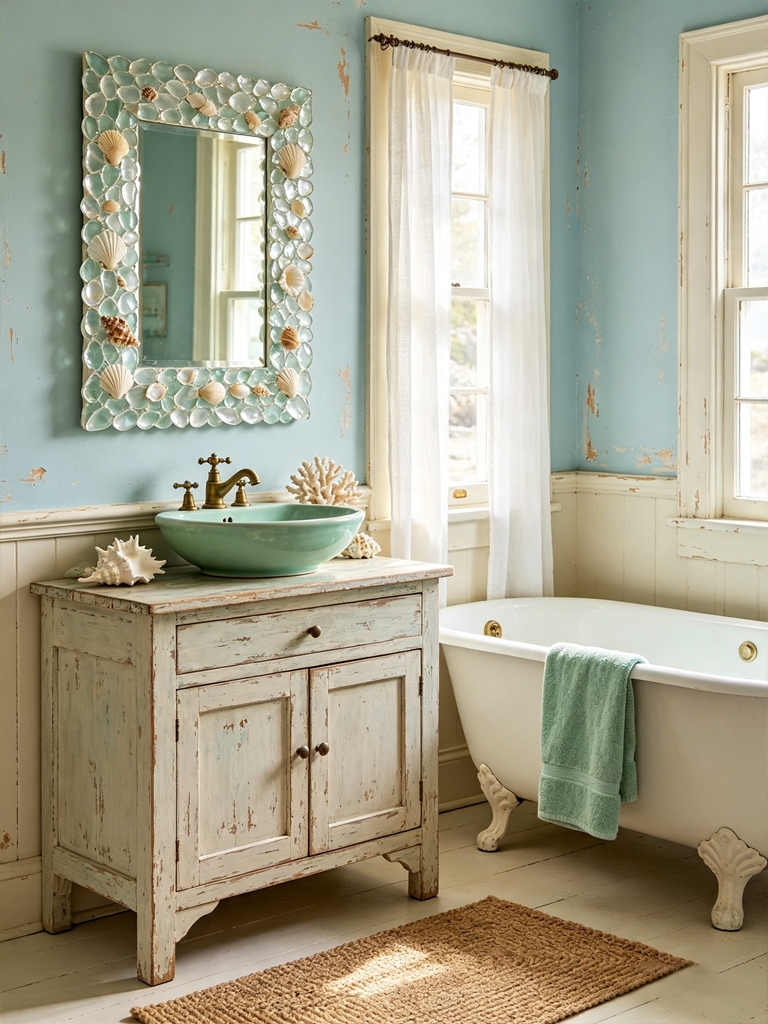
A mirror with a capiz shell or sea-glass frame catches light in a way a plain framed mirror just can’t, and it’s the one place on this list where I’d actually say lean into the “beachy” material – as long as it’s the only overtly coastal object in the room. Best for the focal point above a single vanity. Expect $90-$300 at Etsy, or Amazon.
Open Driftwood or Reclaimed Wood Shelving
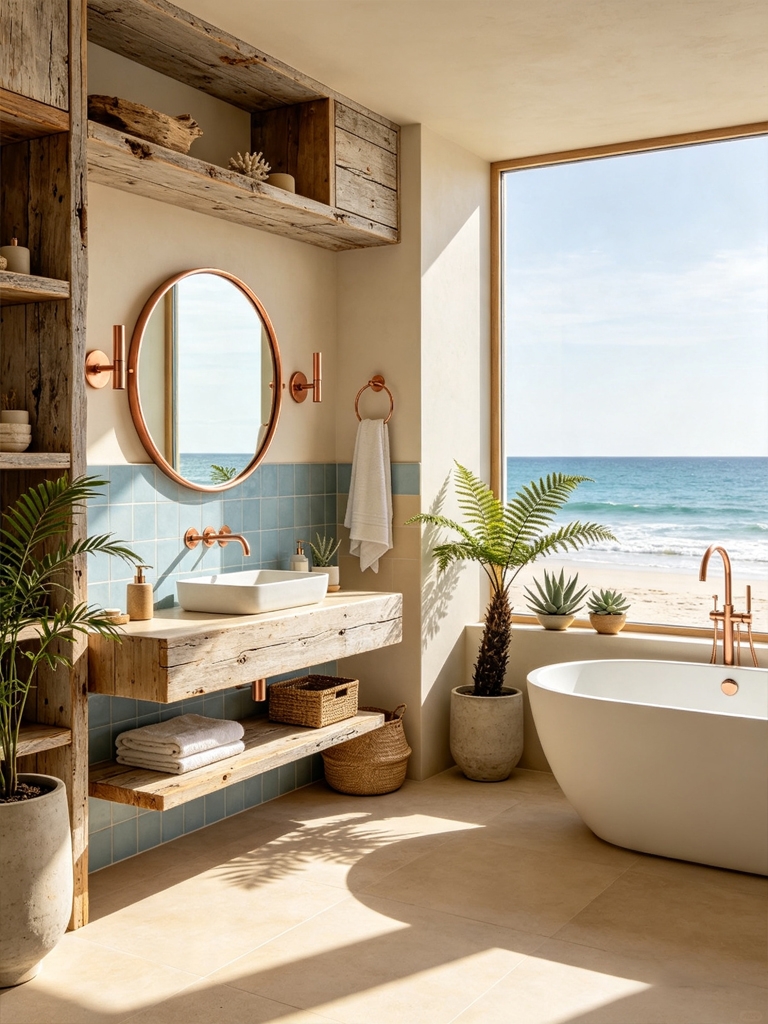
Open shelving in a weathered or driftwood-toned wood does two things at once: adds storage and adds warmth to a room that’s otherwise all cool tile and white paint. Best for small bathrooms where a full cabinet would feel heavy. You’re looking at $60-$200 for a couple of brackets and boards from Wayfair or 2Modern.
Style it with restraint – three or four items per shelf, max. This is the one spot in the whole house where the “more is more” instinct actively works against you.
|
MUST READ: |
A Skylight or Larger Window
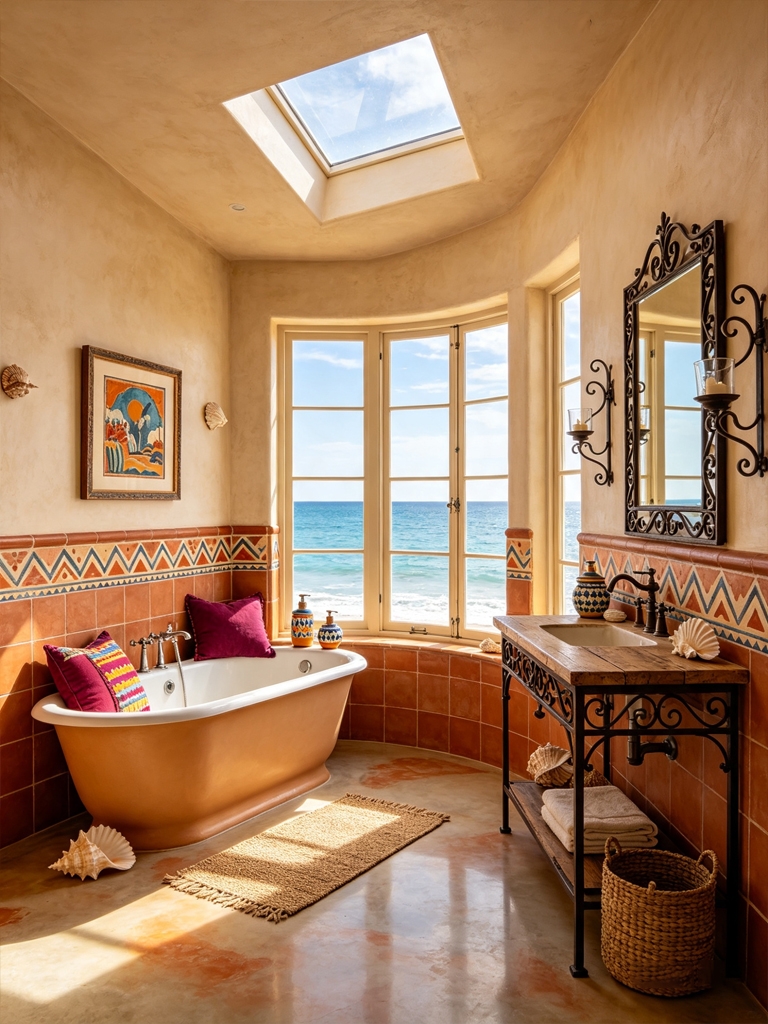
Every idea on this list matters less than this one, and it’s the idea nobody wants to hear because it’s the most expensive. Coastal design is fundamentally about light – that sun-washed, slightly bleached quality you see in every “relaxed luxury” bathroom photo comes from actual daylight, not a paint color. Best for interior or windowless bathrooms where you’re fighting a cave-like feeling, no matter what you put on the walls.
A tubular or full skylight installed runs $1,200-$3,500, depending on your roofline. If that’s out of budget this year, a solar tube is a cheaper middle step at $400-$900 installed.
Ticking-Stripe or Linen Shower Curtain
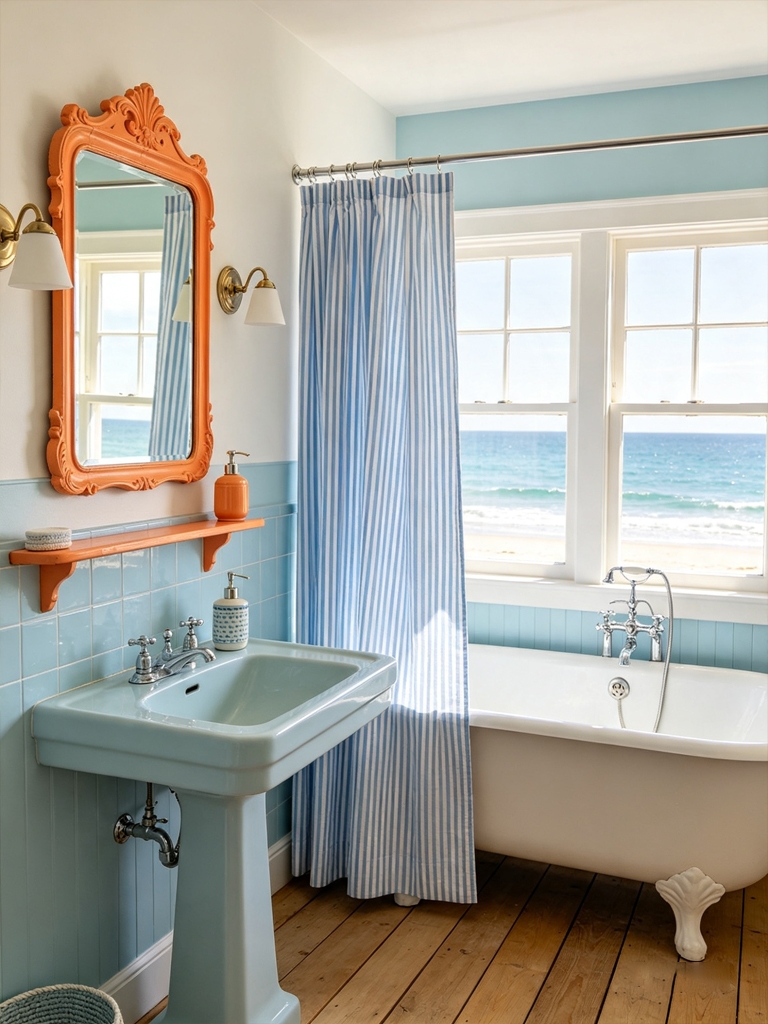
This is the fastest, cheapest idea on the entire list, and it works. A blue-and-white ticking stripe or a plain heavyweight linen curtain instantly softens a shower that would otherwise be all hard tile and glass. Best for renters who can’t touch the tile or fixtures. Walmart and Amazon both carry solid options for $30-$65.
Linen and Waffle-Weave Textiles
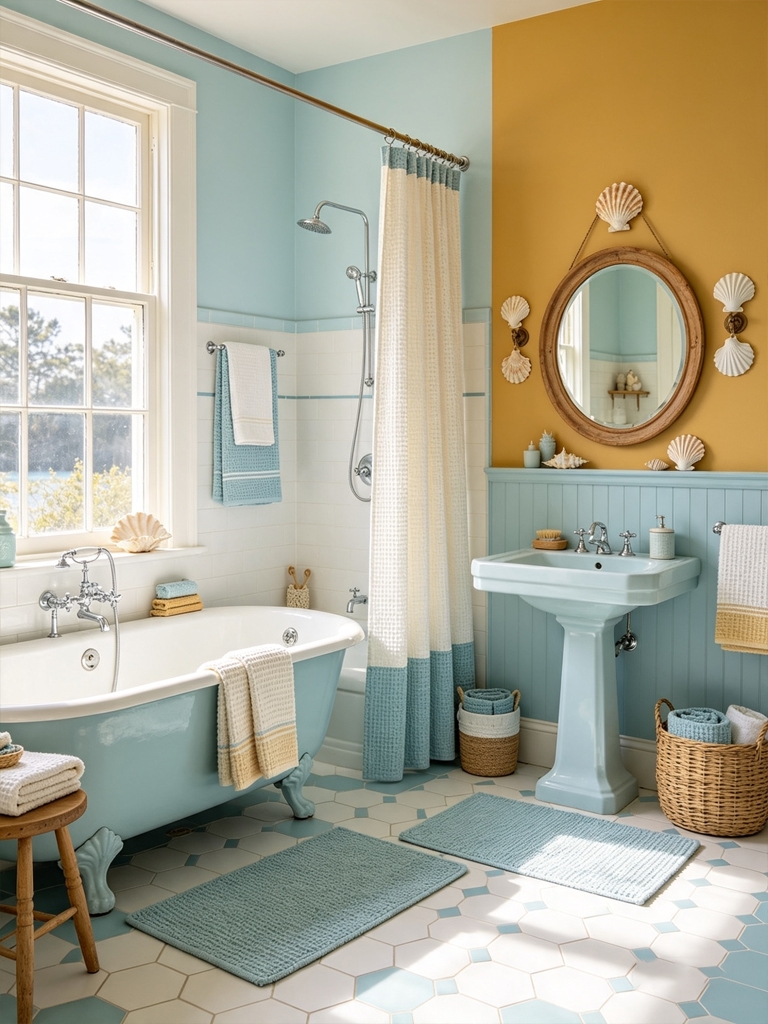
Swap your towels before you swap anything else in the room – I mean that. Linen and waffle-weave towels in sandy, oatmeal, or soft white tones add texture that fluffy white hotel towels just don’t have, and it’s the cheapest way to shift the whole mood of a bathroom in one afternoon. Budget $35-$90 for a full set at CB2, or Amazon.
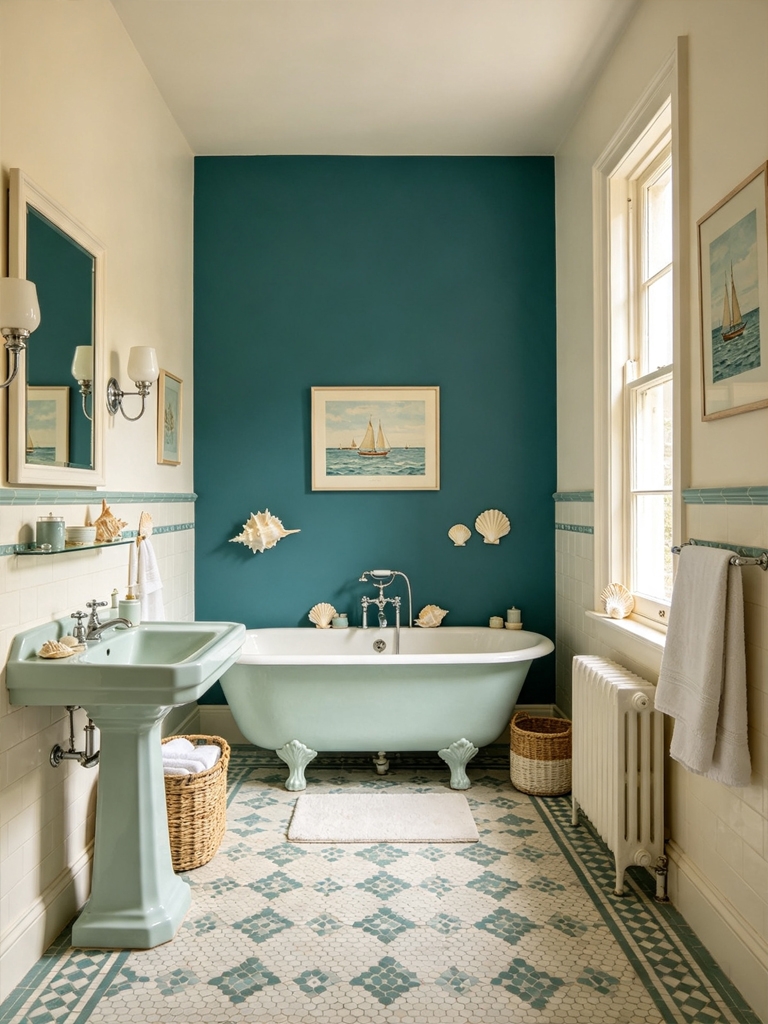
All-white coastal rooms can tip into feeling clinical instead of relaxed, and a single deep accent wall – a dusty navy or muted seafoam – fixes that without turning the room into a theme. Best for adding contrast behind a vanity or tub. A gallon runs $40-$70 at Sherwin-Williams or Benjamin Moore, and one wall is usually all you need.
Counterintuitive tip: paint the wall behind the tub, not the vanity. It photographs better, and it’s the wall you actually see when you walk in.
Indoor-Outdoor Touches
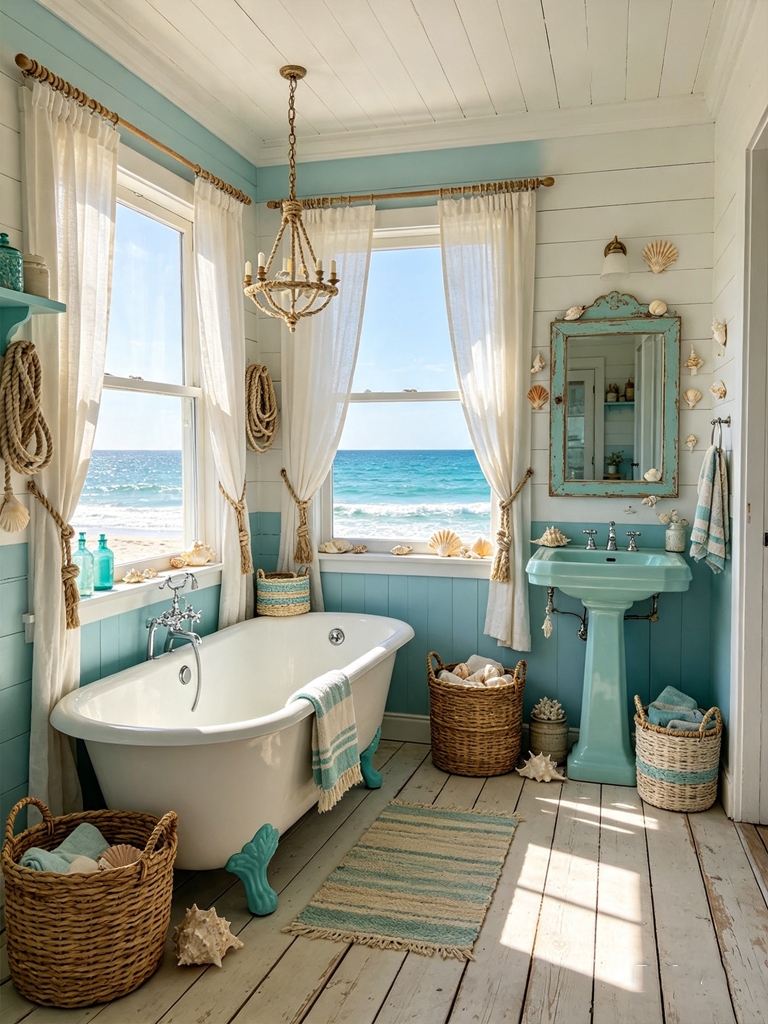
A small teak stool, a potted eucalyptus or fern that tolerates humidity, or a louvered door instead of a solid one – these small moves connect the bathroom to the idea of outdoor air even if you don’t have an ocean view. Best for anyone in a landlocked house who still wants that breezy, resort feeling. Expect $60-$400, depending on what you choose.
|
MUST READ: |
Which Coastal Bathroom Idea Is Right for You?
If you’re renting: start with the shower curtain, towels, and rattan baskets – none of them require touching a wall or fixture, and together they change the room more than you’d expect.
If you’re doing a full remodel: put your budget into the tub, the fixtures, and the light source first, and treat everything decorative as the last 10% of the project, not the first.
If you’re on a tight budget: limewash paint and unlacquered brass together cost less than a single piece of furniture and do more for the room than almost anything else on this list.
If you have a windowless bathroom: the skylight or solar tube isn’t optional in my opinion – no amount of white paint substitutes for actual daylight.
Common Mistakes to Avoid
Most coastal bathrooms miss the mark because the design starts with accessories instead of permanent finishes. Wall color, tile, flooring, vanity style, and lighting establish the coastal look long before decorative objects do.
Another common mistake is matching every metal finish. Using brass for every fixture, mirror, hook, and cabinet pull creates a showroom effect rather than the layered appearance designers typically aim for.
Combining two complementary finishes (such as brushed brass with matte black or polished nickel) adds depth and feels more natural. Finally, avoid relying on overt nautical decor like anchors, ship wheels, rope mirrors, and fishing nets.
Contemporary coastal interiors emphasize natural textures, soft color palettes, organic materials, and abundant light instead of themed decorations, making the space feel timeless rather than tied to a passing trend.

Expert Tips
Professional designers often prioritize long-term durability alongside aesthetics. Seal natural stone and cementitious grout soon after installation to reduce staining, moisture absorption, and future maintenance. If you use natural fiber rugs such as jute, rotate them every few months to distribute wear evenly and extend their lifespan.
Before committing to paint, view large samples under both daylight and evening artificial lighting, since warm whites, greiges, and limewash-inspired colors can shift dramatically depending on color temperature.
Finally, choose moisture-resistant finishes (including bathroom-rated paint, sealed wood, and corrosion-resistant hardware) to help preserve the room’s appearance in a high-humidity environment.
These practical decisions improve durability while maintaining the relaxed, refined look associated with modern coastal bathroom design.
Frequently Asked Questions
What actually makes a bathroom feel coastal?
The biggest factor is the material palette, not beach-themed decor. Designers consistently rely on warm white paint, natural wood, stone, linen, woven textures, and soft brass or matte black accents. When those foundation materials are right, the space feels coastal without shells, anchors, or obvious nautical accessories.
Do you need a freestanding tub for a coastal bathroom?
No. A bright walk-in shower with large-format tile, clear glass, and subtle natural textures creates the same relaxed aesthetic while often providing better accessibility, easier cleaning, and a more spacious feel in smaller bathrooms.
Which paint colors work best for a coastal bathroom in 2026?
Warm off-whites remain the safest choice because they reflect light without feeling stark. Shades similar to Alabaster, Swiss Coffee, creamy ivory, and soft sand pair well with muted blues, sage greens, or weathered wood tones, creating the calm, layered look designers continue to favor.
How much does a coastal bathroom makeover typically cost?
A cosmetic refresh with paint, textiles, lighting, a new mirror, and updated hardware generally costs $250-$800. A full remodel with new flooring, tile, vanity, plumbing fixtures, and a shower or tub commonly ranges from $8,000-$25,000+, depending on materials, labor costs, and project scope.
What’s the biggest mistake to avoid when creating a coastal bathroom?
The most common mistake is decorating before upgrading the room’s foundation. Coastal design comes from cohesive materials, finishes, and color, not themed accessories. Prioritize paint, lighting, hardware, textiles, and natural textures first, then add a few carefully chosen decorative pieces.

Final Recommendation – Coastal Bathroom Decor Ideas
- Best overall: limewash walls plus unlacquered brass fixtures – the highest combined impact for the price.
- Best budget pick: linen towels and a ticking-stripe curtain.
- Best premium upgrade: a freestanding matte tub.
- Best long-term investment: adding a skylight or larger window, since it improves the room every single day, not just in photos.
Conclusion
The biggest upgrade in a coastal bathroom design rarely comes from buying more decor. It comes from creating the right foundation first. Designers consistently recommend starting with the largest surfaces (walls, flooring, and cabinetry) because they establish the room’s color temperature, texture, and overall atmosphere.
Once that foundation feels calm, light, and natural, every smaller detail works harder with less effort. If you’re only making one change, choose a textured finish such as limewash or a soft, warm white paint before adding accessories.
Then layer in natural materials like woven baskets, linen towels, wood accents, and a few mixed-metal fixtures instead of matching every finish. This approach creates a bathroom that feels collected, timeless, and authentically coastal rather than themed.
Remember the core principle: invest in permanent finishes first, functional storage second, and decorative accessories last. Following that order typically produces a more cohesive result, reduces costly decorating mistakes, and makes future updates easier without requiring another full renovation.




Add comment