

Small changes, a richer-looking home

20 years of experience as a home decor consultant, specializing in furniture selection, space-conscious layouts, and practical interior solutions.
These budget home decor ideas that look expensive come down to a few smart moves: a fresh coat of paint in the right colour, layered lighting, curtains hung high and wide, one large mirror, and hardware that feels weighty in the hand.
None of them needs a renovation or a designer budget, and most of them cost less than a dinner out. Below are twelve ideas, grouped into six short chapters, that make a room feel calm, considered and quietly luxurious, starting with the changes that cost almost nothing.
Most affordable home decorating ideas fail for the same reason: they add more stuff instead of making better choices. A room does not look expensive because it is full. It looks expensive because a few things feel intentional.
The light is warm, the colors repeat, the curtains actually reach the floor. That is inexpensive luxury home decor at its best: not a copy of a showroom, but a home that looks like someone thought about it.
The twelve ideas below are grouped into six chapters, from the walls to the finishing touches. Start with whichever chapter matches the room that bothers you most. One afternoon on a single chapter can change how a room feels, and a weekend on two or three can change how the whole house reads.
|
MUST READ: |
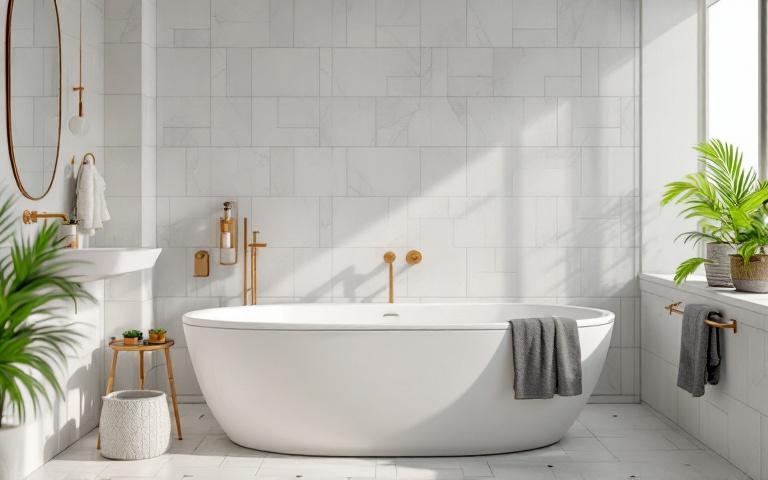
Paint Is the Cheapest Transformation
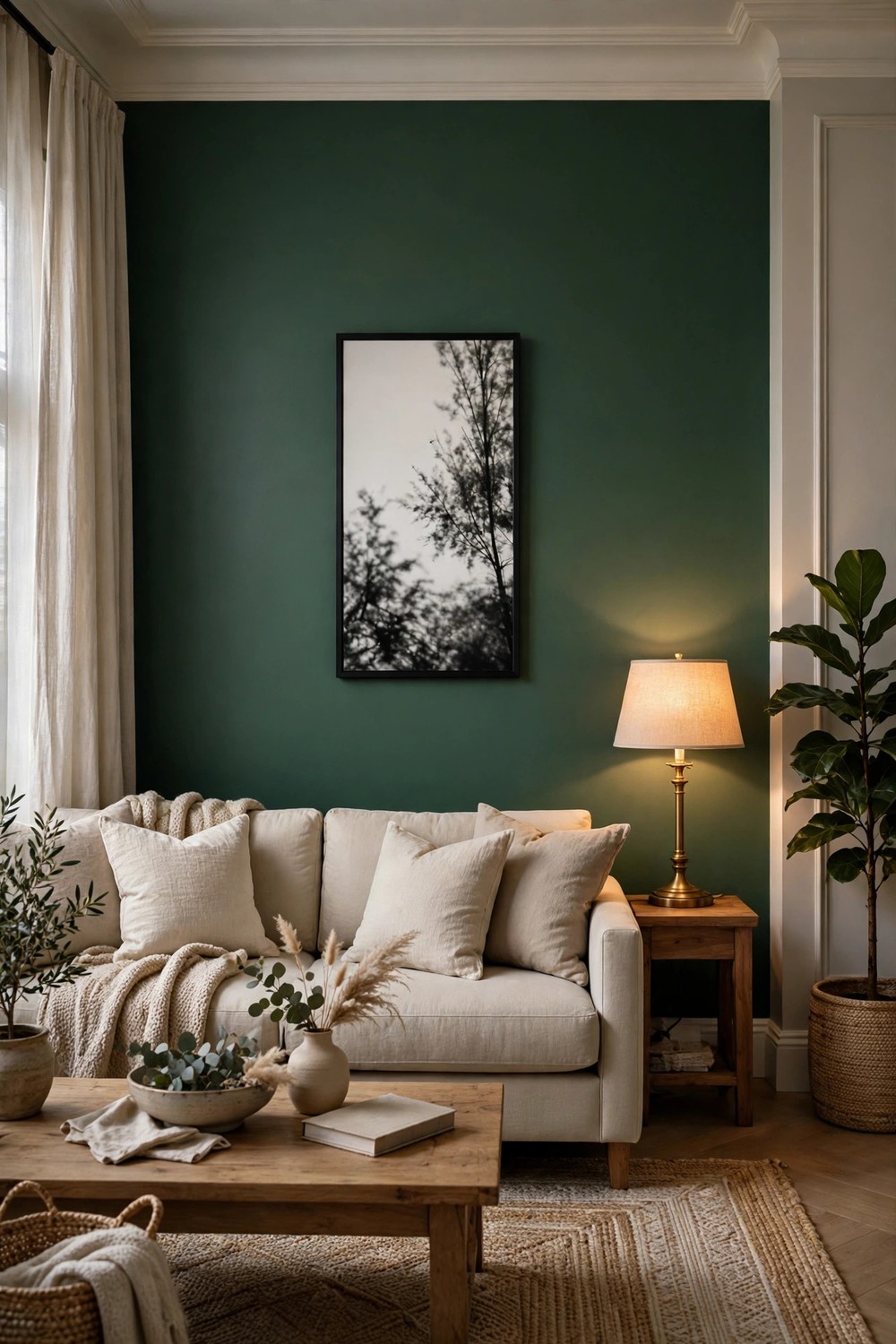
Idea 1: paint one wall a deep, confident color. A tin of paint is still the cheapest way to change a room, and a deep color does the most work. I like a dark green, a navy or a soft charcoal on the wall behind the sofa or the bed, with the rest of the room kept pale and quiet.
The dark wall gives the room a focal point, the pale walls keep it bright, and the contrast makes everything in front of it look more considered. Keep the finish matte, keep the ceiling white, and stop at one wall. Two dark walls start to close a room in, and a whole dark room needs more light than most of us have.
Idea 2: paint the furniture you already own. That tired dresser or the side table you stopped noticing can be the best-looking piece in the room after a coat of chalk paint. A soft matte finish hides small scratches, and a rich color like charcoal or deep sage makes a plain piece look like it came from a boutique. Sand lightly, wipe it clean, and use a small foam roller for a smooth finish.
This is budget-friendly interior design at its most honest: the same piece, the same room, a completely different feeling. That is the heart of these budget home decor ideas that look expensive: spend the money where the eye lands, not where a catalogue tells you to.
For a furniture refresh, a chalk-style paint is the forgiving choice. It needs little prep, dries to a soft matte finish, and one 30-ounce tin covers a surprising amount of furniture. The Rust-Oleum Chalked ultra matte paint in charcoal goes on in one coat on most surfaces, dries to the touch in about half an hour, and the deep charcoal shade is the one I would reach for first. Seal it with a clear wax or topcoat on pieces that get daily use, like a dining table or a hallway console.

Layer the Lighting
Idea 3: swap cold bulbs for warm ones. Nothing makes a room feel cheap faster than cold, white overhead light. It flattens colors, shows every scuff, and makes a living room feel like an office. Warm bulbs, around 2700K, do the opposite: they soften edges, warm up wood and fabric, and make skin tones look better in the evening.
Swap every bulb in the room you use most, and if you can, fit a dimmer. A dimmer costs very little and turns one harsh light into a whole range of moods.
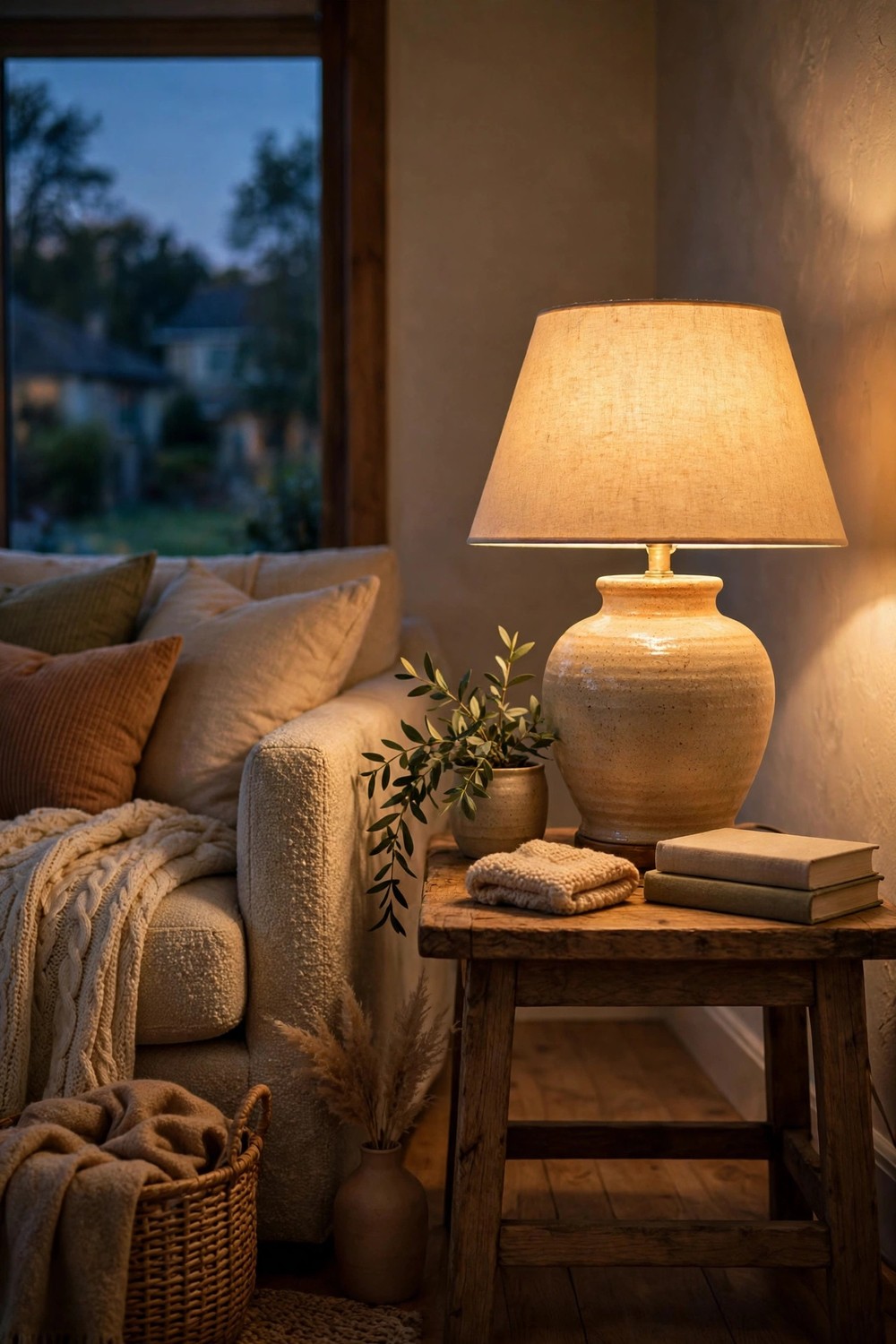
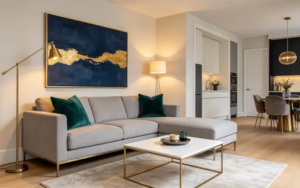
Idea 4: add a second lamp, low and warm. One ceiling light is never enough, however good the bulb. A room needs a low light as well: a table lamp on a side table, a floor lamp beside an armchair, something that glows at sitting height.
That second layer of light is what makes a room feel finished in the evening, and it is one of the most affordable ways to upgrade your home. I would skip the matching lamp sets and pick one lamp with a shape you actually like. A ceramic base, a linen shade and a warm bulb will do more than a whole shelf of small accessories.
A good table lamp does not need to cost much. The Mainstays tripod table lamp has a warm oak finish, a crisp white shade and a simple three-legged silhouette that suits a bedside table, a desk or a console. It takes a standard bulb up to 60 watts, so you can choose a warm LED and set the mood yourself. Put it where you sit in the evening, not where it looks best in a photograph.
Dress the Windows and the Sofa
Idea 5: hang curtains high, wide and to the floor. This is the trick designers use most, and it costs nothing beyond the rod. Mount the rod close to the ceiling and extend it several inches past the window frame on each side. Hang panels that reach the floor, not the sill. The window instantly looks larger, the ceiling feels taller, and the whole wall looks tailored.
Short curtains, hung just above the frame, do the opposite: they chop the wall in half and make the window look small. If the panels pool slightly on the floor, that is fine. A little extra length reads as generous, not sloppy.
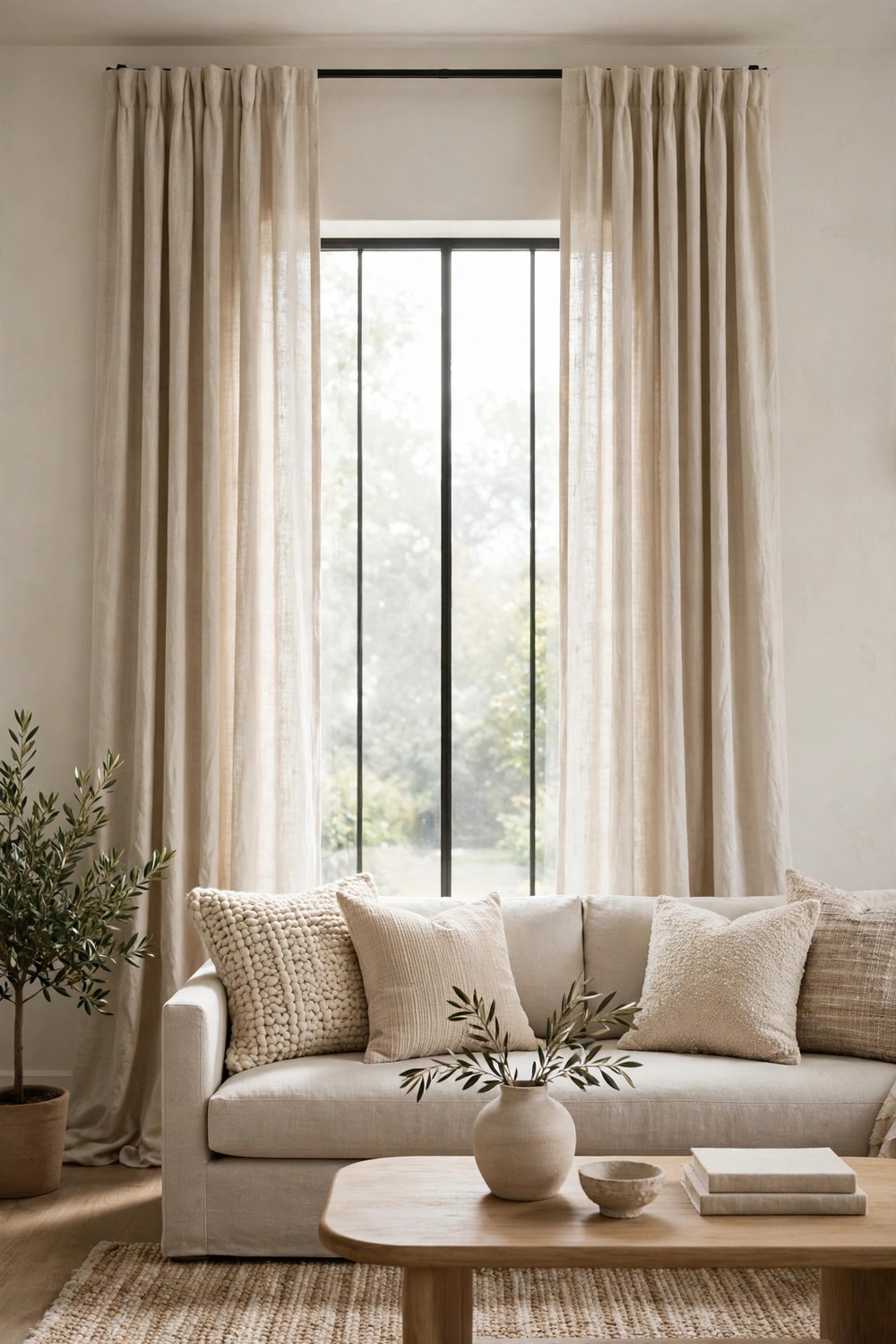
Idea 6: swap pillow covers, not the pillows. A sofa with tired cushions does not need new cushions. It needs new covers in better fabrics. I like a mix of textures rather than a matching set: a velvet cover in a deep tone, a linen one in a pale neutral, something with a little nubby texture to catch the light.
Two or three covers, in colors already in the room, will change a sofa more than a whole new throw. Curtains and cushions are where these budget home decor ideas that look expensive earn their keep: soft, full and floor-length reads as custom, even when it is not.
Linen-look curtains are the easiest version of this idea. The H.VERSAILTEX linen curtain panels come as a pair in 84-inch length, in a linen blend that filters light without blocking it, and the sage and natural shades suit most rooms.
Hang them on a rod mounted high and wide, and let them fall to the floor. Elegant home styling on a budget is often just this: the right fabric, hung in the right place, with nothing fussy added.
|
MUST READ: |

Mirrors and Art That Fill the Wall
Idea 7: one large mirror, leaned or hung. A big mirror is the fastest way to make a small room feel larger and a dark room feel brighter. It bounces daylight across the room and gives a blank wall a purpose. I would rather have one large mirror than three small ones, and I would lean it rather than hang it where the wall allows.
A leaning mirror feels relaxed and intentional, like a piece of furniture rather than a decoration. Keep the frame simple, a thin black or brass edge, and let the reflection do the work.
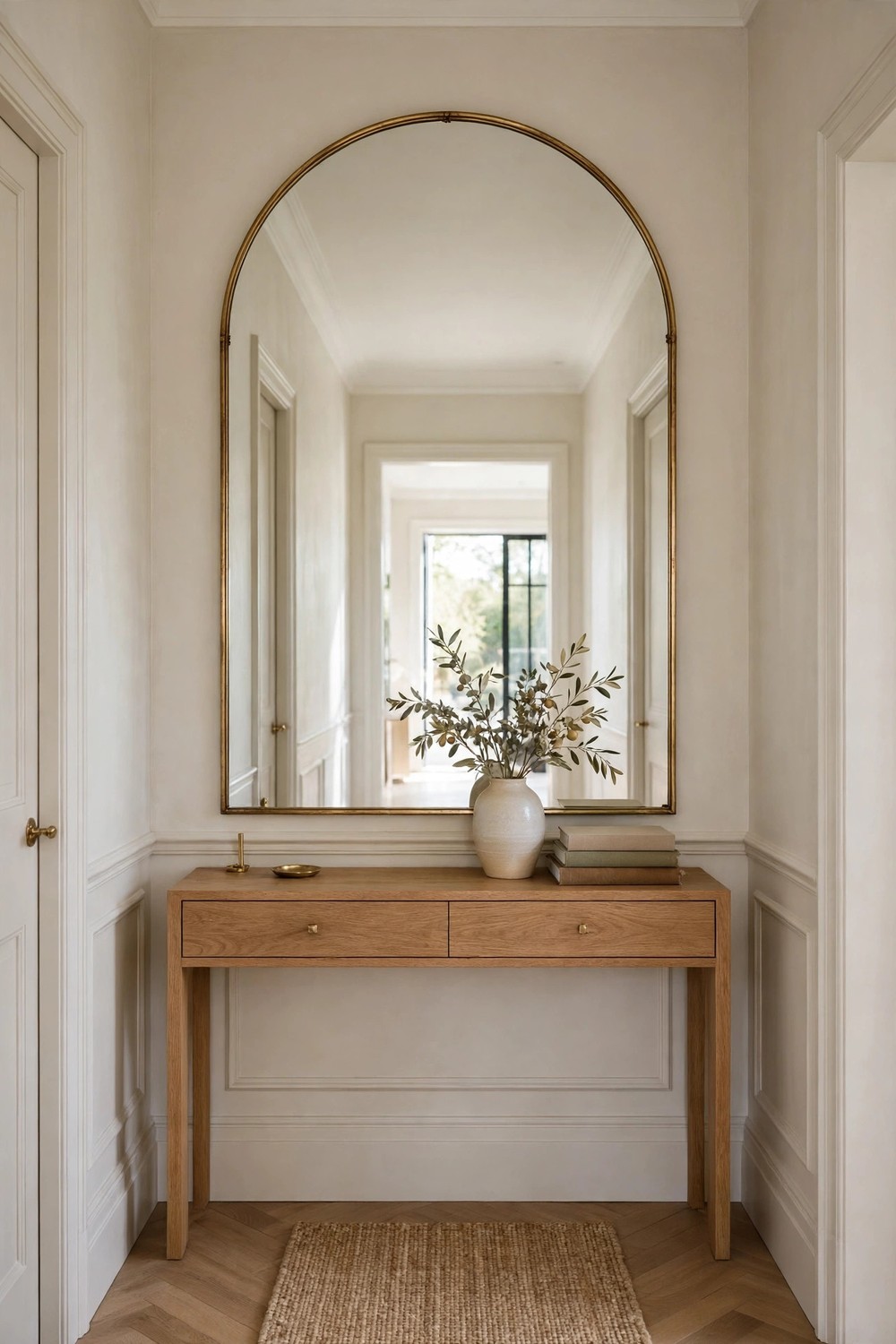


Idea 8: go big with art, or build a simple gallery wall. Small pictures scattered across a big wall make a room look unfinished. One oversized print above the sofa, or a tidy grid of matching frames, does the opposite.
The frames matter more than the art: the same size, the same finish, hung in a straight line with even gaps. That is designer-inspired home decor in its simplest form, a system rather than a collection. You can use your own photographs, free printable art or a single canvas, and the wall will look considered either way.
Matching frames are what make a gallery wall look deliberate instead of accidental. The Better Homes and Gardens gallery frames come as a matching pair in white wood with glass, holding an 8 by 10 print or a 5 by 7 with the mat. Buy two or three sets, hang them in a grid, and keep the spacing even. A row of identical frames looks calm and expensive, even when the prints inside cost almost nothing.
Swap the Hardware, Add the Trim
Idea 9: replace cabinet knobs and drawer pulls. Swapping hardware is one of those budget home decor ideas that look expensive out of all proportion to its cost. A ten-pack of pulls, a screwdriver and an afternoon can make a kitchen or a dresser look new.
I like brushed brass or matte black, one finish repeated through the whole room, because mixed metals are the fastest way to make a space feel accidental. Measure the hole spacing before you order, and keep the old screws in a labelled bag in case you ever want to change back.
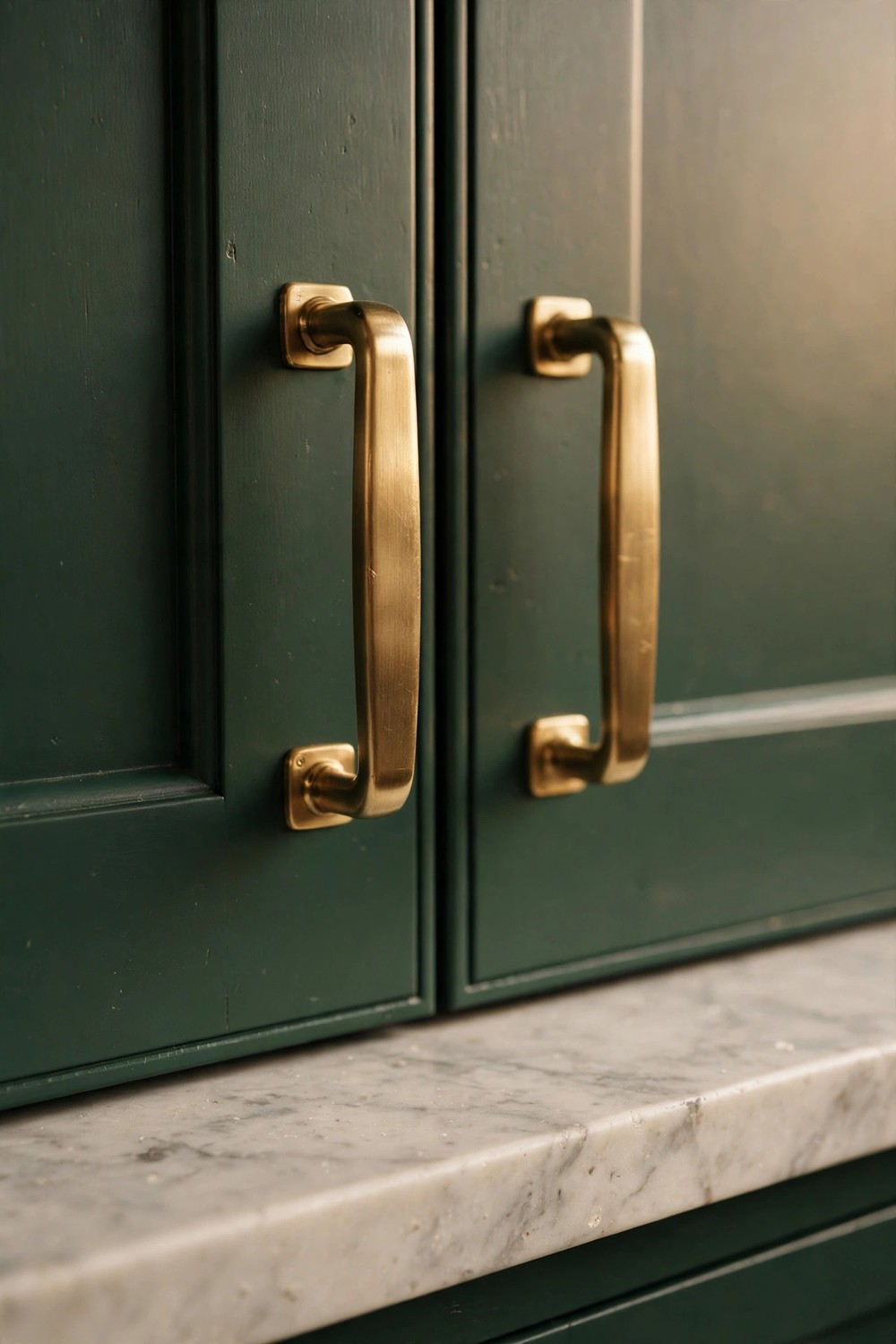
Idea 10: add picture-frame moulding to plain walls. Plain walls look plain because nothing breaks them up. Thin strips of trim, arranged in rectangles like picture frames, give a wall the architecture it is missing.
Peel-and-stick trim makes it a weekend job with no saw and no nails, and a coat of paint over the top makes it look built in. Keep the rectangles the same size, keep them level, and stop at one feature wall. A brass pull, a ceramic vase, a framed print: expensive-looking home accessories are usually just ordinary objects chosen in one finish and repeated with intent.
For hardware, a brushed brass pull is the safest bet in most kitchens. The Amerdeco brushed brass cabinet pulls come as a set of ten with a five-inch hole spacing, in solid-feeling zinc alloy, and the warm brass tone works with white, navy and wood cabinets alike. Swap the pulls on the most-used drawers first and see how the room changes before you commit to every door.
|
MUST READ: |
Greenery and the Final Layer
Idea 11: one large plant, or a few good stems. A room without anything living in it can look perfect and still feel flat. One large plant in a corner, or a few stems in a vase on the table, adds the one thing paint and fabric cannot: a bit of life.
I would rather have one big plant than six small ones scattered around, because a single large plant reads as a deliberate choice. If you travel a lot or your rooms are dark, a good faux plant is the honest answer. The best ones have varied leaf colours and a proper pot, not a shiny plastic one.
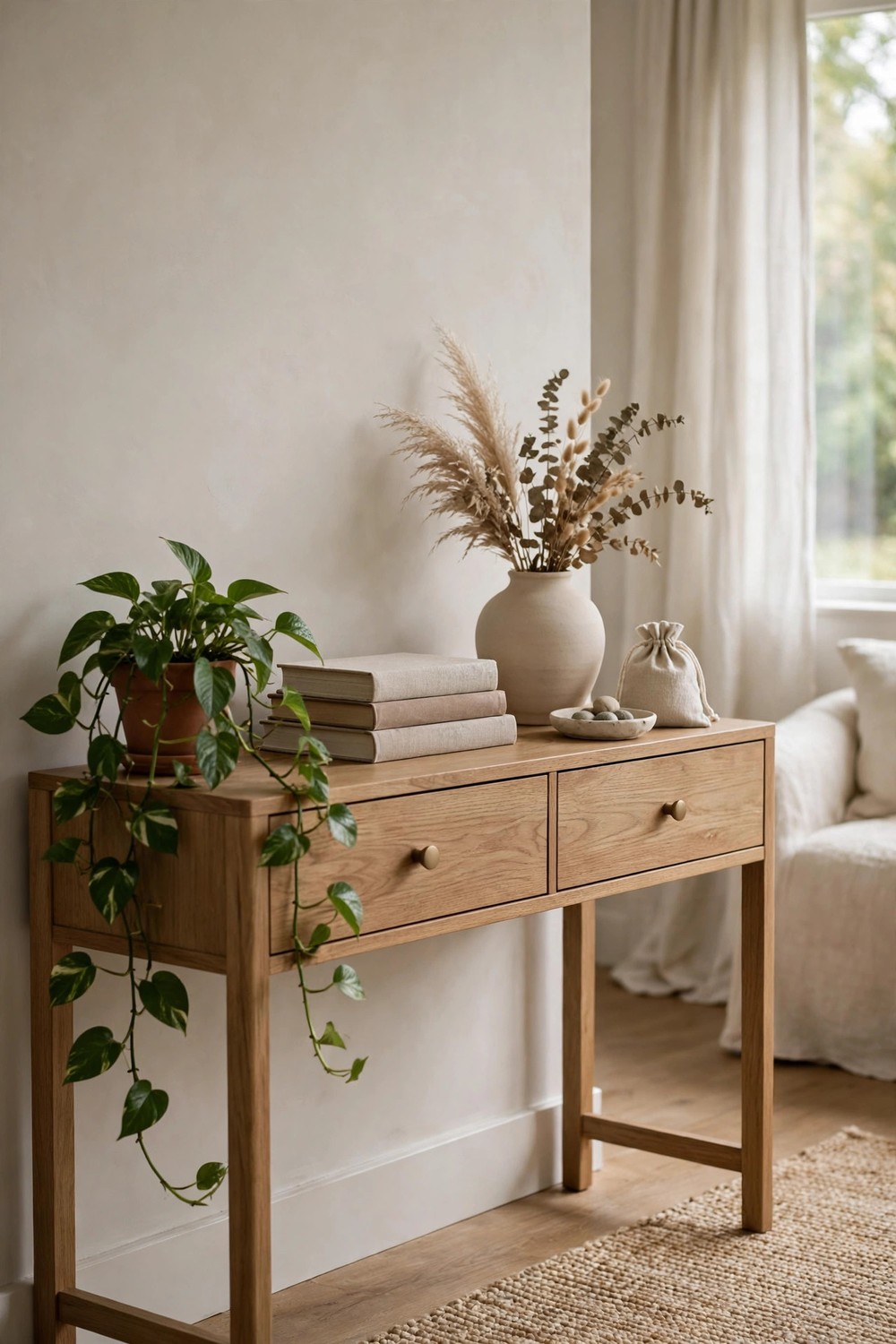

Idea 12: clear the surfaces, then style them on purpose. This one costs nothing, and it might be the most powerful idea in the whole article. Clear a coffee table or a console completely, then put back just three things: something tall, something flat and something alive.
A vase, a stack of books and a small plant, for example. Group them close together, leave the rest of the surface empty, and the room will feel calmer at once. Inexpensive home makeover ideas often come down to this: not adding more, but choosing what stays.
For the greenery, a small faux plant in a ceramic pot is the low-commitment version. The Mainstays artificial string of pearls plant sits in a clean white ceramic pot and trails softly over a shelf or a side table. It needs no water and no light, so it suits the dark corners where a real plant would give up. One on a console, one on a bookshelf, and the room has greenery everywhere it needs it.
Key Facts
- Paint is the cheapest transformation: one deep-colored wall and a painted piece of furniture can change a room for the price of two tins.
- Warm light, around 2700K, with at least two light sources in a room, makes a space feel finished in the evening.
- Curtains hung near the ceiling, wider than the window and reaching the floor, make windows look larger and ceilings feel taller.
- One large mirror or one oversized piece of art has more impact than a wall of small frames.
- Matching hardware, one repeated finish and cleared, intentionally styled surfaces are what make a room read as designed.
FAQ
How can I make my home look expensive on a budget?
Start with paint, lighting and curtains, in that order. A deep accent wall, warm bulbs with a second lamp, and floor-length curtains hung high change how a room feels for very little money. Then add one large mirror and swap the cabinet hardware. Those five moves cover most of what makes a room read as expensive, and none of them needs a tradesperson.
What is the cheapest way to make a room look more expensive?
Paint and decluttering. A tin of paint costs less than most accessories, and clearing surfaces costs nothing at all. After that, warm light bulbs are the cheapest upgrade with the biggest effect: cold white light makes even a tidy room feel stark, while warm light softens everything in it.
Do curtains really make a room look more expensive?
Yes, when they are hung properly. A rod mounted close to the ceiling, extended past the window frame, with panels that reach the floor, makes the window look larger and the ceiling taller. Short curtains hung just above the frame have the opposite effect. The fabric matters less than the height, the width and the length.
What colors make a home look expensive?
Warm neutrals on the large surfaces, with one deep accent color repeated in small doses. Cream, warm white, greige and soft grey keep a room calm, while deep green, navy or charcoal on one wall or a piece of furniture adds depth. Add one metallic finish, brass or matte black, and repeat it through the room.
How do I style my home like a designer without hiring one?
Repeat a small set of choices instead of collecting many different ones. One color palette, one metal finish, one style of frame, and odd numbers when grouping objects. Then edit: take one thing off every surface and see if the room looks better without it. Designers do not buy more; they choose less, more deliberately.
A Richer-Looking Home, One Afternoon at a Time
That is the whole set: twelve small moves, none of them heroic, and these budget home decor ideas that look expensive only work because they are small enough to actually do. Start this weekend, not next month. Pick one chapter, paint one wall or hang one pair of curtains, and see how the room answers. Tomorrow it will feel a little calmer, and by the end of the month the whole house will read like someone designed it on purpose.
Sources & Citations
- HGTV — 30 Designer Tips for Decorating on a Budget: https://www.hgtv.com/decorating/design-ideas/15-budget-decorating-secrets-pictures
- Family Handyman — Cheap Decorating Ideas That’ll Make Your Space Look Expensive: https://www.familyhandyman.com/list/cheap-decorating-ideas-look-expensive/
- HGTV — Simple and Cheap Home Upgrade Ideas: https://www.hgtv.com/decorating/design-ideas/simple-home-upgrade-ideas

Enjoying our content? Make us a preferred source on Google.





Add comment